“Populism is all about loss.” This sentence by the German sociologist Andreas Reckwitz, from his widely discussed book Loss: A Fundamental Problem of Modernity, offers a key to understanding the rise of the AfD (Alternative für Deutschland). A commentator in Switzerland’s Neue Zürcher Zeitung recently put it pointedly: Germany is changing faster than it can culturally absorb.
Indeed, loss has become a defining sentiment across large parts of German society: the loss of security and prosperity, of familiar social structures and certainties, and, above all, the perceived loss of trust in the state and in politics. In eastern Germany, there is an additional, distinctly historical experience. For many people, reunification was not merely a success story. It also meant the loss of jobs, the departure of large numbers of people for the West, and a radical social and economic transformation. To this day, there persists a sense of having been disadvantaged compared with the West, and of not receiving sufficient recognition for what people have accomplished in their lives. That these emotions do not necessarily correspond to socioeconomic facts is of secondary importance. Politically, as we can observe these days in eastern Germany, they exert enormous force.
The AfD has been particularly successful in mobilizing these sentiments politically. It promises to reverse developments and return to a supposedly better past. That such a return is an illusion – indeed, that the good old days were in reality not nearly as good as people are led to believe – apparently does little to diminish the appeal of these reactionary messages.
Yet explaining the AfD’s seemingly unstoppable rise solely in terms of a sense of loss would fall short. Germany has been going through a period of economic weakness for years. Low growth and the profound structural transformation of industry are fueling fears of a creeping deindustrialization that, in parts of the country, has already begun. Fear of losing one’s job, rising prices, existential anxieties and doubts about the future of the social security system are shaking faith in the German model of success. They also help explain the country’s profound crisis of trust.
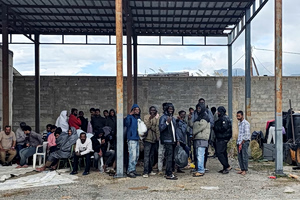
Then there is migration. The AfD emerged in 2013 as a protest party against Germany’s policies during the euro crisis. It was the refugee crisis and Angela Merkel’s liberal migration policy that transformed it into a political force with a far greater capacity for mobilization. To this day, migration, domestic security and national identity remain among its core issues.
It would be misleading, however, to describe the AfD merely as a protest party. A substantial share of its voters support it out of political conviction. Its electorate is heterogeneous. Most are staunch conservatives, while many come from the working class, once a stronghold of Social Democracy. Alongside them is a hard core of far right and anti-democratic supporters. Germany’s party system is undergoing a profound transformation. The AfD is the biggest beneficiary of these changes; the venerable Social Democratic Party is their biggest loser.
In Saxony-Anhalt, these developments can be observed as if under a magnifying glass. There, the AfD is polling above 40 percent, far ahead of the Christian Democratic Union, or CDU, at around 20 percent. The Social Democrats trail far behind at under 10 percent. The Christian Democrats have governed the state for more than two decades. With the departure of their popular state premier and amid widespread dissatisfaction with the federal government in Berlin, a strong desire for political change has taken hold.
The vote of Saxony-Anhalt’s roughly 1.7 million eligible voters this coming Sunday carries significance far beyond this eastern German state. The AfD in Saxony-Anhalt has been officially classified by the domestic intelligence service as a confirmed right-wing extremist organization. Its assumption of government would be a historic event – and, for many democrats and liberals, the breaking of a political taboo: For the first time in Germany, a party of the extreme right would take power in one of the country’s federal states.
The historical warnings are obvious. But Berlin is not Weimar, and the AfD is not the Nazi Party. The Federal Republic has stable institutions and a constitution shaped by the lessons of Germany’s catastrophe in the 1930s and 1940s. Historical analogies and comparisons with the Nazis will therefore not solve the problem, especially since they are unlikely to change the mind of a single AfD voter.
What matters is the here and now. The rise of the AfD will end only when the democratic parties find convincing answers to the fears of loss felt by so many people. That means a functioning migration policy, economic prospects and social security. Above all, it means restoring trust in politics.
Unfortunately, quick solutions are nowhere in sight.
Dr. Ronald Meinardus is a Senior Research Fellow at the Hellenic Foundation for European and Foreign Policy (ELIAMEP).