Greece’s political landscape, analysts say, remains “undisturbed.” The government continues to hover around the same approval levels it held during the European elections, while opposition parties either stagnate or briefly gain traction only to lose it when public attention shifts. The gap between the ruling party and the rest remains comfortably in the double digits—what one analyst aptly called “the stuck needle difference.” It has persisted for nearly seven years.
Yet, beneath this numerical calm lies a government gripped by insecurity—far from the image of confident governance resting on the cushion of complacency. Its approach has become largely reactive, managing each crisis as it comes. The recent controversy over the amendment concerning the Tomb of the Unknown Soldier, for instance, turned into a bout of internal party score-settling. Law and Order for the Tomb? No, broom and dustpan for Dendias. So what?
The answer to the question reveals a deeper issue: a loss of political direction. By constantly chasing headlines and managing daily crises, the government has lost sight of the bigger picture. And in that bigger picture, none of the issues it considers “matters to be settled” are perceived as such by citizens. People, simply put, have their own problems. These do not include Dendias, Karamanlis, Samaras, or any of the “party insiders” who are unhappy with their current positions. What dominates instead is the high cost of living, soaring prices, economic uncertainty, strained healthcare, and the everyday struggles of life.
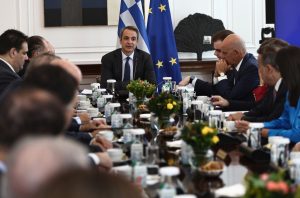
This is where the government is not exactly governing. The government’s attention, as even the Prime Minister admitted at the Thessaloniki International Fair, has narrowed to the worries of “a few thousand around Kolonaki Square”. The government has lost the kind of energy required to stay focused on any meaningful reform path. What, then, is the government’s plan, agenda, or narrative today?
The answer is that to govern, governance, after all, requires more than facing a divided and uninspired opposition. Building up temporary “enemies” to rally support might keep the base alert, but it does little to address the growing question of governability—a word that has entered Greece’s political vocabulary with newfound urgency.
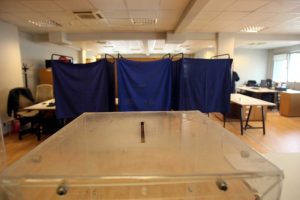
When the time comes to call an election, such an environment will not necessarily favor the incumbents. A government behaving like its own opposition cannot inspire confidence, and an opposition still lost in its own internal struggles cannot offer a credible alternative. No one votes for a government that opposes itself or an opposition that cannot govern its own—let alone a country. Voters simply disengage.
In other words, it’s not only the “wave” that is missing. The rider for it is missing too. The “return of Tsipras” is nothing more than a repositioning in the political landscape, just like the “Samaras party” or the “Karystianos party.” Everyone has something to offer, but none seem to carry true momentum.
That is why, in the roughly one year remaining until the elections, time—even if it should—will not count differently. For both government and opposition, these will be the first elections of internal party arrangements. Under these conditions, how does one go to the ballot box? Without a doubt, with a heavy heart.