Greece has taken a major step toward establishing a national marine park in the southern Aegean (south Cyclades), following the approval of necessary environmental studies for Natura 2000 protected areas in the specific sea region, a project that also involves geopolitical dimensions given previous the continued reactions by official Ankara.
These studies introduce, for the first time, a clear and unified regulatory framework covering protected areas across the Cyclades, parts of the Dodecanese Islands in the southeast Aegean and nearby islets.
The framework defines protection zones, permitted land uses, and management measures aimed at preserving ecosystems while allowing mild human activity. It places strong emphasis on safeguarding endangered species such as the Mediterranean monk seal, cetaceans, and sea turtles, as well as birdlife and endemic species. Sensitive habitats—especially Posidonia seagrass meadows on the seabed —are also prioritized.
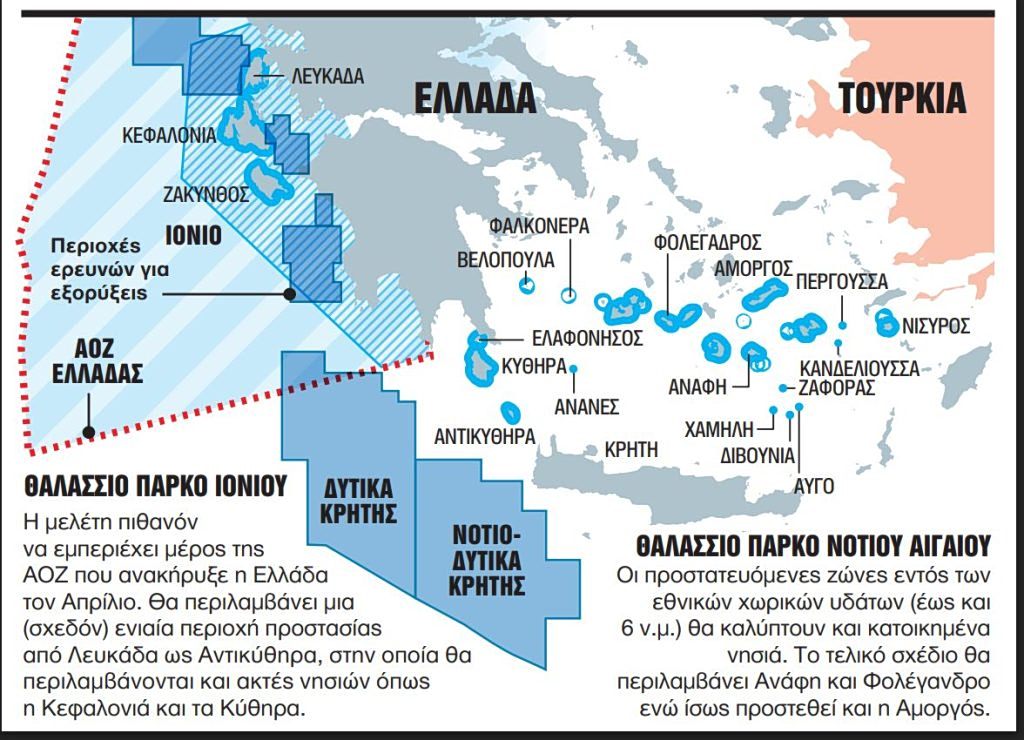
At the same time, the plan seeks a balance between environmental protection and sustainable development. Traditional activities like farming, livestock breeding, beekeeping – on the islands – and fishing in surrounding waters will continue under regulated conditions. Tourism is also addressed, with stricter rules to ensure that the all-important sector remains within environmental limits and does not exceed the capacity of the islands – a concept that will have to been assigned specific numbers, however.
Additional measures focus on regulating boat traffic and anchoring to protect marine ecosystems, including the gradual installation of eco-friendly moorings.
The initiative strengthens conservation of the Southern Aegean’s natural heritage while providing a structured framework for economic activity and local communities.
Turkish reaction
As more-or-less expected, however, Turkey’s foreign ministry, in an announcement posted on its webpage, challenged the latest Greek maritime maps, claiming they depict “imaginary maritime boundaries” and arguing that Athens lacks jurisdiction in certain areas where fishing restrictions have been imposed.
Official Turkey has for decades refused to adhere to specific UNCLOS provisions to delimitate any future continental shelf or the even more advanced concept of an EEZ. Turkey, a perennial EU candidate-state has also not signed, let alone ratified UNCLOS.