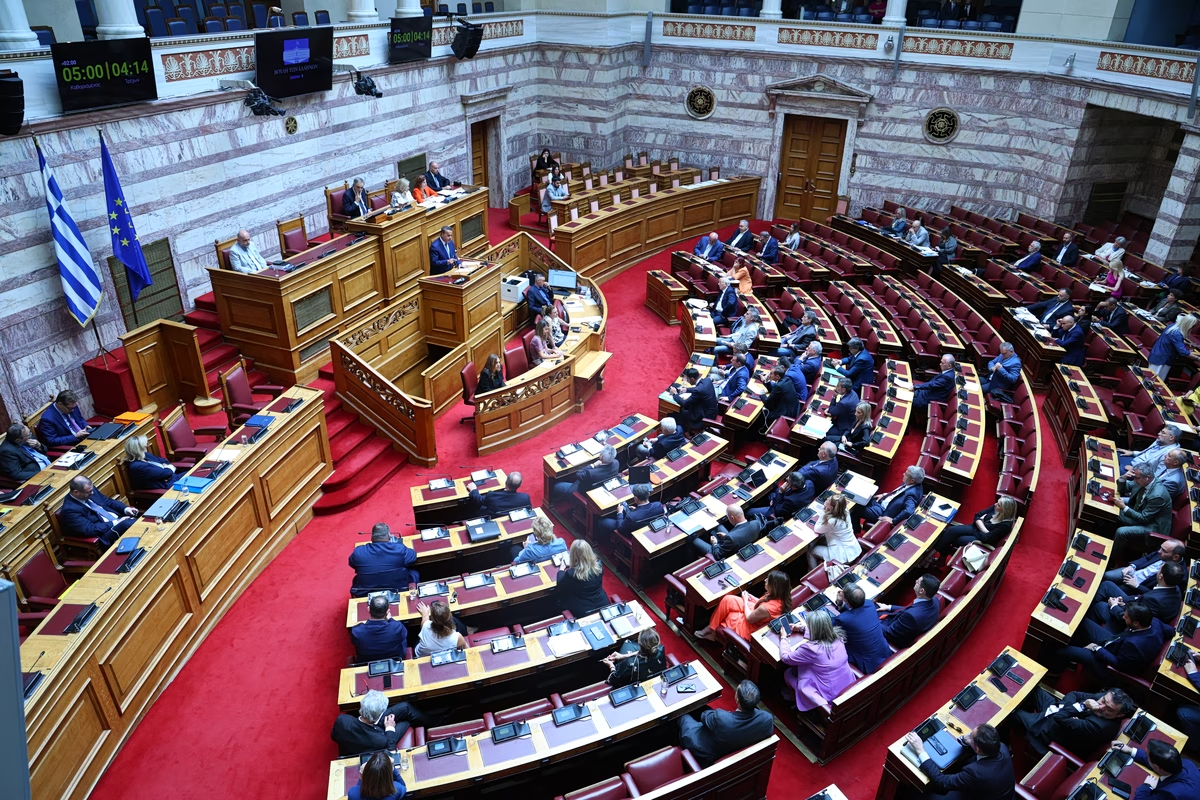
Greece’s parliamentary Committee for Constitutional Revision held its first closed-door session on Friday, electing a cross-party leadership board as it formally launched one of the most consequential legislative processes in years. The ruling New Democracy party’s nominee, lawmaker Makis Voridis, was elected chair, with the remaining board positions distributed among the opposition. The proceedings offered early signals on two fronts: the inter-party dynamics that will shape the process, and the speed at which revisions to the country’s foundational legal text are likely to move forward.
The vote for chair, conducted by secret ballot, was not without friction. Voridis received 25 votes in favor, but 11 blank ballots and 2 spoiled ones were also recorded, pointing to a degree of dissent within the 38-member panel. The vice-chair position went to Evangelia Liakouli, a PASOK lawmaker, who secured 30 votes in favor with 8 blank ballots. Theophilos Xanthopoulos of SYRIZA was elected secretary with 32 votes in favor and 6 blank ballots. The distribution of board posts across the three parties reflects an established parliamentary convention in Greece of allocating committee leadership positions proportionally among the main parties.
With a strict two-month deadline to submit its final report, the committee has set an intensive pace. The next session is scheduled for Monday at 4 p.m., and the panel is expected to meet at least three times a week to work through each party’s proposals.
The political stakes were laid out by Voridis himself during a plenary session, where he described the constitutional revision as the defining issue of the next election campaign. His framing underscored the particular logic of Greece’s two-parliament revision process: the current parliament identifies which articles require change and sets the direction of those changes, while the parliament elected at the next general election carries out the actual amendments. Parties are not being asked to agree on final wording at this stage, but on which provisions need to change and why. The two month timeline is intended, according to the government, to allow for deep deliberation and the broadest possible consensus before the committee delivers its recommendations on which articles the next parliament will ultimately be called upon to revise.