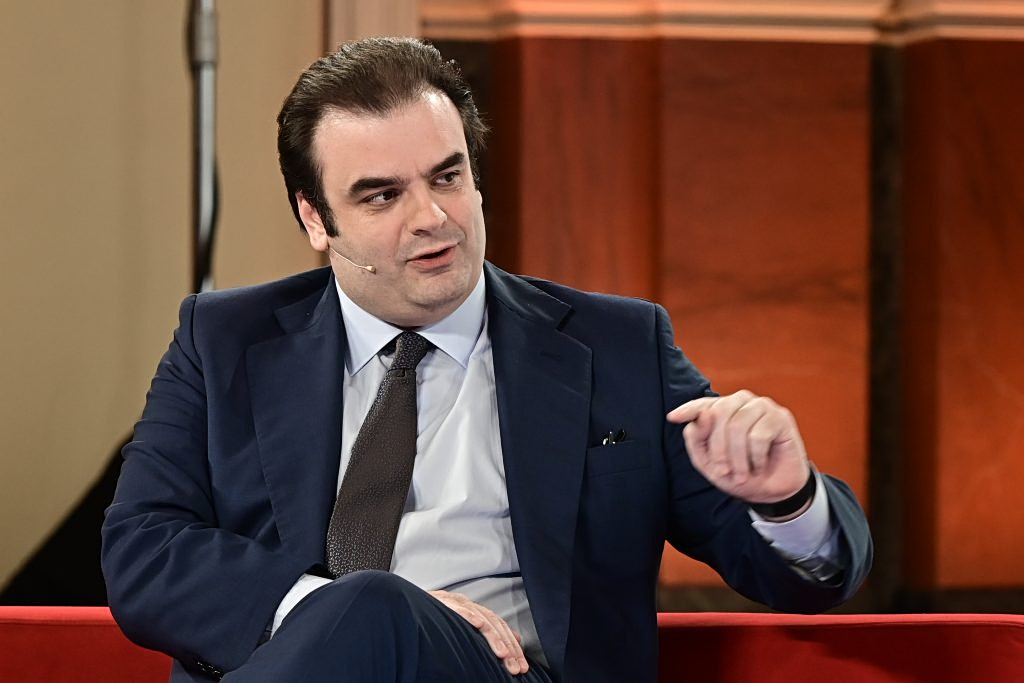
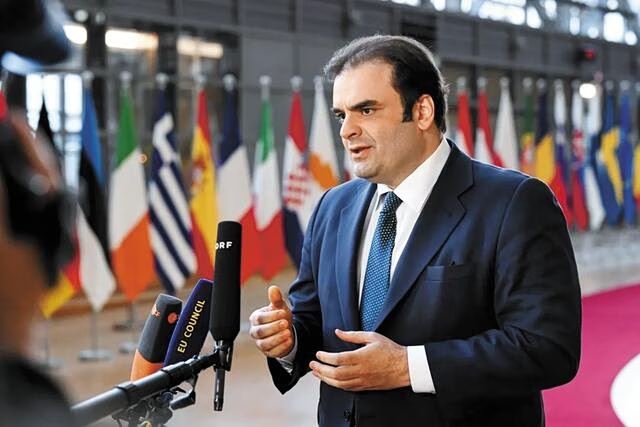
Greek Finance Minister and Eurogroup President Kyriakos Pierrakakis has called on the European Union to deepen integration by creating a unified radio spectrum framework, arguing that Europe must focus on generating new wealth rather than simply reallocating existing resources.
Writing in an opinion article for the Financial Times, Pierrakakis said the EU’s next long-term budget should prioritize unlocking the value of strategic assets instead of treating Europe’s financial resources as inherently limited.
“To create new wealth, Europe must unlock the potential of radio spectrum,” he wrote, adding that the EU cannot expect its telecommunications companies to compete globally while continuing to manage one of its most strategic sectors through 27 separate national licensing systems.
A European Spectrum Union
Pierrakakis argued that radio spectrum underpins artificial intelligence, connected factories, cloud computing, defense communications, industrial automation, and digital public services, yet remains fragmented across national regulatory frameworks.
He said telecommunications providers continue to operate under different auction schedules, license durations, renewal rules, and regulatory requirements, increasing uncertainty, raising financing costs, complicating long-term investment planning, and slowing network deployment.
According to Pierrakakis, the transition from 5G to 6G presents a rare opportunity to address these inefficiencies.
He proposed establishing a European Spectrum Union, under which member states would retain ownership of radio spectrum and existing licenses would remain valid until expiration. Future strategic spectrum, however, would be allocated through a common European framework featuring coordinated renewal schedules, harmonized licensing conditions, and shared technical and security standards.
Investment and Budget Benefits
Pierrakakis said a unified system would provide greater regulatory stability, improve long-term investment planning, reduce financing costs, accelerate the rollout of 6G networks, and strengthen Europe’s telecommunications ecosystem and industrial competitiveness.
He also argued that spectrum licensing could become a new source of EU revenue.
Under his proposal, member states could retain part of the proceeds from future spectrum licensing, while up to 75% would be directed to the EU budget as a new own resource. The remaining 25% would capitalize a dedicated financing mechanism at the European Investment Bank to support connectivity and technology projects.
Because the European Investment Bank can leverage its capital through market borrowing, he said, that funding could generate investments far exceeding its initial value, financing artificial intelligence infrastructure, quantum technologies, and next-generation networks.
Completing the Digital Single Market
Pierrakakis said the proposal is not simply about creating new EU revenue but about completing the single market for digital connectivity, strengthening investment, making European telecommunications markets more competitive, and giving Europe the technological scale needed to compete globally.
Acknowledging that radio spectrum remains a national responsibility, he argued that many of the EU’s greatest achievements began as national competencies before deeper integration proved to be the more effective solution.
Drawing a historical parallel, he wrote that coal and steel formed the foundation of Europe’s industrial era, while connectivity has become the essential infrastructure of today’s digital economy.
“The European budget should not be limited to deciding how Europe’s resources are distributed,” Pierrakakis concluded. “It should also determine how they are created.”