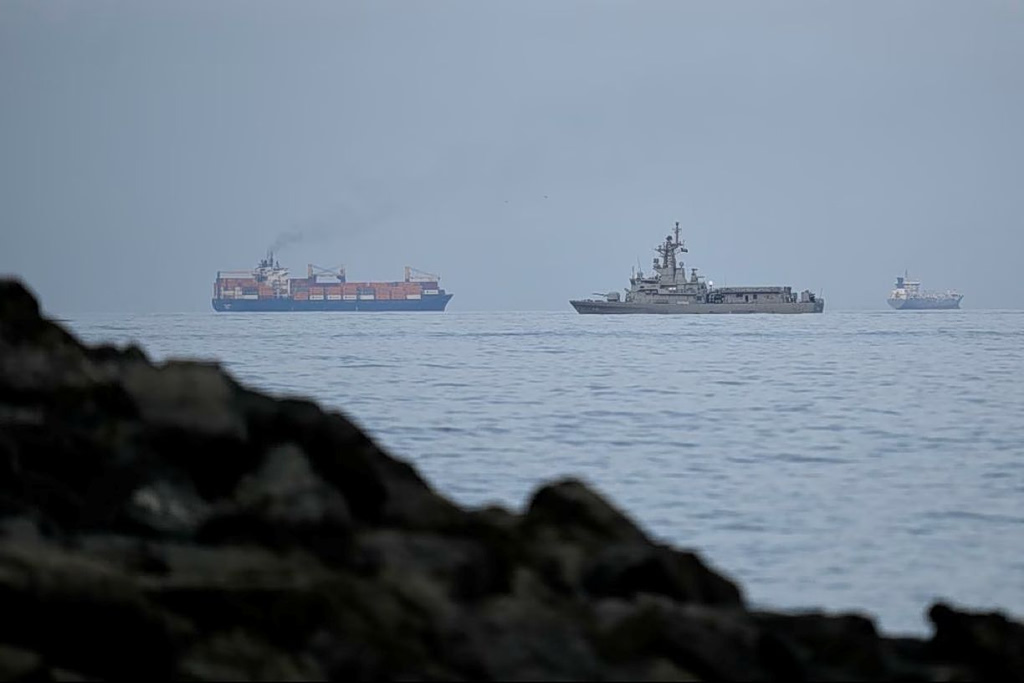
Greece sees an opening to counter Turkey’s attempts to impose faits accomplis in the Eastern Mediterranean through its 2019 maritime memorandum with Libya. The trigger: a binding offer submitted by U.S. energy giant Chevron.
On Wednesday, September 10, Chevron, in partnership with HELLENiQ ENERGY, submitted a bid for hydrocarbon exploration and exploitation rights in the offshore blocks “South of Peloponnese,” “A2,” “South of Crete I” and “South of Crete II.”
Chevron’s Message to Athens
Greek officials told in.gr that Chevron’s decision to pursue exploration rights south of Crete, up to the median line claimed by Greece for its Exclusive Economic Zone (EEZ), signals confidence in Athens’ exercise of sovereign rights. They stressed the company would only proceed after exhaustive checks for geopolitical risk.
If Chevron also pursues Libyan offshore blocks, which lie south of Greece’s claimed median line but generally outside its EEZ, officials say this could result in a de facto maritime delimitation—set not by treaties but by the operational choices of major investors.

Diplomatic Push and Gerapetritis’ Role
Officials highlighted the “huge diplomatic mobilization at all levels” that preceded Wednesday’s outcome.
Foreign Minister Giorgos Gerapetritis has repeatedly emphasized the issue following two visits to Libya, both Tripoli and Benghazi. Speaking on September 9 to Parapolitika, he said Libya’s decision to auction blocks “on the line Greece perceives as the median” was “to its credit,” as it did not overstep Greece’s interpretation.
He contrasted this with unresolved maritime issues with Egypt, Italy, and Malta. Gerapetritis underscored the geopolitical weight of a U.S. multinational investing in Greece’s claimed sovereign rights, suggesting that in practice, Chevron’s involvement would clarify “who holds the blocks and who does not.”
Road to Negotiations With Libya
Gerapetritis has set as a diplomatic goal the formal delimitation of maritime zones with Libya. A Greek technical committee has already been established, and according to reports, Tripoli is preparing to follow suit. Talks are expected to begin this year, with a roadmap possibly in place before year’s end.
Balancing Tripoli and Benghazi
Diplomats caution that negotiations will be complex, as the Turkish-Libyan memorandum remains on Tripoli’s agenda and Ankara is unlikely to concede ground easily. Greece must also balance ties with both Tripoli and Benghazi. Gerapetritis has stressed the importance of repairing relations with the Tripoli government while keeping open channels with Benghazi—an approach where, he argues, the European Union has so far failed.
Chevron’s bid marks a first step toward potentially unlocking Greece-Libya maritime delimitation. Further developments are anticipated during the Libyan foreign minister’s visit to Athens on Monday.
Source: In.gr