History shows a recurring theme in relations between Athens and Ankara: Turkish leaders—whether secular Kemalists or Erdogan’s Islamists—react with fury whenever Greece brings third parties into bilateral disputes. That means Washington, Brussels, or both.
What frustrates Ankara most is when Athens, often labeled in Turkey as “the spoiled child of the West,” takes its complaints international—denouncing Turkish revisionism to block Ankara’s regional ambitions.
Erdogan’s Anger over SAFE and the F-35
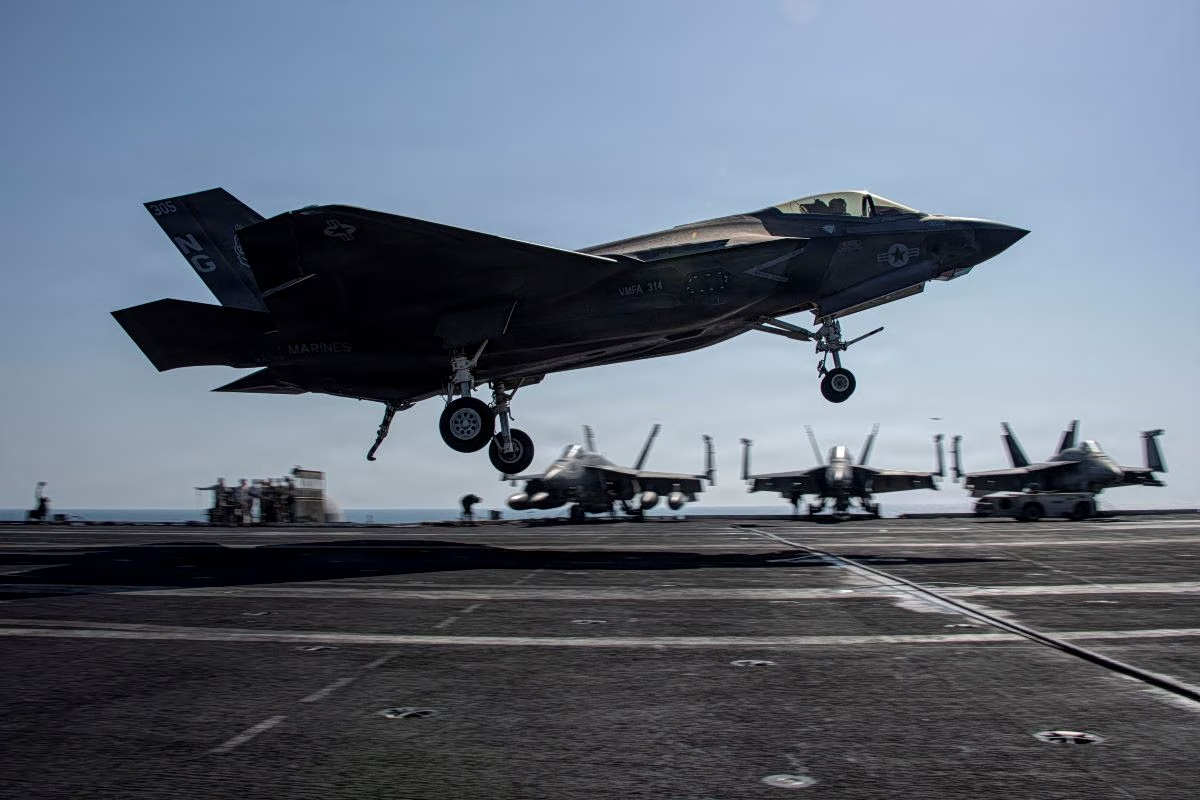
According to reliable reports reaching To Vima from across the Aegean, President Recep Tayyip Erdogan has grown increasingly irritated with Athens. Despite open communication channels and recent attempts at rapprochement, Ankara sees Greece working to block Turkey’s participation in Europe’s new SAFE (Strategic Autonomy for Europe) defense program, and its possible return to the U.S. F-35 fighter jet project.
Greek Prime Minister Kyriakos Mitsotakis has publicly pledged at least three times that he would demand Ankara lift its casus belli threat—Turkey’s standing declaration of war if Greece extends its territorial waters—before allowing access to EU defense funds.
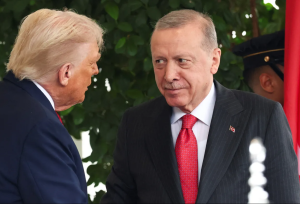
On the American front, Erdogan’s invitation to the White House by Donald Trump triggered reminders from Athens: U.S. sanctions against Turkey remain in force until Ankara disables its Russian S-400 missiles. At the same time, the Greek-American lobby continues pressing Congress to keep Turkey out of the F-35 program.
The Meeting That Collapsed Before It Began
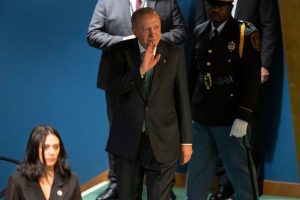
Against this backdrop, anticipation built for a face-to-face meeting between Mitsotakis and Erdogan in New York during the UN General Assembly.
But the atmosphere soured before the leaders even shook hands. Turkish media fumed over Greek positions on SAFE and the F-35, while tension spiked in the Aegean and Eastern Mediterranean, where U.S. energy giant Chevron had just entered Greek offshore blocks south of Crete—an area Ankara disputes.
In the end, the summit was postponed at Turkey’s request—a diplomatically clumsy move that Athens first downplayed, citing crowded schedules and a last-minute Gaza conference organized by Trump. Yet within hours, Turkish daily Milliyet reported Ankara was offended by Greece’s early leak of the meeting date. Soon after, a “senior Greek government source” confirmed the obvious: the meeting would not happen.
Cracks in the “Calm Waters”
Both sides had initially agreed to announce the meeting jointly, a standard practice in recent Greek–Turkish diplomacy. But the postponement created a visible rift. Even efforts by Greek Foreign Minister Giorgos Gerapetritis and his Turkish counterpart Hakan Fidan, whose back-channels had proven effective in the past, failed this time.
For Athens, the explanation of scheduling conflicts rang hollow. The impression was clear: Erdogan was signaling displeasure, using the stage of the UN General Assembly to play a power game.
Erdogan’s Confidence in the Trump Era
The Turkish president arrived in New York with growing self-assurance. With a Trump White House meeting in sight, Erdogan viewed this as a chance to reset U.S.–Turkey ties after the “stone years” of the Biden era. He also counted on Turkey’s pivotal geography—straddling the Eastern Mediterranean and the Middle East—at a moment of shifting Western priorities.
European capitals, too, increasingly treat Turkey as indispensable in discussions about defense autonomy and regional security. NATO Secretary-General Mark Rutte even praised Turkey’s defense industry, noting U.S. factories in Texas “could not function without close cooperation with Turkish companies.” Ankara wasted no time turning that into a slogan: “From Texas to Ankara.”
The Greek Dilemma
Mitsotakis used his UN speech to internationalize Turkey’s casus belli, insisting it has “no place between neighbors and friends” and urging diplomacy over weapons. Still, Athens faces a strategic dilemma: how far should it go in blocking Ankara’s path westward without reigniting full-blown crisis?
For now, Greece leans on the Chevron deal south of Crete as proof of U.S. backing for its maritime claims. It ties Turkey’s access to SAFE funds to dropping the war threat. And it works tirelessly through the Greek-American lobby to keep Ankara out of the F-35 program—even as Athens expects to receive its own first jet in 2028.
But the balance is precarious. As one seasoned Greek diplomat reminded: Erdogan never forgets. After meeting Mitsotakis in Istanbul in 2022, the Greek leader soon after delivered a landmark speech to the U.S. Congress, urging lawmakers never to approve new fighter jets for Turkey. For Erdogan, such wounds remain open.
What Comes Next
The failed summit in New York exposed just how fragile the so-called “calm waters” in Greek–Turkish relations really are. With Ankara regaining influence in Washington and Brussels, Athens may soon face a stark choice: either adapt to Turkey’s reemergence—or risk a return to the era of open confrontation.