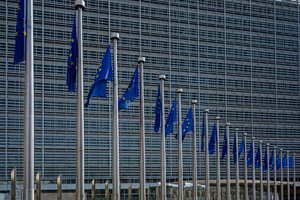
The European Council underlined the urgent need for Europe to become more sovereign, more responsible for its own defense, and better equipped to act autonomously and in a coordinated manner, at its meeting that took place in Brussels, on June 26. The summit’s final conclusions emphasize a 360-degree security approach to address present and future threats.
Greek Proposal Shapes Security Cooperation Framework
A key addition to the summit’s conclusions came at the initiative of Greece, which proposed the inclusion of specific language regarding the EU’s collaboration with so-called “like-minded countries.” The adopted text states that any such partners must “share the EU’s foreign and security policy objectives.”
Athens sees this clause as a way to block Turkey from EU defense projects, but it’s unclear if member states can act individually or only by consensus.
Ukraine: Continued Support and Sanctions Debate
On Ukraine, the European Council reaffirmed support for a just, lasting peace based on the UN Charter and international law, welcoming all peace efforts, including from the U.S. It strongly condemned Russia’s attacks on civilians and demanded an unconditional ceasefire. The EU is ready to increase pressure with new sanctions, however, the path to additional sanctions faces internal hurdles, most notably the opposition from Slovakia’s pro-Russian Prime Minister, Robert Fico, who reiterated his intent to maintain his country’s veto.
Condemnation of Damascus Church Attack and Position on Syria
The Council also addressed broader security concerns, condemning the recent terrorist attack on the Greek Orthodox Church of Prophet Elias in Damascus. It called for those responsible to be held accountable.
In its broader reflection on Syria, the European Council stressed respect for the country’s independence, sovereignty, and territorial integrity under international law. It welcomed the recent easing of sanctions as part of a “gradual and reversible” EU engagement strategy.
Finally, the Council reiterated its support for a peaceful and inclusive political transition in Syria, free from harmful foreign interference, and underscored the need to protect the rights of all Syrians, regardless of ethnic or religious background.