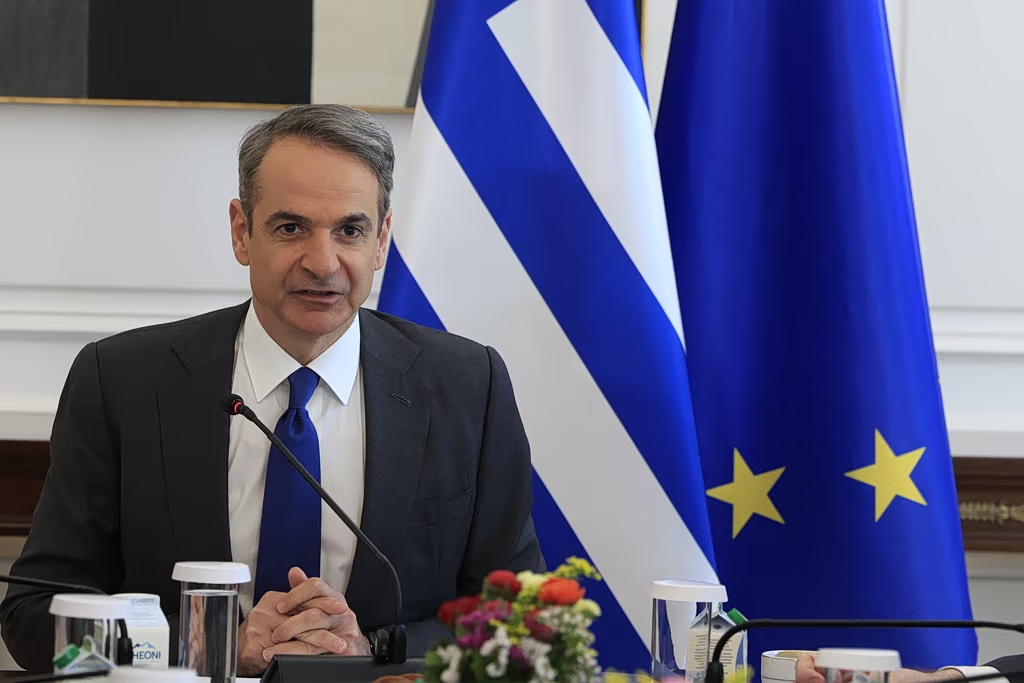
Greece is urging the European Union to take coordinated action on what it describes as growing “digital addiction” among young people, with Prime Minister Kyriakos Mitsotakis calling for a unified European framework to protect minors online.
In a letter addressed to European Commission President Ursula von der Leyen, Mitsotakis stressed that national initiatives alone are not enough to address the issue and that a common EU-wide approach is urgently needed.
The appeal comes shortly after Greece announced plans to restrict access to social media platforms for children under the age of 15, a measure set to take effect in 2027.
Call for a unified European approach
In his letter, Mitsotakis said the protection of minors from excessive online exposure is a “matter of intergenerational responsibility” requiring collective European action.
He proposed the creation of a fully harmonized EU framework for age verification across digital platforms, ensuring consistent enforcement in all member states.
The Greek leader also suggested making the system mandatory for platforms serving users under 15, as well as introducing a “digital age of adulthood” across the EU that would restrict access to social media below that threshold.
Stricter enforcement and platform accountability
Among the proposals outlined are regular age verification checks every six months and the establishment of a simplified EU-level enforcement mechanism. This would allow national authorities and EU institutions to jointly assess violations and accelerate penalties for non-compliant companies.
Mitsotakis also called for stronger coordination to reduce regulatory fragmentation across Europe, arguing that inconsistent rules weaken protections for minors.
Greece’s digital safety model
The letter highlights Greece’s planned national system, including a state-issued application designed to help parents manage and restrict their children’s access to digital platforms.
The system is intended to prevent underage users from accessing social media and to ensure that online content remains age-appropriate, while also integrating with emerging European age verification tools.
Broader EU debate on online safety
Mitsotakis referenced existing EU initiatives, including the European strategy for a better internet for children and the Digital Services Act, saying that while these frameworks are significant, further action is needed to address rising concerns over children’s online wellbeing.
He concluded that tackling digital exposure among minors is not only a policy challenge but also a broader ethical responsibility toward future generations.