Turkey has reopened longstanding disputes in the Aegean Sea, reviving demands on maritime boundaries and the demilitarization of Greek islands. The renewed escalation comes as Athens and Ankara attempt to set a date for a meeting between Greek Prime Minister Kyriakos Mitsotakis and Turkish President Recep Tayyip Erdoğan on the sidelines of the United Nations General Assembly.
Ankara Raises Maritime and Island Demands
The latest flare-up began when Turkey issued a NAVTEX for the oceanographic vessel Piri Reis, asserting rights to conduct surveys in areas Athens considers part of its continental shelf. Ankara claims its potential continental shelf extends to the middle of the Aegean, calculated from mainland coasts rather than including Greek islands—contradicting the United Nations Convention on the Law of the Sea.
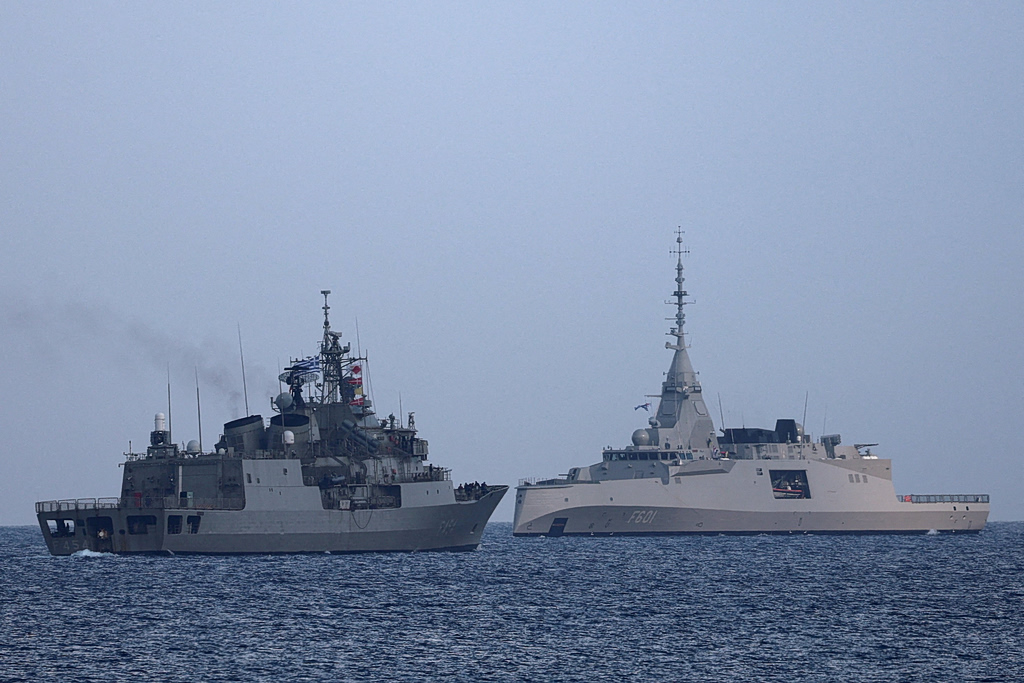
Greece responded with a counter-NAVTEX and carried out a surprise nationwide military readiness exercise, focusing on the eastern Aegean islands. Defense Minister Nikos Dendias said the drill was part of a regular cycle of exercises and unrelated to the Piri Reis.
However, Ankara escalated further, issuing another NAVTEX calling for the demilitarization of a broad chain of Greek islands, from Thasos and Lesvos to the Dodecanese and Kastellorizo. Turkey cited the London Conference, the 1923 Treaty of Lausanne, and the 1947 Paris Peace Treaty as grounds for its demands, insisting military activity should not occur in their waters.
Athens Rejects Demilitarization Claims
Athens maintains its position that “what is threatened cannot be demilitarized,” citing Turkey’s standing casus belli (declaration of war) over Greek territorial waters, its amphibious forces along the Anatolian coast, and the precedent of the 1974 Cyprus invasion. Greek officials stress the country’s right to self-defense under the United Nations Charter.
Government circles also dismissed criticism of the timing of the exercise, saying Greece “does not need permission from anyone” to train in its territory.
These disputes have further strained bilateral relations. Even if discussions were limited to maritime boundaries, the gap between Athens and Ankara remains wide.
Mitsotakis–Erdoğan Meeting Uncertain
Mitsotakis told Antenna TV that efforts are still underway to arrange a meeting with Erdoğan during the UN summit, noting, “We will convey our positions with confidence, knowing international law is on our side.” He also reaffirmed Greece’s demand for Turkey to lift the casus belli, linking it to Ankara’s role in Europe’s defense initiatives and the continuation of dialogue.
Parallel Talks with Libya
Separately, Greece and Libya resumed technical talks on delimiting their maritime zones, the first such meeting since 2010–11. The discussions followed a meeting between Greek Foreign Minister Giorgos Gerapetritis and Libya’s transitional foreign minister.
While largely exploratory, the talks took place under the shadow of the controversial Turkey-Libya maritime memorandum, which Tripoli has said it will not withdraw. Greece reiterated that the deal is “invalid and void.”
The two sides agreed to hold another round of talks in Tripoli soon, though no breakthrough is expected.