In May 2019, at an event at the Brookings Institution in Washington, the Speaker of the House of Commons, John Bercow, was asked a simple question: how concerned is the British Parliament about Turkish violations in Cyprus’ exclusive economic zone.
The Greek Foreign Ministry responded to recent Turkish remarks, stressing that the Muslim minority in Thrace is defined as religious under the Treaty of Lausanne and emphasizing equal citizenship rights for all members.
Athens responds firmly to remarks by Turkey’s foreign minister, stressing its independent decision-making and commitment to regional stability through international partnerships.
Turkey’s international presence has created a kind of “myth” around its capabilities
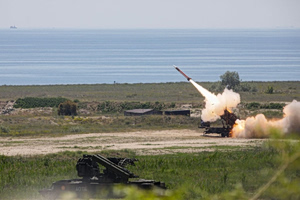
Ankara criticizes the deployment of an anti-aicraft and anti-missile system and F-16 deployments in the Aegean, interpreting international treaties to fit its narrative
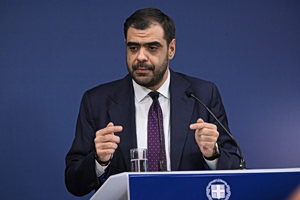
Government spokesperson Pavlos Marinakis said developments in the Turkish-controlled areas will not change Greece’s strategy to support Cyprus, stressing that actions will respect international law while avoiding escalation
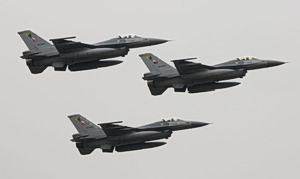
Greek authorities reported multiple airspace violations and flight rule breaches by Turkish military aircraft over the Aegean Sea. Greek fighter jets were scrambled to intercept the aircraft in accordance with international procedures
The main “thorn,” from the perspective of Turkish media, is, pending the SCC, the one and only dispute that Greece—according to the Prime Minister—recognizes with Turkey: the delimitation of the continental shelf and Exclusive Economic Zone (EEZ)
After Greek PM Mitsotakis reaffirmed Athens’ right to extend territorial waters to 12 nautical miles, Turkey warned the move violates its “rights and interests” and vowed to defend its claims in the Aegean Sea
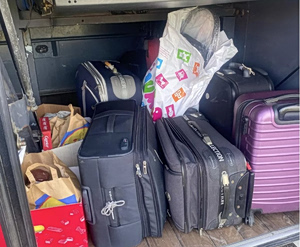
Organized bus trips from Turkey to Greece are on the rise, with travelers taking advantage of lower food prices in Alexandroupoli, including trips focused solely on buying ground beef
Greece’s difficult choices in the Washington–Brussels–Ankara triangle – The European orientation, the Trump factor, and the preservation of calm in the Aegean – Processes ahead of the convening of the Supreme Cooperation Council.
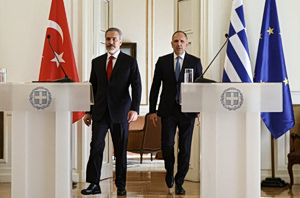
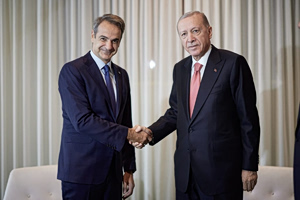
Greek and Turkish leaders will meet next month to discuss Aegean disputes, Syria, Iran, and Turkey’s new defense agreements with Pakistan and Saudi Arabia
Who and how is Athens investing to ensure an active role in the fluid geopolitical field and at the same time peace in the Aegean against an unpredictable Ankara?
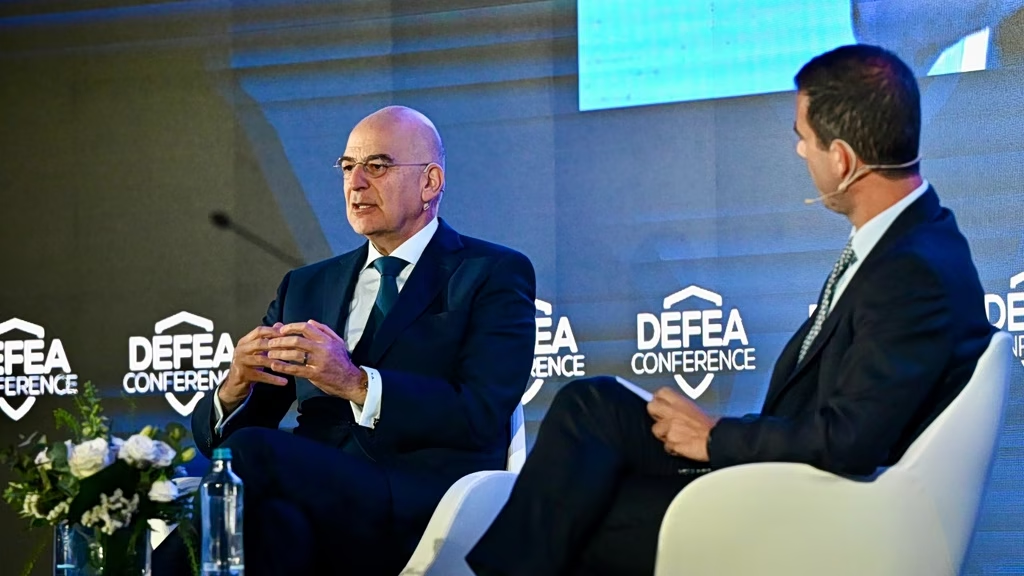
Greek Defense Minister Nikos Dendias emphasized that Greece does not threaten its neighbors but will firmly defend its sovereignty, responding to Turkish claims over military exercises and airspace tensions in the Aegean and Eastern Mediterranean
Tensions flare as Turkey resumes airspace violations over the Aegean, prompting Greek jets to engage in a mock dogfight between the islands of Lemnos and Lesbos
Speaking at Athens Policy Dialogues, former President Prokopios Pavlopoulos warned that “Turkey wants to swallow Cyprus” and urged Athens and the West to seize what he described as a historic moment to advance a just settlement
Seven Turkish trawlers were recorded operating within Greek waters near Agathonisi and Farmakonisi, reportedly destroying local fish habitats while escorted by Turkish Coast Guard vessels
Ankara accuses Athens of attempting to enforce an unrecognized exclusive economic zone in the Eastern Mediterranean through the EU’s maritime spatial planning platform
A confrontation unfolded near the island of Aghathonisi after Turkish fishing vessels refused repeated instructions to leave Greek territorial waters, prompting the Greek Coast Guard to fire warning shots
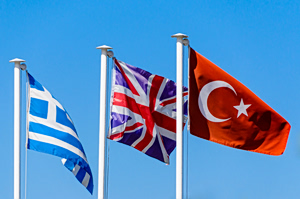
Turkey’s Eurofighter deal with Britain marks not only a major upgrade for its air force but also its renewed engagement with Europe’s security architecture, while Athens remains firm on blocking Ankara’s access to EU defence programs