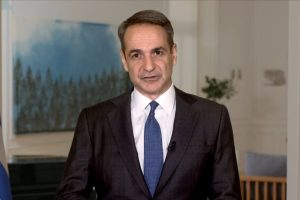
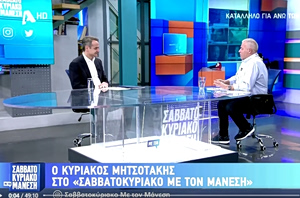
On the eve of a second meeting with farmers’ representatives, Greek Prime Minister Kyriakos Mitsotakis used his weekly Sunday message to spell out the government’s position and its red lines. Expectations for additional concessions, he indicated, should remain restrained.
Mitsotakis said that when he meets Monday with a second delegation that is coordinating the demonstrations and is representing farmers, livestock breeders, beekeepers and fishers, the scope of possible government action will not widen. The boundaries of state support, he said, are already known. “The framework of interventions the government can make,” he wrote, “has, in practice, already been announced.”
According to the prime minister, that framework is shaped by three factors: limited fiscal space that has largely been exhausted, the need to ensure social fairness, and adherence to European Union rules. All these conditions, for now, define the government’s negotiating room.
Separate talks planned for livestock sector
Mitsotakis acknowledged that Greece’s livestock sector faces particular challenges, following a sheep pox outbreak that has hit producers hard. He said a separate meeting with representatives of the sector will take place in the near future.
Rather than short-term fixes, the prime minister said the government is aiming for a broader overhaul of agricultural support. The goal, he wrote, is a system that is “fair, transparent and effective”. He stressed that the state should support “active producers without placing an unfair burden on the rest of society, while offering the primary sector a clearer path toward improved products and higher incomes”.
Defense milestone for the navy
In his weekly review, Mitsotakis also referred to the induction of the first Belharra-class frigate, Kimon, into the Hellenic Navy, describing it as an important step in strengthening Greece’s defense capabilities.
He reiterated that ensuring national security remains a central responsibility of any government, adding that the new frigate marks tangible progress in that direction as part of a broader modernization effort.
Employment data points to record levels
On the economy, the prime minister highlighted new employment figures, noting that Greece recorded the largest increase in employment among OECD countries in the third quarter of 2025 compared with the same period a year earlier.
For people aged 15 to 64, the employment rate reached 64.6%, an increase of 1.4 percentage points year over year. According to Mitsotakis, this represents the highest employment level ever recorded in the country.
Expansion of collective labor agreements
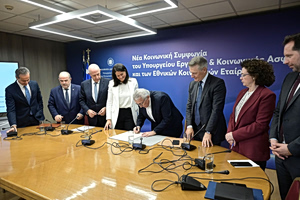
Mitsotakis also revisited the “Social Agreement” signed last November, which aims to revive and expand collective labor agreements across the economy.
Under that framework, a decision by the labor minister extends the collective agreement in the private security sector to the entire industry, covering about 50,000 workers. As a result, pay, benefits and working conditions now apply uniformly to all employees in the sector, regardless of union membership.
The prime minister said the broader aim of the Social Agreement is to make it easier for collective agreements to be signed and extended, establishing common standards for wages and working conditions while offering greater predictability for both workers and employers.