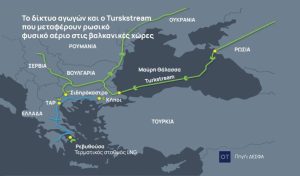
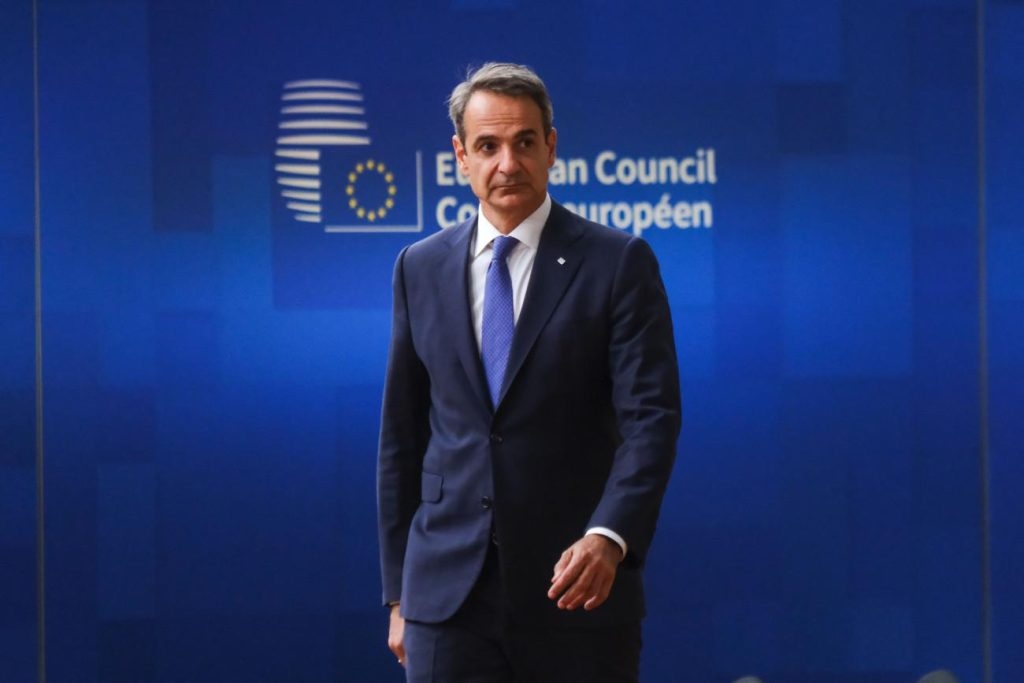
Greek Prime Minister Kyriakos Mitsotakis will participate in the European Council meeting opening today, Thursday, Oct. 23, in Brussels. His intervention is expected to focus on the creation of a new, unified European energy market aimed at protecting households in Southeastern Europe from rising electricity costs. Mitsotakis is also expected to urge faster development of cross-border energy networks and interconnections to strengthen the bloc’s energy resilience.
Alongside energy, the Greek premier will highlight defense priorities, reaffirming Greece’s support for a comprehensive “360-degree” approach to European security that also safeguards the Union’s external borders. He is expected to emphasize that threats emanate not only from the East but also from the South.
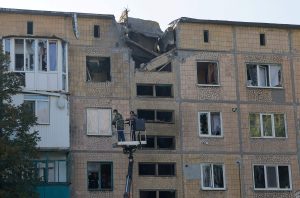
The Brussels summit will address four main topics: Ukraine, defense and security, competitiveness, and the green transition. Ukraine will top the agenda, with leaders reviewing the economic and military situation in the presence of President Volodymyr Zelensky.
The discussions follow the EU’s agreement on its 19th package of sanctions against Moscow, including a full ban on Russian liquefied natural gas imports and new restrictions on “ghost fleet” tankers used to evade Western sanctions.
A key issue is the European Commission’s plan to use proceeds from frozen Russian assets to fund a 140 billion euros loan to Ukraine for 2026–2027. Kyiv would repay it only if Russia covers war damages, leaving EU governments to share the financial risk—a proposal that some states, especially Belgium, have questioned.
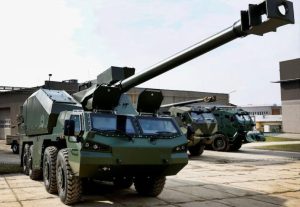
In defense, EU leaders are expected to encourage member states to enhance their military capabilities by 2030, building on the “Defence Readiness 2030” roadmap presented by the European Commission last week. The draft conclusions reaffirm that a stronger and more capable European Union in defense would complement NATO and contribute to global and transatlantic security.
The Council will also focus on competitiveness and the dual green and digital transition, discussing how to streamline bureaucracy, support industry, and meet the EU’s 2050 climate neutrality goals.
On the Middle East, leaders are expected to welcome the agreement to end hostilities in Gaza and call for its full and immediate implementation. During a working dinner with ECB President Christine Lagarde and Eurogroup head Pascal Donohoe, leaders will also review the EU’s macroeconomic outlook, the international role of the euro, and the prospects for a digital euro.