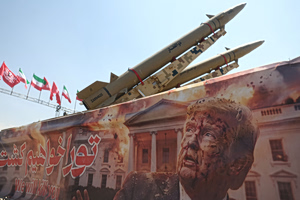
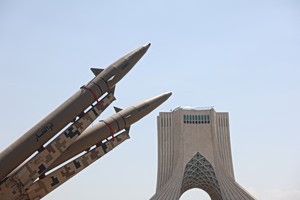
Athens has been in full mobilization mode at both the military and diplomatic level over the past few hours, after revelations about Iranian threats against European and American targets, first reported by the Financial Times, pushed the General Staff of National Defense to review its current operational posture.
Greece’s geographic position, close to the crisis region and within range of Iranian missile systems, combined with its key role in supporting allies, is turning these warnings into concrete scenarios of heightened readiness.
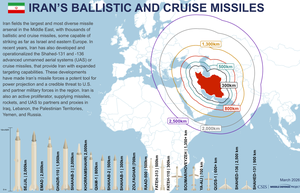
Credit: CSIS Missile Defense Project
Reinforcing Crete is at the center of planning.
According to sources at the Ministry of National Defense, officials are considering relocating the Patriot air defense battery currently stationed in Karpathos to Crete.
The goal would be to strengthen air and missile defense around the Souda area, creating a strong defensive shield over the region’s critical air and naval facilities.
The Souda base is one of the most important American and NATO installations in the Eastern Mediterranean, and protecting it from potential long-range strikes or drone attacks is a high priority for both Athens and Washington.
What happens to the Patriot battery?
If the Patriot relocation goes ahead, the plan calls for no gap in the defense of the southeastern Aegean, since other Air Force assets and units would take over covering Karpathos.
The Akrotiri base
At the same time, particular attention is being paid to the situation developing in Cyprus, which is at the center of Tehran’s new threats due to the presence of British bases at Akrotiri.
The Greek side is working to make clear, including through concrete actions, that Cyprus’s security is an integral part of Greece’s defense doctrine.
Defense Minister Nikos Dendias has repeatedly stressed the significance of Greece’s geographic proximity to Cyprus.
That stance was put into practice last spring, when Greece responded within hours by sending fighter jets and two frigates, while Britain took weeks to send a single destroyer.
The four Greek fighter jets
In that context, four Greek Air Force fighter jets remain in Cyprus, while the frigate “Nikiforos Fokas” continues operating in the Eastern Mediterranean.
The presence of Greek units serves as both a deterrent and a stabilizing factor.
Still, additional reinforcement of Cyprus is also being considered. According to senior military sources, if the security situation worsens, additional forces could be deployed, including special forces personnel, surveillance assets, and air defense systems.
At the same time, the option remains open to once again order the Navy’s most modern frigate, the “Kimon,” to head toward Cyprus.
Possible Greek assistance to Bulgaria
The concern isn’t limited to the Eastern Mediterranean, extending north as well. Bulgaria is closely watching the situation around Bezmer air base, and Athens considers Sofia a key strategic partner for Balkan security.
If Bulgaria submits a formal request for military assistance or support facilities, Greece’s response is expected to be immediate. That decision could be made at an emergency meeting of the Government Council for National Security (KYSEA), which remains on standby to convene under the prime minister.
Greek assistance could range from real-time intelligence and satellite data sharing to providing air defense assets or joining shared air policing patrols in Bulgarian airspace.
A risk close to home
These moves show that Athens isn’t treating the unfolding crisis as a distant geopolitical risk, but as a situation demanding immediate operational preparation. Greece is working to link Balkan security with protecting critical infrastructure in the Eastern Mediterranean.
Through these preventive measures, Athens is sending a clear message that it has both the operational means and the political will to protect its strategic infrastructure, support its allies, and act as a stabilizing force against the risk of the Middle East crisis spreading into European territory.