
 Μake us preferred on Google
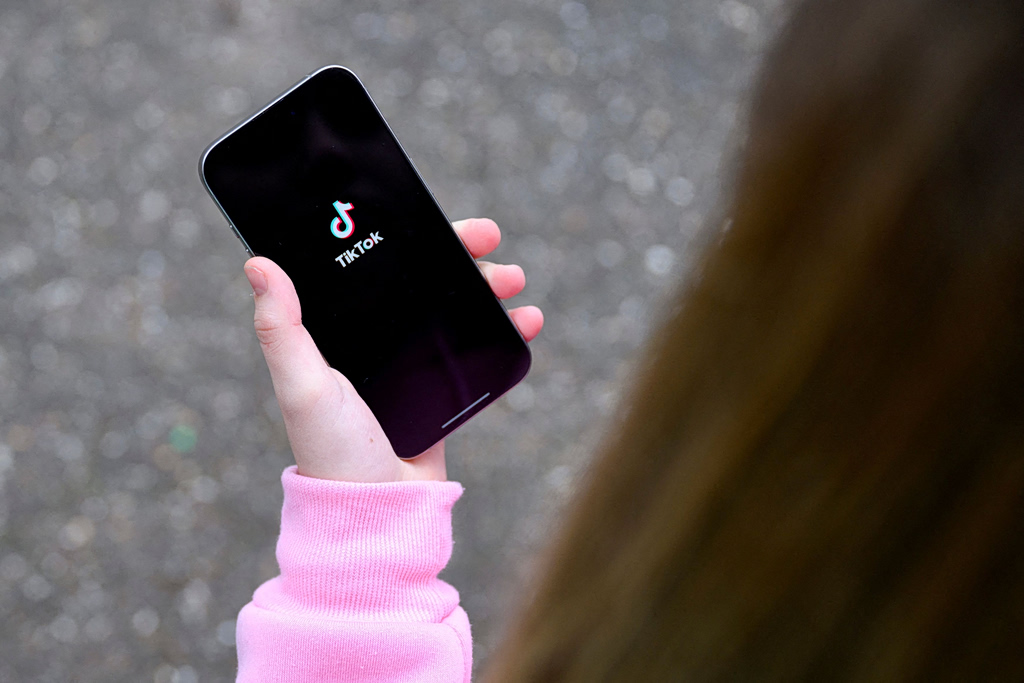
 Children under 15 will be barred from using social media in Greece starting next year under proposed legislation that would place the responsibility for enforcing the ban on technology companies rather than parents. The Greek government unveiled the new framework on Monday, outlining plans to introduce mandatory age verification for social media users and financial penalties for platforms that fail to comply. The bill is expected to go before Parliament for a vote on Oct. 22, with the restrictions scheduled to take effect from Jan. 1, 2027.
The legislation would cover social networking platforms such as Instagram, TikTok and Facebook, although it does not name any specific technology applications. It would also apply to children who already have accounts, with no exemption for those whose parents consent to their use.
The measures were presented at a joint news conference by Minister of State Akis Skertsos, Health Minister Adonis Georgiadis and Digital Governance and Artificial Intelligence Minister Dimitris Papastergiou.
At the heart of the proposal is a shift in responsibility for children’s online safety, which the government argues can no longer rest primarily with families. Skertsos underlined that parents should not be expected to protect children from the risks of social media, while the companies operating those services are not being held to account. Georgiadis was more explicit about the consequences for technology companies that fail to enforce the new rules. “Platforms now have a very strong incentive to act on age verification, because if they don’t, they will pay,” he said.
How the Social Media Ban Would Work
The proposed ban would apply to social networking services such as Instagram, TikTok, Facebook and LinkedIn. It would not prevent children from using the internet more broadly or from owning smartphones.
The restrictions would cover existing accounts as well as new ones. Children who already use social media would lose access if they fall below the age limit, and parents would not be able to override the ban by giving their consent.
The government has adopted an unusual approach to determining who is old enough to use social media. Rather than checking each child’s birthday, the legislation would treat everyone born in the same calendar year as having been born on Jan. 1. As a result, when the law is scheduled to take effect on Jan. 1, 2027, children born in 2013 or later would be barred from social media. Those born in 2012 would be allowed access, even if they had not yet celebrated their 15th birthday. Children born in 2013 would become eligible on Jan. 1, 2028.
Teenagers ages 15 to 17 would not be subject to the ban, although platforms would still be required to comply with existing European rules protecting minors.
How Will Platforms Check Children’s Ages?
For social media companies, the biggest change would be the requirement to verify users’ ages rather than simply take their word for it. Entering a date of birth, as many platforms currently allow, would no longer be enough. Companies would have to introduce more reliable checks to establish whether users meet the minimum age requirement.
One option would be to use Greece’s existing digital identification tools, including Kids Wallet, an application designed to help parents manage their children’s digital access, and Gov.gr Wallet, the government’s digital document application. Neither would be mandatory. Platforms could use other age verification systems, provided they meet European standards.
The government says the checks should not require users to hand over more personal information than necessary. In practice, that means a platform could receive confirmation that someone meets the age requirement without learning their name, exact date of birth or identity number. Nor would the legislation require every social media user to upload an identity document. The aim, according to the government, is to verify age without creating a system that allows companies to identify or track users unnecessarily.
What Happens if Companies Fail to Enforce the Ban?
The government intends to hold technology companies, rather than children or their parents, responsible for enforcing the restrictions. There would be no new fines for families whose children circumvent the ban. Instead, social media platforms that fail to comply could face financial penalties under the European Union’s existing Digital Services Act.
In Greece, the National Council for Radio and Television and the Hellenic Data Protection Authority would oversee compliance by companies based in the country, within their respective jurisdictions. For platforms headquartered elsewhere in the European Union, complaints could be filed with Greece’s telecommunications regulator, which would forward them to the relevant authorities in the country where the company is based. The European Commission would retain its oversight responsibilities for the largest online platforms.
Can the Ban Actually Be Enforced?
That remains one of the central questions surrounding the legislation. Children can already get around age restrictions by entering false birth dates, borrowing someone else’s account or using virtual private networks, known as VPNs, to disguise their location.
Digital Governance Minister Dimitris Papastergiou acknowledged those difficulties, pointing to Australia’s experience, where minors have found ways around social media restrictions. The Greek government is discussing additional safeguards with technology companies, including checks involving VPN use, language settings and mobile phone information.
But officials concede that no technical system can prevent every attempt to evade the rules. There is also the possibility that children shut out of mainstream social networks will simply move to smaller, less regulated services.
Why Is the Government Introducing the Ban?
The legislation reflects growing concern among Greek officials about excessive social media use, particularly its potential effects on children’s sleep, mental health and exposure to harmful content or unwanted contact online.
The government cited a 2026 EU Kids Online survey of more than 28,000 children across 19 European countries, in which fewer than half said they felt safe online. It also pointed to research conducted by the Greek Safer Internet Center in February 2025, which found that one in four middle and high school students surveyed reported excessive internet use.
However, the government itself acknowledges that not all social media use is harmful and that the effects vary depending on children’s ages, vulnerabilities and online activities. Nor does the research establish that prohibiting social media before age 15 will, by itself, improve children’s mental health. There are also competing considerations. Social networks can provide young people with opportunities to communicate, learn and express themselves, raising questions about how far governments should go in restricting access.
The effectiveness of the Greek measures will therefore be assessed over time, with officials examining changes in children’s online behavior, sleep and well-being, as well as the number of users incorrectly blocked by verification systems.
How Does the Ban Compare With EU Plans?
The Greek legislation is being introduced as the European Union considers a broader set of rules to protect children online. The proposed EU KIDS Act would go beyond social media, covering services such as online gaming, video-sharing platforms, app stores and certain artificial intelligence applications.
There is also an important difference in how the two proposals treat younger teenagers. Under the European proposal, children ages 13 and 14 could be allowed restricted social media accounts created and supervised by a parent or guardian. Parents would be able to impose daily time limits of no more than one hour and control who could contact their children. The Greek proposal makes no such exception. Children below the age threshold would be barred from the covered social networks, regardless of parental consent.
The European legislation has not yet been approved, and its final provisions could change. The Greek government says its own proposal has been discussed with the European Commission and is intended to operate within the EU’s existing regulatory framework.
For parents, the immediate timetable is clearer. If Parliament approves the bill on Oct. 22, the restrictions are expected to take effect on Jan. 1, giving technology companies less than three months to prepare for a new system of age checks.