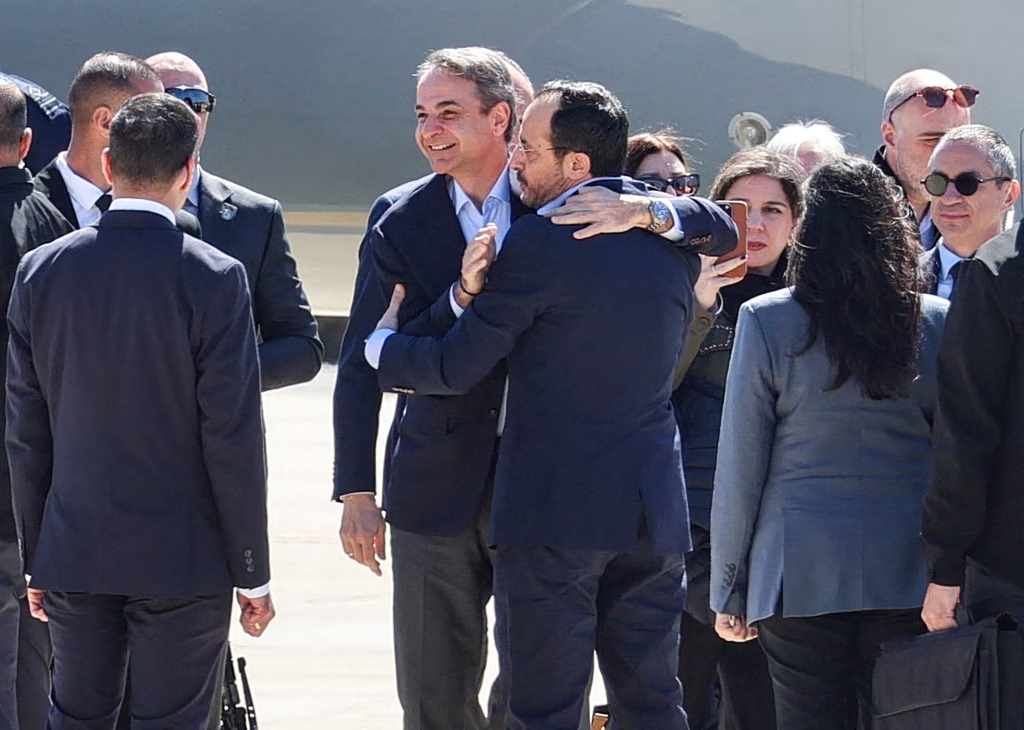
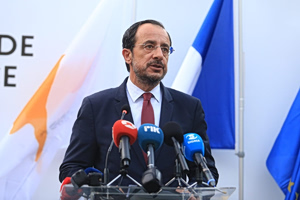
In a coordinated show of support for the Cyprus during a tense period for the region, Greek Prime Minister Kyriakos Mitsotakis is making an emergency trip to the island on Monday. There, he will meet with Cypriot President Nikos Christodoulides and French President Emmanuel Macron, who is scheduled to arrive in Cyprus at roughly the same time.
The meeting was arranged last Thursday during a phone conversation between Mitsotakis and Macron, when the two leaders discussed developments in the war involving Iran and the threats recently faced by Cyprus. On that day, Mitsotakis and Macron coordinated their actions with Christodoulides. After speaking with him by phone, they agreed that visiting the island would send a strong message of solidarity from European powers toward the Cypriot Republic.
The diplomatic coordination also included a conversation between the Greek prime minister and Abdel Fattah el-Sisi, President of Egypt.
The Leaders’ Agenda in Cyprus
Mitsotakis will depart within hours, accompanied by several senior advisers, including diplomatic adviser Ambassador Katerina Nasika—recently returned from the United States—international policy adviser Aristotelia Peloni, and press office director Giorgos Efthymiou.
His first stop will be the Presidential Palace, where he will meet President Christodoulides. The two leaders will then travel to Andreas Papandreou Air Base near Paphos, where a trilateral meeting with Macron will take place.
The message emerging from this meeting is intended to be unmistakable: Cyprus is not alone.
Greek officials stress that the diplomatic activity—combined with the deployment of defensive forces to the island—demonstrates deterrence and defensive readiness, and should not be interpreted as any form of involvement in the war against Iran.
A Signal of Greece’s Defense Capability
For Athens, the visit also carries domestic political significance.
According to government sources, Mitsotakis aims not only to provide tangible support to Cyprus but also to demonstrate the effectiveness of Greece’s recent defense investments—an area where the government has faced intense criticism in recent months.
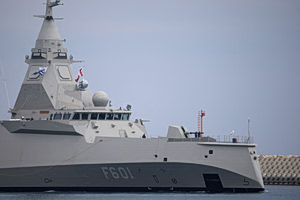
One example frequently cited is the rapid deployment of the French-built Belharra frigate HS Kimon (Belharra frigate), which was quickly dispatched on a mission to support operations around Cyprus.
“This is a concrete answer to those who attacked the prime minister fiercely,” his aides say, “over the strengthening of Greece’s defense capabilities.”
Greece’s Role in Europe
From the government’s perspective, the latest developments—and Mitsotakis’ initiatives alongside European leaders such as Macron—demonstrate that Greece can play a significant role during critical moments.
They argue that Athens is increasingly viewed within the European Union as a country with both diplomatic influence and military capabilities, capable of shaping developments rather than merely reacting to them.
Next Stop: Paris
Mitsotakis will meet Macron again tomorrow when he travels to Paris to attend an international conference on nuclear energy hosted by the French president.
The cooperation between the two leaders has two major dimensions.
The first concerns a broader European effort to position nuclear energy as a tool for strengthening energy security and achieving long-term decarbonization goals. Countries including Sweden, Czech Republic and Denmark will participate in the conference at Macron’s invitation.
The second dimension involves France’s proposal for a more integrated European defense framework—often described as a kind of “European NATO”—in which the United Kingdom could also play a role.
Under this concept, France’s so-called “nuclear umbrella” would be expanded into a broader model of strategic autonomy for Europe, combining nuclear deterrence with wider defense cooperation.
Domestic Political Implications
Close aides to the prime minister told To Vima that these developments could also influence Greece’s domestic political landscape.
With national elections expected in roughly a year, they believe such diplomatic initiatives highlight the importance of a strong government capable of making decisive choices and earning the trust of democratic allies.
In their view, Greece’s ability to take initiatives on the international stage demonstrates that the country can now act as a proactive player in regional and European affairs, rather than merely responding to crises.