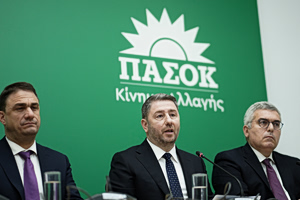
The Greek Parliament is expected to hold a special debate on surveillance and the rule of law before Easter, following a request by opposition party PASOK. The discussion comes amid continued pressure from Nikos Androulakis and the center-left party he leads for answers over the Predator spyware case. Despite its insistence that the case is being handled by the courts, the government appears uneasy, even as it says it will address all issues raised.
Government points to judicial process
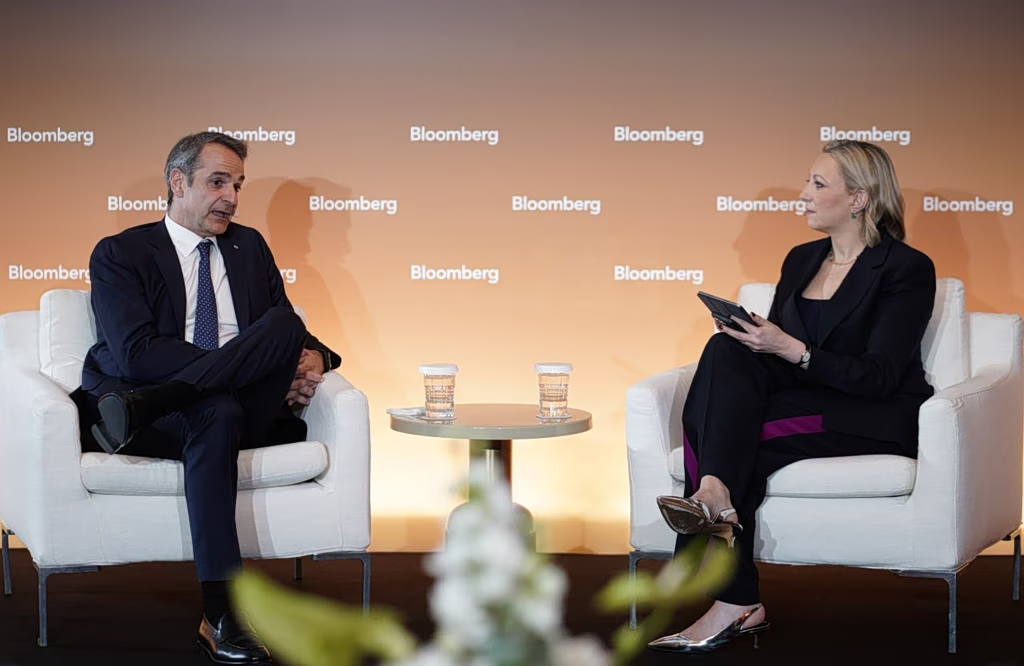
Government spokesperson Pavlos Marinakis reiterated during his daily briefing on Monday, March 16, that the case remains before the courts and should be judged there. He also pointed to a Supreme Court finding that no government official was involved in the spyware affair.
His comments follow statements by Tal Dilian, founder of Intellexa, who said his company’s Predator spyware was only sold to governments and law enforcement agencies.
According to government sources, a senior judicial decision found no evidence implicating state officials. At the same time, four private individuals, including Dilian, were sent to trial in a lower criminal court in Athens and were convicted. They have appealed the ruling, meaning the case will be reviewed again by the courts. Officials also stressed that the initial prosecutorial finding, which determines whether there is sufficient evidence to bring charges, did not support criminal proceedings against state actors.
Opposition challenges government narrative
PASOK, however, strongly disputes the government’s position, arguing that key questions remain unanswered.
In a statement, party spokesperson Kostas Tsoukalas accused Marinakis of failing to clearly answer whether the Greek state purchased and used Predator. He also rejected the claim that the case is effectively closed, noting that following a recent court decision, the case has been sent back for further investigation; including for potential espionage charges.
The opposition have raised concerns about national security, pointing to allegations that private individuals may have monitored ministers, military leaders and other senior officials, potentially accessing sensitive state information. PASOK further accused the government of attempting to downplay the issue, arguing that the case has broader implications for democratic accountability and the rule of law.
Uncertainty over new inquiry
The possibility of launching a new parliamentary inquiry remains open, with the government saying it will wait for PASOK to formally submit a proposal before taking a position.