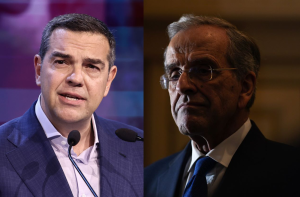
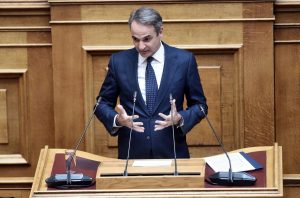
Alexis Tsipras, former Prime Minister of Greece, is scheduled to deliver the closing remarks tonight at a politically significant Economist conference in Thessaloniki, Greece, held just before the annual Thessaloniki International Fair (TIF), where Prime Minister Kyriakos Mitsotakis will outline his domestic policy agenda for the year ahead.
The timing highlights the weight of both appearances, as TIF traditionally serves as the stage for Greek leaders to set the political tone for the coming season. Tsipras’ participation has drawn heightened attention, with mounting speculation that he may use the platform to formally signal his return to frontline politics as New Democracy’s popularity wanes in polling.
Tsipras served as Prime Minister from 2015 to 2019 and was at the center of some of the most turbulent years of Greece’s recent history including the near-Grexit and Syrian refugee crisis. Rising to power as leader of SYRIZA, then a newly ascendant force on the left, he vowed to end austerity but ultimately signed a third bailout after a dramatic 2015 referendum.
His premiership oversaw both Greece’s exit from the bailouts and a contentious compromise with North Macedonia over its name, a deal that carried significant political cost. SYRIZA’s defeat in the 2019 elections, and the party’s crushing losses in 2023, led to Tsipras’s resignation as leader, leaving the party divided and in decline.
Even after stepping aside, Tsipras has kept a presence through his Tsipras Institute, which has hosted high-profile events such as a recent Athens conference with U.S. Senator Bernie Sanders. His selective interventions and social media posts, often sharply critical of the government, have fueled expectations that his political pause was temporary and that he is gearing up for a return.
For many within the fragmented Greek left, he remains the only figure capable of uniting forces against Mitsotakis’ New Democracy. Some of his supporters describe his anticipated return in almost “messianic” terms, while others see it more pragmatically as an attempt to reshape the progressive space with a new vehicle—possibly a new party.
According to wideranging media reports, Tsipras is expected to use tonight’s address to launch a broadside against the incumbent government’s economic record. He will argue that current policies exhibit “bias in favor of the wealthy,” deepening inequalities and pulling Greece further away from European benchmarks, both economically and institutionally. He is also set to present the pillars of a “National Recovery Plan,” which he envisions as a blueprint for Greece 2030. This includes reforms in governance and production, stronger support for labor, measures for resilience and energy security, and a specific focus on the country’s demographic crisis, which he is expected to call “the problem of problems.”
Reactions to Tsipras’ possible comeback are sharply divided. Polling in mid-2025 shows that about 20% of respondents would back a new formation led by Tsipras, making him a potential challenger to Mitsotakis, at a time when New Democracy’s popularity has dipped amid sevearl scandals and economic strain. Yet critics argue that Tsipras carries the baggage of his years in power and question whether he has learned from past mistakes. His detractors within the opposition say he risks fracturing the left further rather than consolidating it.
Tonight’s speech in Thessaloniki is therefore more than just a keynote at a policy forum. For Tsipras, it may be the moment to clarify his role in Greece’s future political map—whether as a returning leader with a renewed mandate or as a figure of the past whose time has passed.