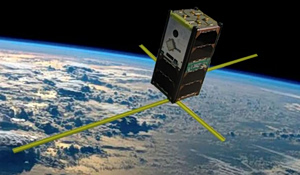
Greece has entered a new chapter in space-based environmental monitoring, as the first Greek thermal satellites of the National Microsatellite Program are now in orbit around Earth. The development marks a significant step forward for civil protection, environmental surveillance, and the country’s growing space technology capabilities.
The four specialized thermal satellites were successfully launched aboard a Falcon 9 rocket operated by SpaceX from Vandenberg Space Force Base in California. The mission is part of Greece’s broader national strategy to strengthen climate resilience and improve natural disaster management.
Developed by OroraTech, the system represents the country’s first dedicated satellite network for wildfire detection and monitoring. Equipped with advanced thermal sensors, the satellites will be capable of identifying fire outbreaks and tracking their progression in near real time—significantly enhancing prevention, preparedness, and rapid response by authorities.

“This is the first time Greece has acquired a fully integrated wildfire monitoring system,” said Digital Governance Minister Dimitris Papastergiou. He noted that satellite data will be integrated into the national Earth Observation Hub, creating a unified operational information platform for public administration.

Beyond fire protection, the satellites will deliver high-precision data on sea surface temperatures, coastal zones, lakes, and reservoirs, as well as land-use categories such as agricultural areas, forests, urban environments, and wetlands. These capabilities are expected to support evidence-based decision-making across sectors including water resource management, agriculture, environmental protection, and climate adaptation.
Also deployed during the same mission were two experimental microsatellites from the Hellenic Space Dawn program—the first Greek CubeSat pair designed for Earth observation. These satellites will be used for applications such as ship detection, coastal flood monitoring, and agricultural surveillance, while also testing advanced domestic space technologies, including innovative laser-based optical communications.

The launch represents another key milestone for the National Microsatellite Program, overseen by the Ministry of Digital Governance and Artificial Intelligence. The initiative is implemented through the General Secretariat of Telecommunications and Posts, with support from the Hellenic Space Center and the European Space Agency.