Athens’ public transport system is buckling under the strain of staff shortages and an aging fleet. Despite a surge of 35.4 million passengers last year, the city’s buses, trolleys, and trains operated nearly 229,000 fewer routes—a sharp illustration of a system stretched to its limits.
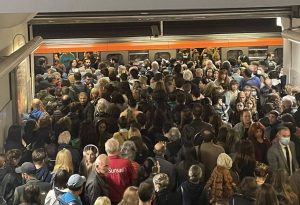
The situation was starkly visible earlier this week at the central Athens Syntagma station, where overcrowding triggered a safety protocol after passenger flow ground to a halt. Such scenes of packed platforms, long delays, and infrequent service have become routine for commuters, especially during rush hour.
According to the Athens Urban Transport Organization’s (OASA) annual report, the transport network continues to falter despite investments in new buses, vehicle maintenance, and outsourcing routes to private operators. A shortage of drivers has immobilized roughly 20% of the city’s bus fleet, while a lack of operational trains has kept the metro and electric railway from meeting demand.
Metro operations shrank to 51.07 million vehicle-kilometers in 2024, down from 53.54 million the previous year. Overcrowding and extended waiting times are now daily occurrences.
Road transport fared no better, logging 82.66 million vehicle-kilometers compared to 83.41 million in 2023. Yet ridership rose by more than 8% on buses and trolleys and 7.6% on the metro, totaling nearly half a billion passenger boardings.
Revenue, however, dropped 3.9% to 254.8 million euros, largely due to a fall in state reimbursements for discounted fares offered to students, seniors, people with disabilities, and security personnel.
Athens has poured 500 million euros into modernizing its fleet, but tangible improvements are not expected until 2026, when 950 new buses—240 of them electric—will be fully deployed. By the end of 2024, only 1,050 of the city’s 1,373 available buses were in daily service due to driver shortages.
While OASA plans a fully renewed fleet by 2027 and another 200 million euros in rail investments, for now, Athenians continue to face the daily grind of crowded trains, delayed departures, and a transport system running out of steam.