Nearly two years after the devastating floods caused by Storm Daniel, farmers in the Larissa region are taking to the streets once again, demanding overdue compensation and answers regarding a major agricultural funding controversy.
On Saturday, July 19, 2025, farmers from the municipalities of Tempi and Agia in the Larissa regional unit are expected to stage a new protest to press for state support and financial relief that, they claim, has been unreasonably delayed.

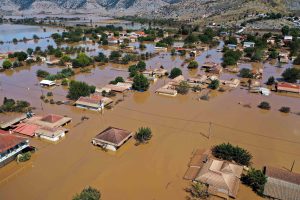
A flooded town by the Storm Daniel , in Astritsa village, Karditsa on September 8, 2023.

Tractors Head to National Highway
Farmers are planning to gather at 11 a.m. on the old Athens–Thessaloniki national road, just before the Pyrgetos tolls. Although it is not yet clear whether the demonstration will include a roadblock, the presence of tractors and other vehicles is expected to cause significant disruption in the area.
The mobilization reflects growing frustration among agricultural workers who say they have not received the full compensation owed to them following the catastrophic flooding caused by Storm Daniel. The disaster severely impacted farmlands across central Greece, including large parts of the Larissa region.
Ongoing Concerns Over OPEKEPE
In addition to the delayed compensation, farmers are also calling for government transparency and action regarding the ongoing controversy surrounding OPEKEPE, Greece’s Payment and Control Agency for Guidance and Guarantee Community Aid.
Farmer representatives argue that unresolved issues related to the management and distribution of agricultural subsidies have further deepened the crisis in the sector. They are urging the state to take immediate steps both to support affected farmers and to clarify the details of the alleged mismanagement within the agency.
Growing Discontent in the Agricultural Sector
Saturday’s protest is the latest in a series of actions by farmers in Larissa, who have repeatedly voiced their concerns about being left behind in the recovery process. With harvests disrupted and livelihoods at risk, they are demanding concrete solutions and accountability from national authorities.