The Greek government has announced a package of support measures for farmers, aimed at offsetting rising production costs driven by the ongoing energy crisis and global instability.
Speaking in parliament, Deputy Minister of Rural Development Christos Kellas outlined a series of interventions designed to provide immediate financial relief to the agricultural sector.
Fuel subsidy and fertilizer support
A key measure is the subsidy of diesel fuel, which will apply throughout April 2026. The support amounts to €0.16 per liter before tax—approximately €0.20 in final cost—covering fuel distributed in the domestic market during the month.
In addition, farmers will receive financial aid covering 15% of fertilizer purchase costs for the period between March 15 and May 31, 2026. The measure applies to both individual farmers and agricultural businesses.
Authorities emphasized that the fertilizer subsidy will be tax-free, non-transferable, and protected from deductions or offsets against debts. It will also not be counted toward income criteria for social benefits, ensuring that the full amount reaches beneficiaries.
Response to rising costs
According to Kellas, the measures are part of a broader policy framework aimed at supporting agricultural production, which is under increasing pressure from higher energy prices and raw material costs.
The government says these interventions are intended to help stabilize the sector and maintain production levels amid ongoing economic challenges.
Emergency plan for livestock disease
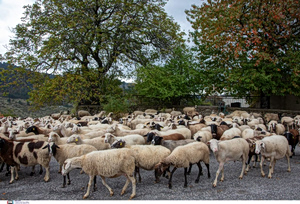
The minister also addressed the recent outbreak of foot-and-mouth disease on the island of Lesvos, describing it as the first occurrence in around two decades.
He confirmed that the disease, while highly contagious among livestock, does not pose a risk to human health.
Following the detection of the first case on March 15, authorities activated emergency response measures in line with European regulations. These include culling infected animals, disinfecting facilities, and imposing strict movement restrictions within a designated protection zone.
Extensive tracing and testing operations are ongoing, while veterinary services have been reinforced with additional personnel.
Compensation and further support
Farmers affected by the outbreak will receive compensation covering 100% of their losses and related costs, according to the government.
Additional support measures are also being considered for dairy producers and processing businesses impacted by restrictions on product distribution.