The Greek Coast Guard carried out a planned training exercise simulating attacks by UAVs and aerial vehicles on March 31.
The large-scale emergency exercise aimed at testing Greece’s response to maritime incidents was held with the participation of Minister of Maritime Affairs and Insular Policy Vasilis Kikilias, as authorities step up preparedness amid growing risks to shipping, energy transport and supply chains.
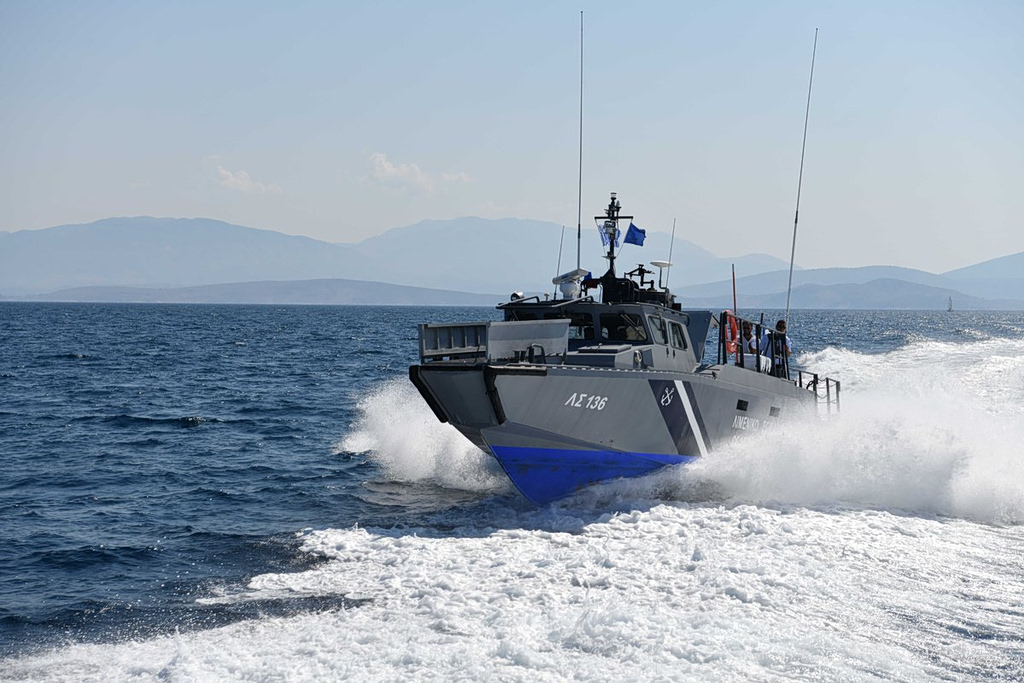
archive, credit: Ministry of Maritime Affairs
The drill scenario involves a tanker being struck by an unmanned aerial vehicle, triggering an oil spill and the immediate activation of marine pollution response mechanisms.
Assets from the Hellenic Coast Guard will take part, alongside private-sector vessels and anti-pollution equipment. The exercise will also test coordination procedures with regional and local authorities, port organizations and harbor funds.
Parallel drills will be conducted across all port authorities nationwide to strengthen operational readiness at a national level.
“In the context of prevention, in an environment of international instability and unpredictable developments, we are obliged to develop scenarios and train our personnel so we can intervene effectively to protect the marine environment, our coasts and seas,” Kikilias said in an interview.
He added that the exercise is designed to evaluate the response speed of the Greek coast guard, readiness and the activation of available resources, both from state services and private operators, under realistic emergency conditions.