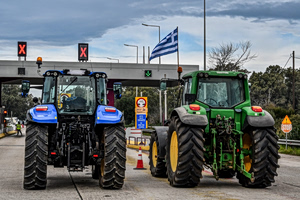
Greek farmers intensified their nationwide protests on Monday, temporarily closing the Tempi road tunnels to freight traffic in a symbolic escalation of their mobilizations. While trucks were barred, passenger vehicles continued to pass normally, in an effort to limit disruption for the public.
The closure, decided by protest groups gathered in central Greece, was expected to last around five hours. Farmers stressed that the move was symbolic and aimed at highlighting their demands, adding that travel would remain as smooth as possible during the Christmas holiday period.
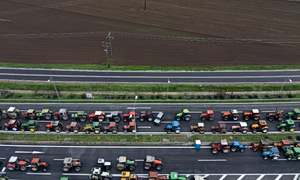
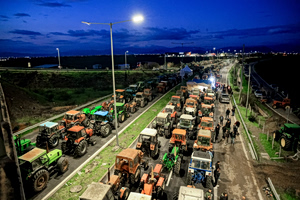
Protest leaders said further actions would be coordinated with other farmer blockades across the country, depending on developments surrounding their demands. “We are staying here. We are continuing the struggle,” farmers in western Thessaly said, as more tractors reinforced existing protest points along major highways.
In central Greece, farmers agreed to keep one lane open in each direction on a key motorway from Tuesday, citing the need to facilitate holiday travel. Daily assemblies continue to be held, with actions coordinated at a national level.
Border crossings blocked in northern Greece
Significant disruption was also reported at major border crossings in northern Greece. Farmers and livestock breeders maintained long-hour blockades at customs points along the borders with Bulgaria and North Macedonia, including Promachonas, Exohi, Evzoni and Niki.
At Exohi, truck traffic was blocked indefinitely from midday, while passenger cars, tourist buses and emergency vehicles were diverted via alternative routes. At Promachonas, farmers moved to block freight vehicles, with further decisions expected following internal meetings. Protesters said traffic conditions would be reassessed throughout the day to avoid excessive congestion.
At the Niki crossing, a six-hour blockade for trucks was announced for the evening, followed by a temporary halt to passenger vehicles, weather permitting. Meanwhile, at Evzoni, all vehicle traffic was set to be blocked for four hours, with only emergency cases allowed through.
Western Greece and mainland regions remain on alert
In western Greece, farmers remained firmly positioned at multiple protest sites across agricultural regions, holding assemblies to determine their next steps. Temporary road closures and symbolic actions have already taken place, while tractors continue to line major junctions and national roads.
In central mainland Greece, farmers signaled they would not retreat unless their demands are met. While some secondary roads were left open to reduce traffic problems, protest leaders warned that demonstrations would intensify after the holidays if no progress is made. In the city of Chalkida, a three-hour closure of the high bridge was announced, with traffic diverted to older routes.
Elsewhere, tractors remained stationed at several key locations, with local assemblies deciding on further actions. Farmers confirmed that during Christmas, one lane in each direction would generally remain open to help holiday travel, but stressed that the protests would continue uninterrupted.
Port blockades and symbolic actions in Epirus
In northwestern Greece, farmers, livestock breeders and beekeepers continued coordinated protests at multiple sites. In the port city of Igoumenitsa, a two-hour blockade for heavy trucks was scheduled for the evening, while a separate three-hour closure was planned near the Albanian border.
In a symbolic gesture, protesters distributed fruit to passing drivers at toll stations, describing the action as a thank-you to the public for its patience and support. Despite the festive atmosphere, farmers made clear they remain determined to continue their mobilizations until their demands are fully addressed.
Dispute over responsibility for closures
Tensions have emerged between farmers and police over who is responsible for traffic disruption. Protesters argue they are keeping lanes open and accuse authorities of enforcing broader restrictions. Police officials, however, say traffic arrangements are decided solely by law enforcement to ensure public safety, stressing that while protests are a democratic right, citizens also have the right to use the national road network.
Police have warned that detours around blocked highways can be less safe than main routes, adding to the inconvenience faced by travelers.