When a tourist recently asked why a local restaurant in a popular Aegean island town did not serve boiled greens, the owner replied bluntly: “Because washing them requires too much water, and it’s not allowed.” The exchange captured a growing concern across Greece’s islands: water scarcity.
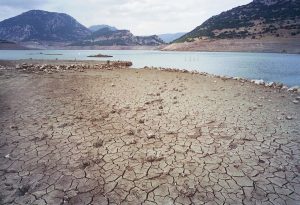
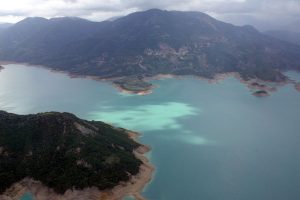
Drought, mismanagement of resources, and surging demand from millions of visitors have left many Greek destinations struggling to secure enough water. Hotels, swimming pools, golf courses, and restaurants require vast amounts of supply, placing heavy pressure on already fragile reserves.
To address this challenge, researchers from Democritus University of Thrace and Aristotle University of Thessaloniki, in partnership with five tech companies, have created a pioneering tool called WATERWISE. The system calculates how much water is available in a given area, how much is missing, and—crucially—how much tourists consume, a figure never before measured systematically.
Water use more than doubled
Professor Dimitrios Emmanouloudis, one of the project’s coordinators, explained that Greece currently consumes around 1.8 billion cubic meters of water annually—more than double the 800 million cubic meters used in 2000. “Today we don’t know how much water is missing or how much we’ll lack in five or ten years,” he said. “WATERWISE can tell us.”
By recording rainfall, snow, evaporation, and human use—along with tourist arrivals—the platform builds a precise picture of both current and future water balances. Using artificial intelligence and big-data analysis, it models different drought scenarios and their impact on local supply.
Tourism is a critical factor: with visitor numbers far exceeding Greece’s permanent population each year, tourist consumption has become one of the most significant pressures on water resources.
Testing on five islands
The system is being piloted in Santorini, Corfu, Chios, Thasos, and Fournoi, as well as in one mainland area, Drama. Questionnaires distributed in hotels and restaurants feed data into the platform, helping scientists and local authorities plan future projects such as rainwater reservoirs, dams, storage tanks, or desalination units.
Emmanouloudis emphasized that this approach makes it possible to “design the type, number, and size of works that can guarantee sufficient water for the future.”
Shielding against floods
In parallel, the same research team has developed HYDRA-GML, a digital system that identifies river basins most vulnerable to floods, landslides, and erosion. By combining rainfall scenarios with historic disaster records, the platform generates risk maps that can guide civil protection authorities in planning evacuations and safeguarding lives.
Both WATERWISE and HYDRA-GML were presented publicly for the first time at the upcoming Thessaloniki International Fair in September.