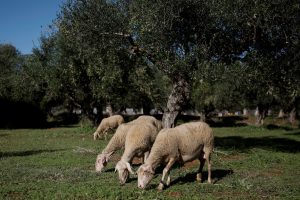
Losses exceeding €350 million place Greek livestock farming face-to-face with one of the greatest crises of recent decades. More than 300,000 animals have been lost to sheep pox alone, according to Dimitris Moschos, president of the Hellenic Livestock Association (SEK), with the total number of losses from animal diseases reaching 410,000.
“Livestock farming is no longer at a critical crossroads; it has already begun to collapse,” he stressed, warning that the future of the sector hangs by a thread.
New outbreaks across the country
Thrace and Thessaly remain the hardest hit, but the situation is also worsening in Western Greece, with Achaia at serious risk. Cases are now appearing in Serres, Katerini, Imathia and Thessaloniki, while scattered outbreaks are being detected in many areas.
The vaccination that divides
Farmers are calling for universal vaccination, considering it the only solution. The Ministry of Rural Development, however, is opposed, arguing that vaccination would endanger feta exports, valued at over €1 billion annually.
SEK, on the other hand, points out that the EU has already clarified that pasteurized products can circulate freely, with no threat to public health.
Intervention from Brussels
The European Commission warned the Greek government that current measures are ineffective, urging it to seriously consider vaccination. Already 500,000 doses have been allocated, with a tender for an additional 4 million to cover member states’ needs.
Fear for feta and experts’ objections
The Ministry of Rural Development insists that vaccination would jeopardize Greece’s status as a “disease-free country,” with consequences that could last 8–10 years. It also stresses that no vaccine has been approved by EFSA, and that the necessary DIVA test (differentiating infected from vaccinated animals) is lacking.
Scientists warn that vaccination could lead to the slaughter of even healthy animals, since there would be no way to distinguish between infection and vaccination.
The future of a sector at breaking point
Since August 2024, more than 275,000 sheep and goats have been culled, with financial losses mounting and farmers in despair.
“Immediate political decisions and courage are needed, otherwise Greek livestock farming risks never recovering,” said the president of SEK.