The “shadow” that appeared on a routine X-ray due to a viral infection led him to the emergency ward at Athens Erythros Stavros (Red Cross) Hospital. The doctor on duty that night showed particular interest in the case before him. Despite his concern for the young patient, the gaze of the scientist–researcher lingered on what was, in fact, the first case of hypertrophic cardiomyopathy he had ever seen. After all, the rare disease appears in roughly one out of every 2,000 Greeks and has been clearly linked to sudden death syndromes in many young people, especially athletes.
For then-20-year-old Theodoros Kotsarinis, the diagnosis he heard did not alarm him, despite its seriousness. However, when—some years later—he miraculously survived a series of cardiac arrests, he realized he had to take it seriously and monitor its progression closely. It was then that he was discovered by a team of doctors, who determined that his disease was hereditary. And it even had a name: Naxos disease.
Tracing the “nests”
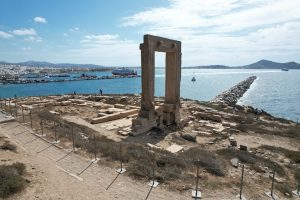
The frequency of the disease, particularly on the island of Naxos, was identified about forty years ago by doctors Nikos Protonotarios and his wife Antigoni-Eleni Tsatsopoulou, laying the groundwork for the effort to uncover other “nests” of hereditary diseases in Greece.
To date, researchers of this phenomenon in Greece have already identified most of the “clusters” of hereditary diseases with cardiovascular involvement, allowing for targeted medical intervention. What conditions affect specific groups of Greeks who were born with genetic predispositions? Naxos disease occurs more frequently on the islands of Naxos, Milos, and Mykonos. On the Fournoi islands near Ikaria, there is Cohen syndrome (a genetic disorder affecting multiple body systems), while on Ikaria, there is Friedreich’s ataxia (a disease that causes difficulty walking, loss of coordination in the arms and legs, and speech impairment). On Kalymnos, Wilson’s disease (characterized by copper buildup that affects the nervous system and liver) is found, while on Crete, cases include propionic acidemia (a genetic metabolic disorder that damages organs), hypertrophic cardiomyopathy, and ATTR amyloidosis (a disease that causes heart failure).
In Chios, there is Kennedy disease (a neurodegenerative condition causing progressive muscle weakness and atrophy), while in Mani, myotonic dystrophy type 1 (a neuromuscular disease) appears, as well as Huntington’s disease (a neurodegenerative genetic disorder affecting muscle coordination) in southwestern Peloponnese. All of these diseases are marked by complications that affect the heart and can lead to death.
Cases of similar conditions are not few, and the story of Theodoros Kotsarinis is one of hundreds recorded in our country—many, unfortunately, with tragic outcomes for young people. Sudden death due to undiagnosed hereditary cardiac disease, though considered rare, takes the lives of about 200 of our fellow citizens, mainly young people, in Greece each year.
Mapping genetic paths
The genetic lineage of Greeks and the specific diseases that appear in particular regions have led many scientists to search for connections and common patterns. Professor of Cardiology Panagiotis Vardas began in 2018 the creation of a network of facilities capable of detecting and preventing fatal incidents that threaten Greeks, tracing links between these conditions and their regions of origin. The deeper goal of this research, of course, is that such diseases will eventually disappear. Overall, it is estimated that more than 50,000 people in Greece today live with a hereditary disease that could pose a serious risk to their lives.
Mass preventive screenings
Most rare diseases “strike” the heart and are generally hereditary. In cases related to sudden death syndromes, mass preventive screenings are now carried out across the country, focusing mainly on young people who engage in regular sports activity.
As Professor Vardas tells To Vima, “Research into rare diseases began in collaboration with cardiologist Aris Anastasakis, who specialized in sudden death among young people under 35 years old. This led to the creation of the Precision Medicine Network, now overseen by the Ministry of Health, with the Onassis Cardiac Surgery Center and Hippocration Hospital as its model centers. Today, the network—comprising 8 cardiology clinics and 4 genetic testing centers—not only deals with cases of sudden death but also extends to the genetic screening of entire families, identifying population groups with specific genetic traits. Through this process, tens of thousands of individuals have already been examined, and despite the challenges, the network has achieved remarkable results.”
For his part, Theodoros Kotsarinis explains to To Vima that for years he lived with the disease without knowing it. When he eventually developed symptoms and was diagnosed, tests confirmed its hereditary nature—both his father and brother carried the same gene. However, the disease had not manifested in them as it had in him. As he says, his relationship with his doctor, one of the two “architects” of the Network, Mr. Anastasakis, has become almost familial: “My doctor and I practically grew up together. I consider myself lucky to this day. In fact, 22 years ago, I underwent a heart transplant after the disease led to heart failure. Mr. Anastasakis and his team have always been by my side.”
Dr. Aris Anastasakis, head of the Inherited Cardiovascular Disease Unit at the Onassis Hospital and coordinator of the Network, explains that “Naxos disease is a form of arrhythmogenic cardiomyopathy that occurs in about 1 in 5,000 people in the general population—but on Naxos, the frequency rises to about 1 in 800 residents. And there are other similar diseases we are researching and uncovering.”
According to Dr. Anastasakis, genetic testing so far has identified family members who were unaware they carried the disease, as well as carriers of pathological genes who may develop the condition later and pass it to the next generation. “We are therefore able to address the problem early and prevent the disease from being transmitted further. From our clinical and genetic screening of families affected by hereditary disease or sudden cardiac death in youth, we have found that in 49% of families, there were members who did not know they had a subclinical condition or a simple genetic predisposition.”
So far, about 6,000 families have been screened, with plans to expand testing further. Genetic screening, in fact, is a long-standing demand of scientists as a preventive measure for public health. “Our research has paved the way for understanding a vast number of pathological genetic mutations in Greece,” adds Professor Vardas, “and artificial intelligence—through deep learning algorithms—will elevate all research and clinical work focused on the genetic significance of these diseases.”