At the Embassy of Greece in Belgium, a special event marking World Mental Health Day on Oct. 10 brought together experts and community members to address two pressing issues: the struggles faced by people living with memory loss and their families, and the growing phenomenon of youth delinquency.
The discussion explored the causes behind these challenges and potential paths toward prevention and support.
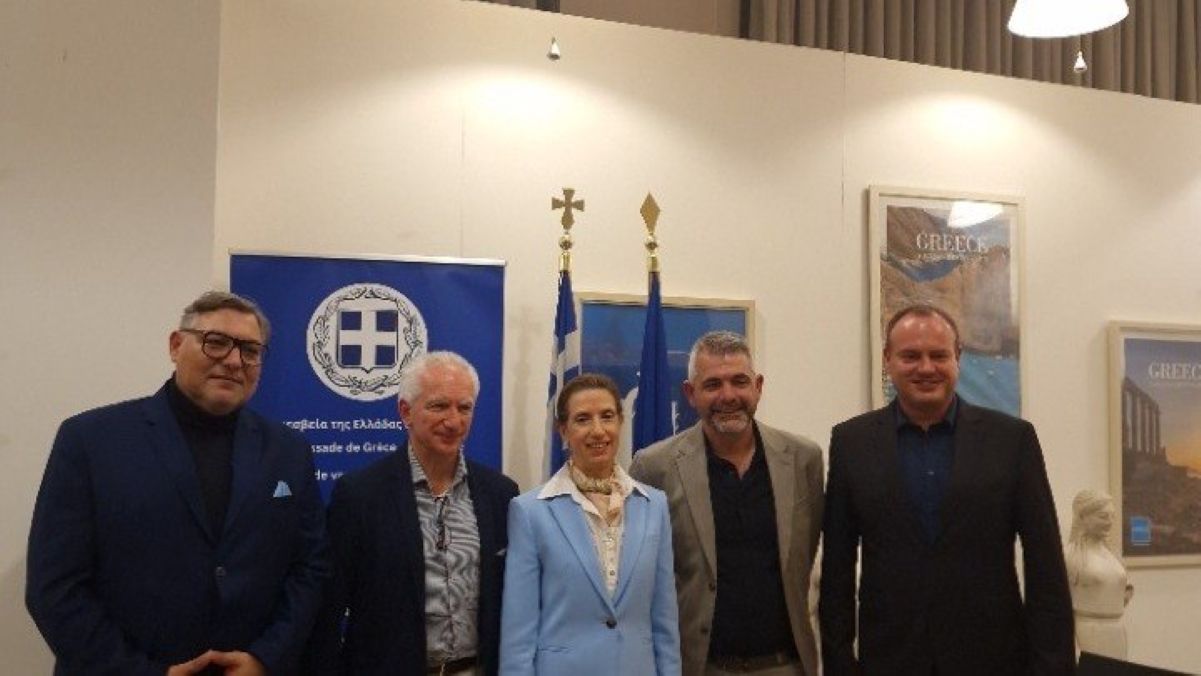
Held under the auspices of Ambassador Sofia Grammata, the event was organized in collaboration with the Hellenic Community of Brussels, Connect Brussels, and the nonprofit organization IASIS.
The ambassador emphasized the importance of hosting a scientific discussion centered on two vulnerable population groups — the elderly and young people — while acknowledging the contributions of the Greek scientific community in Belgium, represented by ULB Professor of Neurology Nicolas Mavroudakis.
Mavroudakis presented the latest scientific findings on neurodegenerative diseases, focusing on Alzheimer’s disease, which currently affects over 55 million people worldwide. His presentation, titled “Dementias: Pathological Mechanisms, Impact on Mental Health, Treatments,” outlined the cognitive and functional decline associated with the condition, often leading to significant loss of independence within a decade of diagnosis.
He highlighted the need for early detection, interdisciplinary approaches to treatment, and stronger research and support structures for patients and their caregivers.
The discussion also turned to youth behavior and the influence of the digital world. Psychologist and IASIS researcher Dr. Stefanos Alevizos presented findings showing that nearly all Europeans aged 16–29 use the internet daily, with 88% active on social media.
He noted that while digital connectivity offers opportunities, it also exposes young people to risks such as misinformation, isolation, and cyberbullying. Offline, shifting community structures have given rise to new forms of delinquency, often driven by the desire for visibility and acceptance.
The event concluded with a shared understanding that open dialogue and community engagement are vital to fostering mental well-being and social resilience across generations.