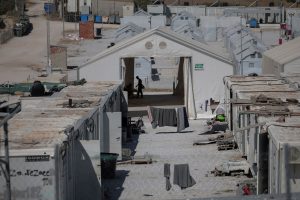
The number of migrants housed at the Aghia facilities in Chania, Crete, has reached 1,139, Deputy Mayor Eleni Zervoudaki confirmed on Sunday. Speaking to the Athens-Macedonian News Agency (AMNA), she described the situation as “unprecedented” and warned that without immediate intervention, local authorities may lose control.
An additional 578 migrants arrived on Sunday afternoon, swelling the number of migrants hosted at the facility to dangerously high numbers.
“It is a very difficult situation, and we are now at the mercy of the circumstances,” Zervoudaki said. She added that although the Hellenic Police (ELAS) have official responsibility for migrant transfers, it is coast guard personnel who continue to provide services, despite being understaffed and operating beyond their mandate.
The deputy mayor also voiced concerns about the long-term accommodation of so many people in a closed space, noting that public health problems could emerge. “Authorities must provide solutions immediately, so we can all address this emergency of migration flows together,” she said.
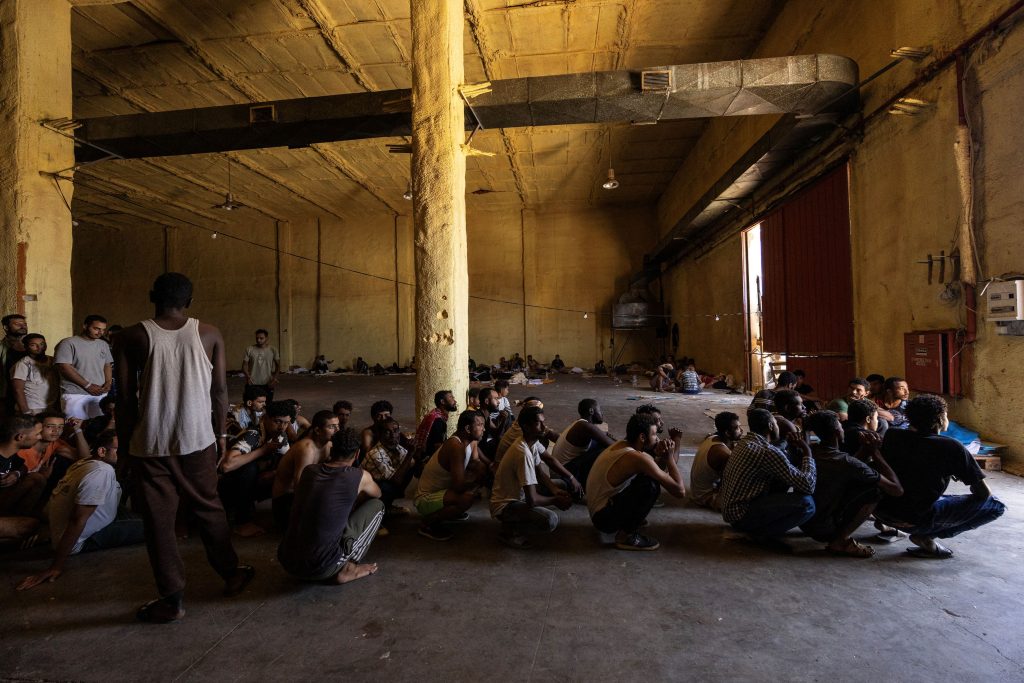
Migrants, who recently arrived in Crete, sit at their temporary shelter staged in a former facilities of citrus producers at the town of Rethymno, on the island of Crete, July 12, 2025. REUTERS/Nicolas Economou
According to FRONTEX, irregular border crossings into the EU fell by 18% the first seven months of 2025, but pressure is growing on Crete and Gavdos, where the Greek government and aid agencies report that more than 7,300 migrants have arrived in the first seven months of 2025, mainly via sea from North Africa.
The Greek government suspended asylum processing for migrants arriving from North Africa in July, a move that has left many new arrivals in limbo. As Al Jazeera reported, this policy shift has slowed transfers and extended stays in reception centers. Combined with new arrivals, bottlenecks in registration, medical screening, and transport have resulted in overcrowding and deteriorating conditions in Crete’s main shelters.
Seasonal surges play a role as well- calmer seas and shifting routes have turned southern Crete into a major landing point. Immediately following Greece’s announcement that it will no longer be processing asylum applications, arrivals on Crete and Gavdos dipped, as reported by Greece’s Minister of Migration Thanos Plevris. However, the recent influx of arrivals indicates that migrants and smugglers are undeterred by Greece’s suspension of asylum processing.
With longer stays at facilities and new arrivals, local officials warn that without urgent state support, facilities like Aghia—already hampered by limited staff, weak infrastructure, and scarce resources—are now at breaking point.