“For me, language is a unique way to preserve culture. Greeks have much to say. But to understand the heart of Greece, we must first gain ears. By learning the language, we open the door to a new and largely fascinating world.” Thirty-year-old Father Michael Manos, a second-generation Greek-American who now serves the Greek Orthodox Archdiocese of America as an assistant priest in Detroit and is a graduate of the Department of Modern Greek Studies at Ohio State University, speaks to To Vima about the importance of teaching the Greek language, both to the Greek diaspora and to foreign students.
Father Michael did not speak Greek, and after visiting his grandparents’ village near Karpenisi, he realized there was an entire history—a whole world—that he had not known because of the language barrier. This realization motivated him to enroll in the Department of Modern Greek Studies at OSU.
The occasion for our discussion was the establishment, in June, of the Miltiadis Marinakis Endowed Professorship of Modern Greek Language and Culture at Ohio State University. For the record, the Department of Modern Greek Studies at this prestigious American university had, like many similar programs worldwide, begun to decline due to budget cuts. With the help of the local Greek community, which completed the fundraising, and with major donors Evangelos Marinakis and his family, OSU raised one million dollars—enough to ensure the perpetual and uninterrupted operation of the Chair.
A Home Away from Home
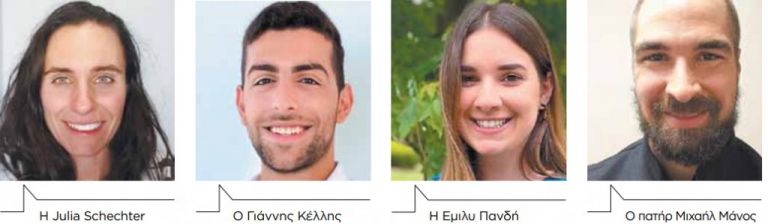
For Yiannis Kellis, the Modern Greek Studies Program was “like a home away from home.” Born in Ohio, he moved with his family to Greece at a young age, later returning to the United States and choosing to study Modern Greek Language alongside Finance. He is now preparing for postgraduate studies in London.
“Modern Greek culture should be protected and admired, just like any culture important to a person’s roots. Securing funding for programs like this is of immense importance, because it allows students from all cultures and religions to come into contact with heritage, language, and culture, thus ensuring their continuation.”
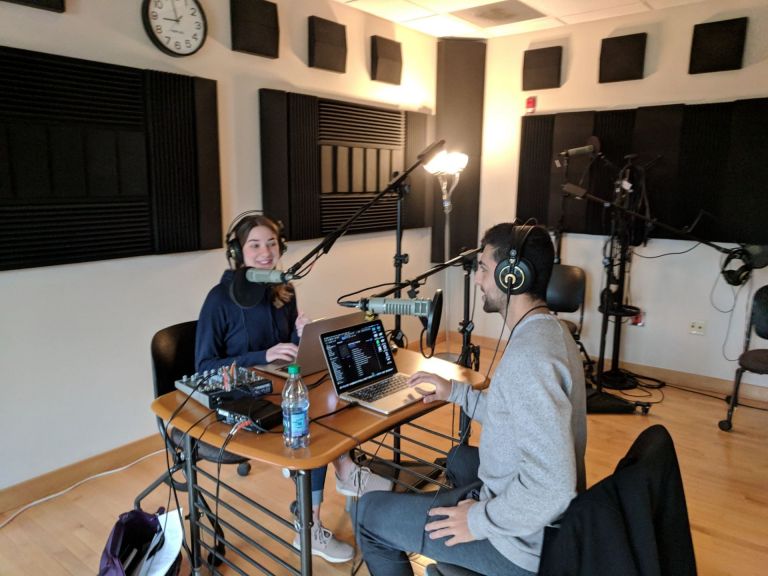
Emily Pandis and Yiannis Kellis on the history of shipping in Greece and the BRI
Also Greek-American, his former classmate Emily Pandis is now in the final year of her Master’s program in Global Governance, Politics, and Security at American University in Washington, D.C., while also working at the Hellenic American Institute.
What does she remember about her daily life in the Modern Greek Program?
“I would describe it in three words: rewarding, intellectually challenging, and demanding. The courses allowed me to explore different aspects of Greek culture.”
She speaks about their classroom discussions—ranging from the “character” of graffiti in central Athens, cultural nuances, and the film Stella, to the struggle of the first Greek miners of the Diaspora who played a leading role in the rarely discussed Ludlow Massacre.
“One of the most important lessons I took from Ohio State was the Greek Radio program, where my classmate Yiannis Kellis and I presented shows on bilingualism, multiculturalism, the significance of shipping in Greece, and Greece’s political role on the global stage.”
Greek Communities
The importance of maintaining a Chair for Modern Greek Language and Culture in America may seem self-evident to the Greek diaspora. Yet it is also deeply moving to hear the experiences of a graduate who has no Greek background.
Julia Schechter studied in the Modern Greek Department while pursuing Anthropology at Ohio State. She studied the modern Greek language for two years, read Greek books, participated in discussions and group activities, attended numerous courses on modern Greek culture and writing, and even hosted live radio programs in Greek. She is now preparing to study Medicine—and notes the Greek roots of many medical and anatomical terms.
When asked about Greek culture and its preservation, she said:
“Cultures are fluid and constantly changing. Modern Greek culture, therefore, is continuously subject to the increasing influences of globalization. Cultures are truly preserved when they are practiced at the family and individual level. Young Greeks today must feel the responsibility to preserve their family traditions and pass them on to their children. As for the Diaspora, Greeks have a unique way of forming meaningful communities wherever they migrate. These communities reinforce the values and characteristics of Greek culture.”
How Alexis Zorbas Changed Their Lives
Distinguished Professor of Modern Greek and Comparative Literature at Ohio State University, Mr. Gregory Jusdanis, speaks about his experience teaching literature and his lectures on Zorba, which were among the most popular.
“My former students still speak about the joy they felt reading Alexis Zorbas by Kazantzakis in my classes. Some even write to me years later, saying that the novel changed their lives.
I have taught it many times during my 33-year tenure at Ohio State—from small seminars of 15 students to large lectures of over 180. Since the great majority of students study the natural and social sciences, nursing, engineering, or business, my class is likely the only literature course they take during their four-year studies. Many receive financial aid to complete their education, and some work up to 20–30 hours a week to support themselves.
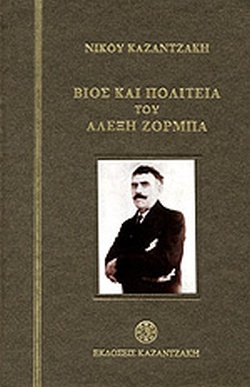
Why, then, are so many young people from different social classes, nationalities, and races fascinated by Alexis Zorbas, a novel set in Crete in the early 20th century? Kazantzakis presents the main character as living a great odyssey, seeking answers to enormous questions—what kind of person he is, what he will do with his life, and how he connects to broader philosophical issues. The students themselves grapple with these same questions and appreciate how Kazantzakis weaves profound philosophical inquiries in a way that is accessible and engaging. Perhaps that is the novel’s secret: that it places philosophy in the service of character development and introspection.
However, students are not uncritical readers. Some are bothered by the weaknesses of the work. Yet they view it within context—as an imperfect novel that still addresses their contemporary concerns through compelling characters and relatable imagery. In short, they understand that the book offers them opportunities for experience and life lessons.
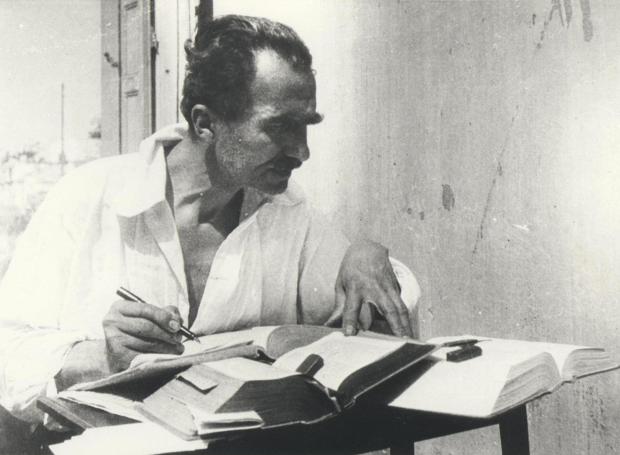
My hope is to connect literature in the classroom with students who do not regularly read novels, short stories, or poetry. The work of Kazantzakis gives them the opportunity to participate metaphorically in another person’s odyssey—and then to use the insights from that literary journey before embarking on their own.”
Ifigenia Virvidaki – Print Edition, To Vima