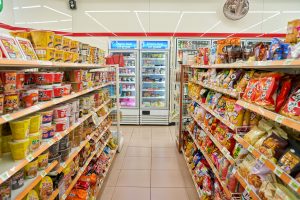
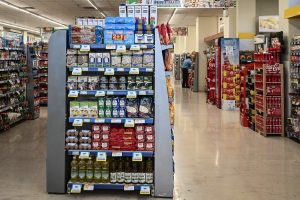
Private-label products have reached a record level in Greek households as high prices continue to shape supermarket purchasing decisions, while consumers are also showing a strong preference for quality products made in Greece, according to a 2026 study by the Athens University of Economics and Business.
The study, conducted in January 2026 using a scientific random sample of households, found that private-label products reached a new record for the third consecutive year. Nearly four out of every 10 products purchased are now private-label items, while acceptance of these products among consumers remains particularly high.
At the same time, demand for Greek-made products has strengthened. According to Professor Georgios Baltas, most private-label products are manufactured in Greece by domestic producers and manufacturers on behalf of supermarket chains.
As a result, the growing preference for products made in Greece is complementing the expansion of private-label goods.
Strong consumer preference for Greek products
According to Baltas, “Made in Greece” is not only a question of production but also of consumer behavior.
Marketing research has shown that a product’s country of origin can influence consumers’ perceptions of its quality and their intention to purchase it. A series of studies has also identified consumer trust in Greek-made products and a desire to support domestic production through their purchases.
“The long-standing preference of consumers for Greek products can ensure stable demand for domestic producers, support domestic jobs and allow companies to modernize in order to contain costs and, ultimately, retail prices,” Baltas told the Athens-Macedonian News Agency.
Inflation continues to pressure households
Baltas described high prices as the dominant economic issue for Greek households, noting that recent data indicate that price pressures have not eased.
Annual inflation reached 3.8% in August, up from 3.4% in July, according to the Hellenic Statistical Authority. The largest contributions came from housing, where prices rose 9.7%, transportation, up 7.7%, and hotels, cafes and restaurants, up 6.0%.
The average inflation rate over the 12 months from September 2025 through August 2026 also increased, rising 3.4%, compared with 2.6% in the previous 12-month period.
“The public discussion usually focuses on measures affecting demand or administrative measures such as subsidies, caps on gross profit margins and informal agreements,” Baltas said. “These measures may ease the burden on consumers in the short term. However, they largely leave untouched the other side of the equation, namely the economy’s supply.”
Why domestic production could help contain prices
Baltas said strengthening domestic production in both industry and agriculture could play an important role in containing prices.
Manufacturing accounts for close to 10% of Greece’s gross value added, significantly below the European average. The country’s goods trade balance has remained structurally in deficit, while substantial portions of meat, dairy products, animal feed and cereals are covered by imports, along with many industrial and consumer goods.
“In other words, a large part of the consumer basket follows international prices, transportation costs and geopolitical disruptions,” Baltas said. “In this context, imported inflation is difficult to address through domestic demand measures because its source lies outside the country’s borders.”
He identified three main ways stronger domestic production could help.
More supply and competition
Greater domestic production can expand supply and competition. When more domestic producers operate in a market, the available supply increases and the ability of a small number of importers or distributors to influence prices is reduced.
In highly concentrated markets, domestic production can provide an alternative source of supply and, consequently, limit pricing power and excessive price increases.
Shorter supply chains
Domestic production can also shorten supply chains. Transportation, storage, refrigeration and intermediary services all add costs that are ultimately passed on to consumers.
Producing goods in Greece can substantially reduce those costs. It can also have environmental benefits because domestically produced goods travel through shorter supply chains.
Greater resilience
A stronger domestic production base can also make the economy more resilient to external disruptions.
The pandemic and the 2022 energy crisis demonstrated how quickly international supply chains can be disrupted. Economies with stronger domestic production bases absorbed such shocks at lower cost and with fewer problems, according to Baltas.
“In simple terms, domestic production functions as a kind of insurance against the volatility of international prices,” he said.
Domestic production also keeps the incomes and jobs it generates within the economy, supporting household purchasing power.
Agriculture seen as key to domestic production
Greece has recognized comparative advantages in olive oil, fruits and vegetables, dairy products and aquaculture. However, the country remains dependent on imports in categories that account for a significant share of household spending, including meat and cow’s milk.
Livestock farming, in particular, has been hit in recent years, resulting in a decline in domestic supply at a time of increased demand.
“Strengthening agricultural production requires interventions that go beyond subsidies,” Baltas said. “The fragmentation of farmland and the small size of farms increase the cost per unit of production.”
He said producer organizations and modern cooperative structures could create economies of scale, improve farmers’ bargaining power and reduce the gap between the price received by producers and the retail price.
Irrigation projects, domestic animal-feed production and digital agriculture are also important, he said.
Food processing adds value to domestic production
Food and beverage manufacturing, Greece’s largest manufacturing sector, can further strengthen domestic production by turning locally produced raw materials into finished products and keeping more of the added value within the economy.
Other sectors, including construction materials, pharmaceuticals, metallurgy and packaging, also play an important role by supplying other industries and supporting wider networks of connected businesses and partners.
Together, these sectors can contribute to a stronger domestic production base while supporting the growing consumer preference for Greek-made products.