Child poverty remains alarmingly high in Greece, according to new findings from the Center of Planning and Economic Research (KEPE). The data show that more than one in ten children experience significant economic or social deprivation, with poverty rates varying widely depending on family structure and region.
On October 17, marking the International Day for the Eradication of Poverty, KEPE officially launched its new Multidimensional Child Poverty Index (MCPI)—a tool designed to capture the complex and layered nature of child poverty in Greece more accurately than traditional, income-based indicators.
Stark regional and social disparities
The study finds Greece’s overall multidimensional child poverty rate at 5.5%, with major regional variations. Central Greece (Sterea Ellada) records the highest rate, at 8.56%, followed by Attica, Thessaly, and the Ionian Islands.
By type, economic child poverty—measuring income-related deprivation—stands at 9.2%, while non-economic child poverty, which covers factors such as education, health, and social inclusion, reaches 12.5%.
Certain groups face much higher rates:
21.1% in large families
10.6% in rural, island, and mountainous areas
25.7% in single-mother households.
Non-economic poverty is especially high (14.2%) among middle school students.
Greece: A European outlier in Child Poverty
Greece continues to register one of the highest rates of child material and social deprivation in the EU. In 2024, 33.6% of children under 16 lacked essentials such as proper clothing, nutritious food, books, extracurricular activities, or holidays—the highest rate in Europe, ahead of Romania (31.8%) and Bulgaria (30.4%), and far above the EU average of 13.6%.
How the index works
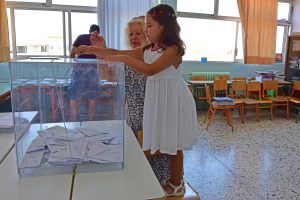
KEPE’s index reflects a broader international move beyond income-based poverty metrics, combining economic and social indicators for a fuller view of children’s wellbeing. Unlike traditional surveys answered by adults, this research gathered data directly from children in schools, allowing them to describe their own living conditions through age-appropriate questionnaires. This direct approach makes the data more authentic and reliable, while giving children a voice in shaping the understanding of their realities. Drawing on data from 3,076 students collected during the 2024–2025 school year, the index measures both economic and non-economic aspects of deprivation, offering a fuller picture of the conditions affecting children’s lives across the country.
Founded in 1959, KEPE is Greece’s leading public economic research institute, advising the government on economic and social policy.