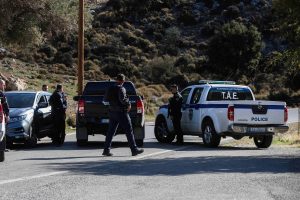
Greek police (EL.AS.) are preparing a major offensive to dismantle zones long viewed as effectively off-limits to law enforcement — across Crete. The operation includes home raids, surprise inspections, and financial scrutiny aimed at at least ten influential families in areas such as Mylopotamos, Voriza, and other parts of the Heraklion and Rethymno regions.
These actions are being shaped using case files and criminal-activity “mapping” carried out by Crete’s so-called “Greek FBI,” a nickname locals use for the island’s elite investigative teams.
This is only one component of a wider plan being developed after the deadly shootout in Voriza three weeks ago and the fear of fresh bloodshed not only in that area but across the island.
Police Take Aim at Weapons Fired at Celebrations
As To Vima reports, the next phase of EL.AS. operations is based on months of intelligence gathering regarding long-standing criminal groups — often family-structured clans — whose activity predates the recent vendetta.
Among the measures being prepared:
- Mandatory reporting by organizers of concerts, weddings, and nightclub events if guns are fired during festivities — a common practice in some rural Cretan celebrations known as balothies (shots fired into the air).
Violators will face tens of thousands of euros in fines. - Selective searches of guests arriving at Cretan feasts and celebrations to identify illegal firearms, which may lead to felony charges.
- Prison sentences for repeat offenders caught using weapons.
300,000 Illegal Guns on the Island
Authorities also plan extensive financial checks targeting suspicious “investments” and assets tied to family-based criminal networks. A parallel effort will focus on uncovering hidden stockpiles of weapons.
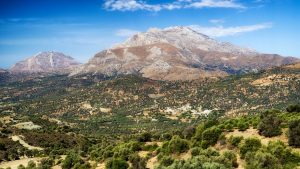
Police estimate that more than 300,000 illegal firearms circulate in Crete — many smuggled from Albania or transported from the Middle East on ships crossing the Libyan Sea, then hidden in rural warehouses or stashed in caves and shepherds’ huts on Mount Psiloritis and the Lefka Ori (White Mountains).
Crete, with roughly 620,000 residents, records 14,547 crimes annually, including 2,445 weapons offenses.
For comparison, Thessaloniki — with nearly twice Crete’s population — records only 1,582 such incidents.
The intelligence gathered by senior EL.AS. officers about criminality in Crete’s mountainous “high-risk” zones is striking — and underscores the urgent need for intervention.
Some of the 20 men charged in Mylopotamos for the armed attack on police officers in November 2007 are believed to have returned to criminal activity, despite serving lengthy prison sentences.
One of them took part in jewelry-store robberies in Hersonissos in 2015, opening fire again on police who attempted to disarm him. Others appear tied to a recent cocaine-trafficking case.
Violence, Drugs, and Hostility Toward Police
In a major 2022 operation to arrest members of a drug-trafficking ring, residents again displayed open aggression toward police.
During an extensive raid — which located, uprooted, and seized 200 cannabis plants and 15 kilograms of marijuana in livestock pens and a warehouse in Zoniana — locals jeered at officers and demanded they leave.
A group of 25–30 individuals attacked police with stones and wooden clubs, forcing officers to respond with stun grenades.
A similar scene unfolded in August 2024 in Zoniana, during an operation to arrest locals who had brutally beaten a Greek-Canadian tourist in downtown Heraklion. Residents again hurled stones at officers, prompting the use of tear gas and stun devices.
In the 2007 operations, police discovered on Mount Psiloritis at least:
- 10 weapons arsenals
- Stolen ATMs
- Dozens of cannabis plantations
- Huge quantities of drugs, even hidden inside cemeteries
Codes, Explosives, and Hidden Cash
Police have also uncovered in homes across the region:
- radio-frequency codes used to intercept communications of the Coast Guard and Fire Service
- cannabis grown on rooftops
- 12 kilograms of ammonium dynamite stored inside a café
- a woman’s handbag containing €245,000 in cash, whose origin remains unexplained
In 2024 alone, authorities located 7,855 cannabis plants, compared to over 11,000 the previous year.
A recent report by Greece’s Anti-Narcotics Coordination Body, involving EL.AS., the Financial Crime Unit, and the Coast Guard, notes that the sea south of Crete is a major transit route for large-scale shipments of processed cannabis from the Middle East.
Investigators are also concerned by the growing involvement of individuals from Crete’s mountainous regions in cocaine transportation and local distribution.
It is estimated that many recent crimes on the island were committed by perpetrators who were drug users or under the influence of narcotics at the time.
Silence, Intimidation, and “No-Go” Villages
The difficulty police face in accessing these remote areas — and the lack of cooperation from locals — is exemplified by a violent incident last year.
After a man in Voriza was stabbed in an event seen as a precursor to the recent deadly clash, a gunman retaliated by firing at villagers, injuring several people and damaging cars.
Yet no one in the village informed police.
Security officers stress that neither doctors nor nurses who treated the injured notified authorities, despite being legally required to do so.
Police units on the island also frequently face attacks from shepherds during routine investigations into livestock theft — such as one incident last June on Psiloritis.
Crete has also recorded four bomb attacks targeting police officers’ homes and vehicles (the latest in January in Chania), as well as the hostage-taking of an officer by criminals from Mylopotamos.
A Mutilation Meant as Warning
The brutality in Crete’s mountainous regions is further illustrated by horrifying recent attacks.
In September 2024, a 69-year-old shepherd in a remote Rethymno village was shot and then had his tongue cut out.
Investigators believe this was punishment for the man allegedly revealing the location of a cannabis plantation to police years earlier.
Members of the same extended family are thought to have been targeted in additional retaliatory attacks. A subsequent attempt at sasmos — a traditional local peace-making process — failed.
Explosives, Corruption, and Alleged Political Links
Authorities are now deeply alarmed by intelligence suggesting that some residents of mountainous areas are planning attacks with large quantities of explosives targeting the homes of rival families.
Complicating the situation are claims of:
- links between certain criminal clans and political figures,
- large sums of money being offered to secure favorable judicial treatment for defendants, and
- suspicious contacts with police officers, as highlighted recently in the investigation into the so-called “Chania Mafia.”