Greek law enforcement has shed new light on the profile of Alexandros Angelopoulos, widely known as the “Greek Escobar,” following a major operation targeting an international cocaine trafficking network that moved massive drug shipments from Latin America to Europe.
Angelopoulos is described by authorities as the mastermind behind the criminal organization recently dismantled by Greece’s Organized Crime Unit. For more than three decades, he allegedly played a central role in large-scale cocaine trafficking, attracting sustained attention from U.S. and European law enforcement agencies before ultimately being arrested again.
According to investigators, Angelopoulos was already on the radar of Greek authorities as early as the late 1980s. Over the years, Greek police repeatedly received intelligence from U.S. agencies regarding his alleged activities, including claims that he was involved in arms shipments to Nicaragua’s Sandinistas, reportedly paid for with cocaine. Despite frequent scrutiny, he managed for years to avoid prosecution by leaving little trace behind.
His criminal career escalated from cigarette smuggling to the creation of a fleet of fishing vessels used to transport cocaine across the Atlantic. Authorities say this operation generated vast wealth, which Angelopoulos allegedly laundered through an elaborate network that included charitable donations, the purchase of two local soccer teams, and even the use of winning gambling tickets bought through agencies across Greece.
Angelopoulos was finally arrested in 2004 in Stuttgart, Germany, after authorities intercepted the vessel Africa 1, which was carrying 5.5 tons of cocaine from Latin America to Europe. That case led to his imprisonment. After serving his sentence, he was released about a decade ago, briefly returned to prison following a ruling by Greece’s Supreme Court, and was released again roughly a year ago.
Since his most recent release, Greek authorities placed him back under close surveillance, suspecting he would attempt to revive his lucrative trafficking operations by relying on long-established networks in Latin America and across Northern and Central Europe.
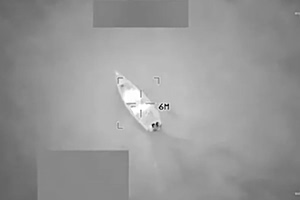
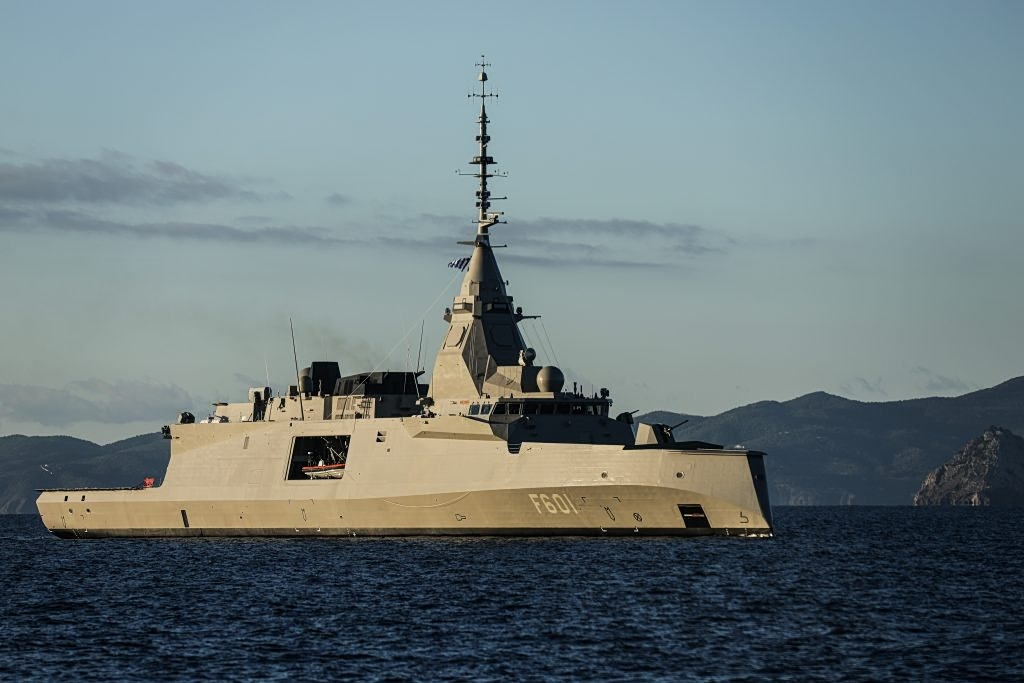
Those suspicions intensified after the interception of the Greek-owned fishing vessel Ourania in the Atlantic Ocean. The ship, linked to Greek financial interests and originating from northern Greece, was carrying large quantities of cocaine from Latin America to Europe. French naval forces, acting on intelligence shared by the U.S. Drug Enforcement Administration and the EU’s border agency Frontex, stopped the vessel in an at-sea operation and arrested its five crew members.
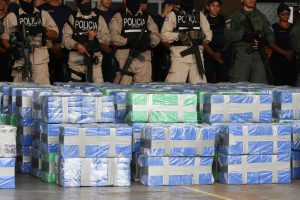
The Ourania was later towed to Martinique, where authorities began cataloging its cargo. Preliminary findings indicate that more than four tons of cocaine were found onboard.
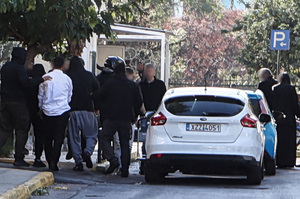
Simultaneously, police in Greece launched coordinated arrests, detaining additional suspects near the cities of Katerini, Thebes, and Athens. Angelopoulos himself was arrested after officers stopped his vehicle during a trip from Nea Michaniona to Katerini.
Angelopoulos is expected to appear before an investigating judge in the port city of Piraeus, along with five crew members connected to the vessel. Authorities continue to investigate where the cocaine was ultimately intended to be offloaded in Europe, as the case remains ongoing.