Greece remains gripped by a relentless heatwave this week, with authorities bracing for continued extreme temperatures through Wednesday, according to the latest update by meteorologists issued on Tuesday evening.
Scorching Temperatures Across the Country
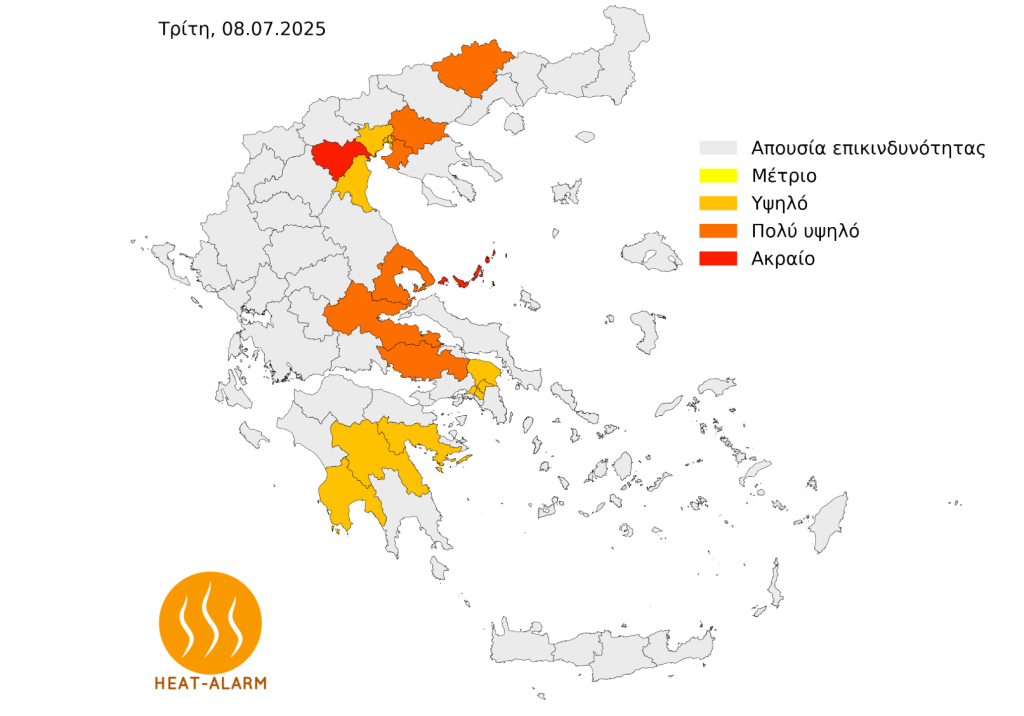
Heat-alarm report by Meteo.gr
On Tuesday, parts of Central Greece recorded temperatures as high as 41°C (105.8 °F). Forecasts for Wednesday, July 9, predict continued sweltering conditions with:
- 38–40°C expected across Eastern Greece
- 41°C in the Peloponnese
- up to 30°C on the Eastern Aegean Islands, Dodecanese, and Crete.
The regions most severely affected include Central and Eastern Macedonia, Eastern Thessaly, Central Greece, Eastern Peloponnese, and Evia.
The weather is expected to change on Thursday as strong winds late on Wednesday begin to drive temperatures down across Greece.
According to the fire danger forecast for Wednesday, a Category 5 extreme fire risk warning is in place for Attica, Viotia, Corinth, Magnesia and Fthiotida.
Pavements & Rooftops Hit 100°C in Athens
In Athens, where recent wildfires have stripped the city of much of its urban greenery, temperatures surged to 42°C in some districts on Tuesday.
Municipal thermal sensors recorded road surface temperatures as high as 70°C, and some building rooftops soared to a blistering 100°C. However, cooler microclimates were detected near green spaces like Lycabettus Hill.
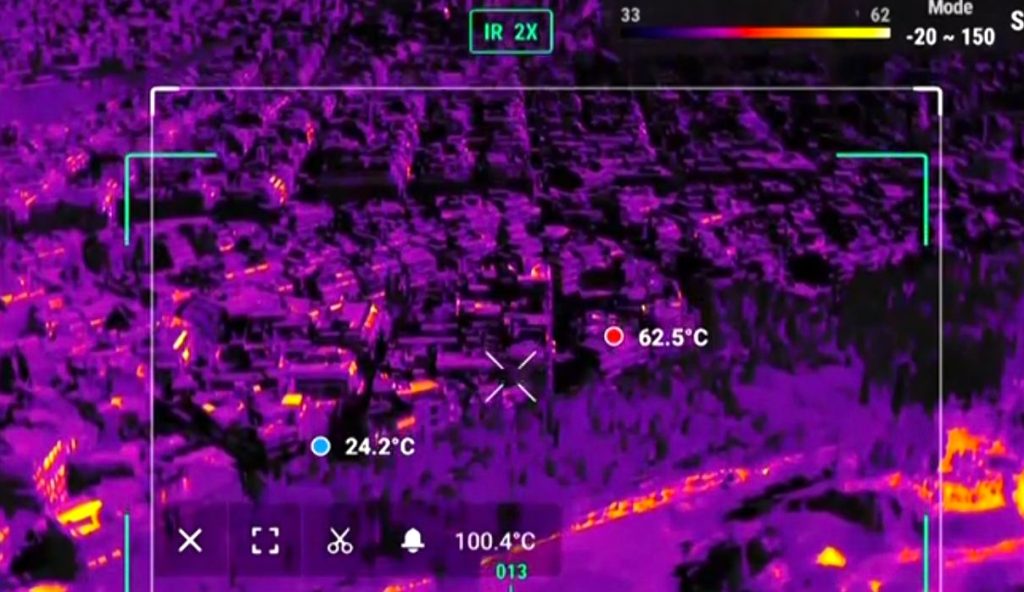
Thermal sensor showing temperatures on rooftops and road surfaces in central Athens on Tuesday, July 8.
Meteorologists warn that incoming winds could cause a Foehn effect, a phenomenon known to rapidly increase temperatures by up to 14°C in just hours due to descending dry, warm air.
The extreme weather conditions have prompted the Greek government to take actions including shutting down the Acropolis on Tuesday as well as introducing measures for employees.
Emergency Measures for Worker Protection
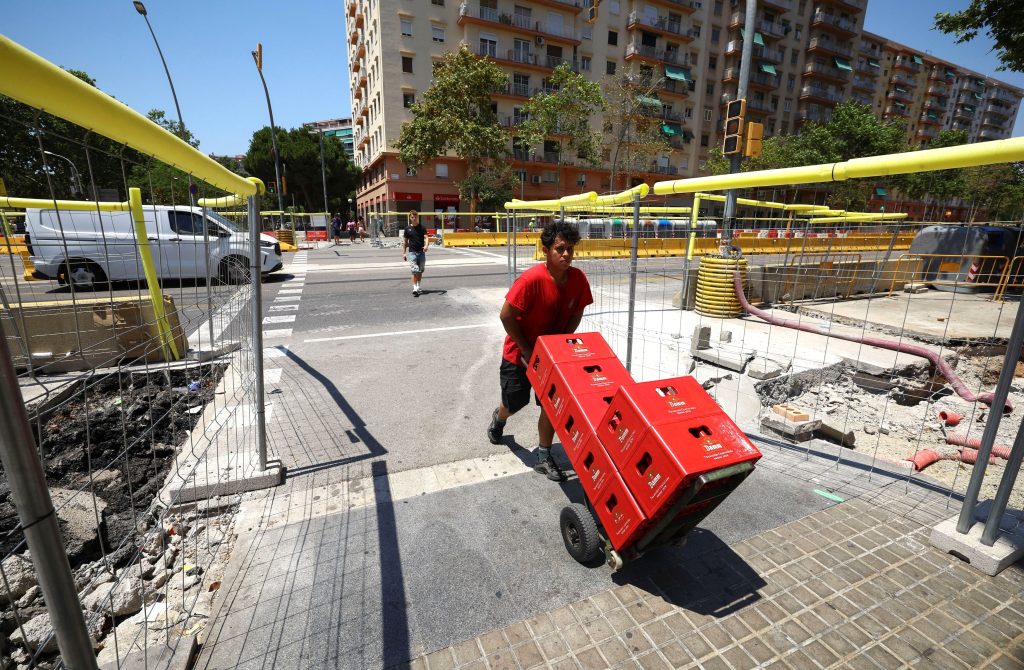
Photo: Reuters/Albert Gea
In response to the extreme heat, the Greek Labor Ministry has issued emergency measures to protect people working outdoors from heat-related illness and injury. These include:
- suspension of outdoor labor from 12:00 to 17:00 in affected regions
- flexible arrival times and telework options for vulnerable employees
- a ban on high-risk jobs such as construction, delivery, and transport services.
These measures apply regardless of employment status, including gig economy workers. Exceptions are made for essential sectors like healthcare, public transport, and utilities.
Non-compliance may result in fines up to 2,000 euros per employee.
The government’s response is guided by the WBGT (Wet-Bulb Globe Temperature) index, a comprehensive measure combining temperature, humidity, wind speed, sun angle, and cloud cover to assess heat stress risk.
* This is all you need to know to stay safe during a heatwave.