Eurostat data for 2024, released on Monday, place Greece on the “podium” alongside two other EU countries with the highest rates of severe material and social deprivation among their residents.
In Greece, the highest rate of material and social deprivation by age group is observed among young people aged 18–24, where 17.6% face such deprivation. Rates are also above average in the 55–64 age group (15.8%) and among those aged 12–17 (15.7%).
The rate of severe material and social deprivation reflects the forced lack of essential and desirable goods for a decent standard of living, according to the EU definition.
In 2024, 6.4% of people in the EU experienced severe material and social deprivation, marking a slight decrease compared with 2023 (6.8%).
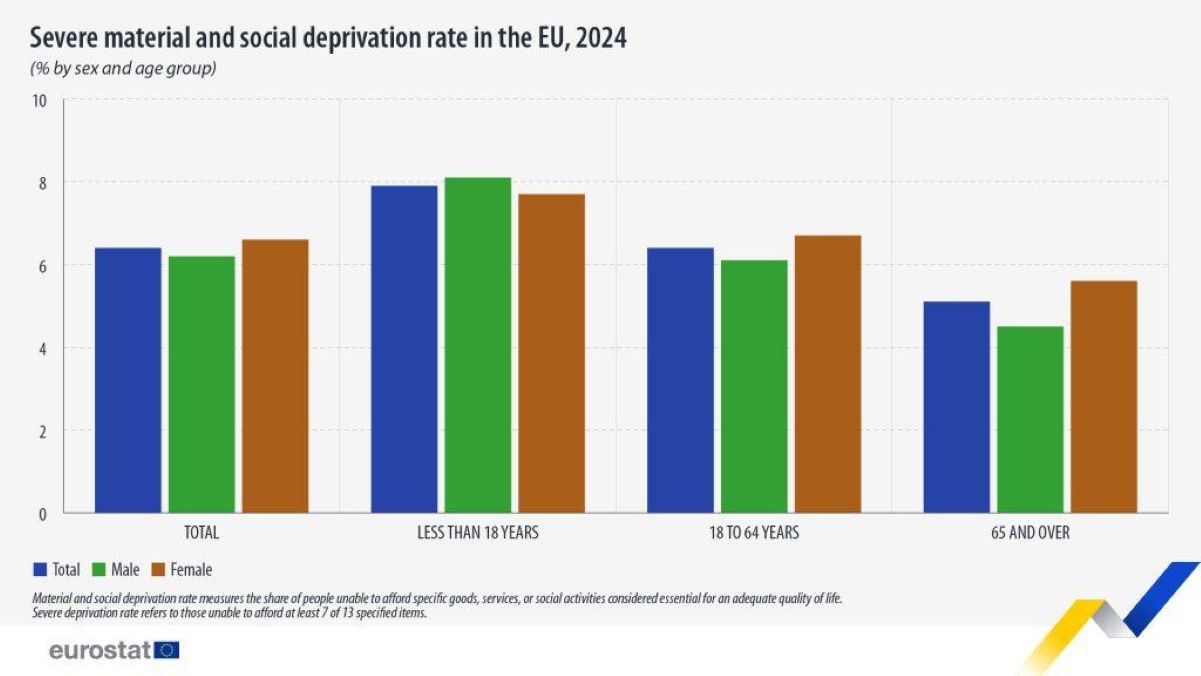
Young people under 18 were the most affected (7.9%), followed by those aged 18 to 64 (6.4%) and those 65 and older (5.1%). Women showed higher rates of severe material and social deprivation than men (6.6% versus 6.2%). This pattern of higher rates for women was consistent across all age groups, except for those under 18.
Among EU countries, the highest rates of severe material and social deprivation were recorded in Romania (17.2%), followed by Bulgaria (16.6%) and Greece (14.0%).
In contrast, the lowest rates were observed in Slovenia (1.8%), Croatia (2.0%), and Poland (2.3%).
The index distinguishes between individuals who cannot afford a specific good, service, or social activity. It is defined as the percentage of the population experiencing a forced lack of at least 7 out of 13 deprivation items (6 related to the individual and 7 related to the household).