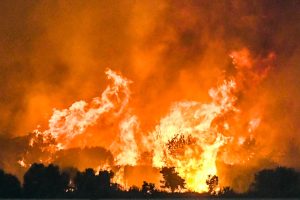
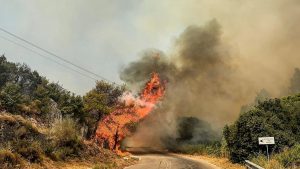
Greece is currently experiencing a hazardous combination of weather factors that are significantly contributing to the outbreak and rapid spread of wildfires. As of August 13, 2025, the country faces soaring temperatures, strong winds, and ongoing drought conditions that together form a volatile meteorological cocktail, raising alarm for both authorities and residents.
Powerful Winds Fan the Flames
One of the main drivers behind the increased wildfire threat is the persistence of strong northeasterly winds, known locally as “meltemi,” blowing at speeds of 5 to 7 Beaufort across much of the eastern mainland and the Aegean Sea. These winds dry out vegetation further and accelerate the spread of flames once fires start, particularly in vulnerable forested and rural areas.
In the Aegean, wind speeds generally range from 4 to 6 Beaufort, with slightly lower winds (2 to 4 Beaufort) around the Dodecanese islands. Western parts of the country experience lighter winds from northern or eastern directions, but these are still enough to maintain dry, hot conditions.
Scorching Temperatures and Dry Weather
Temperatures remain high throughout Greece, reaching up to 39°C (102°F) in some western mainland areas and between 33°C to 36°C (91°F to 97°F) across the eastern mainland and islands. This prolonged heat, combined with a long-lasting drought, dries out soils and vegetation, creating perfect fuel for wildfires.
While most areas enjoy clear skies, isolated clouds and weak local showers may occur over parts of northern Crete and Euboea, though this is unlikely to alleviate the overall dryness significantly.
Regional Impact and Fire Risk
- Eastern Mainland & Aegean Islands: Strong northeasterly winds and high heat create the highest risk zones for wildfire outbreaks.
- Western Greece and Ionian Islands: Experience slightly milder winds but still face high temperatures that support fire hazards.
- Crete and Dodecanese: Winds vary but dry conditions persist, maintaining wildfire risks.
Outlook for the Coming Days
Weather forecasts predict a continuation of mostly clear skies and hot conditions through the weekend, with winds maintaining moderate to strong intensity, especially in the northeast Aegean. Temperatures are expected to stay around 30-37°C (86-99°F), meaning fire risk will remain elevated.
Authorities continue to warn residents and visitors to exercise extreme caution, avoid outdoor burning, and report any signs of fire immediately, as weather conditions remain conducive to rapid fire ignition and spread.