A key meeting between senior Greek government officials and farmers from Crete on Thursday ended without an agreement, despite assurances that several of the producers’ demands would be reviewed. Farmer representatives warned that the island is experiencing an “economic shock,” citing reduced subsidies and rising operating costs.
What Farmers Asked For
During the talks, Cretan producers presented their concerns to the government’s vice president and agriculture minister, as well as regional authorities and the head of Greece’s payment agency for agricultural subsidies. Their demands centered on subsidy levels, grazing land classifications, water shortages, and support for livestock farming, greenhouse crops, and beekeeping.
Farmers stressed that Crete has received only about 40% of its Basic Payment subsidy, a reduction they say has created severe financial pressure across the island.
Government Assurances
Government officials said the meeting was constructive and noted that additional payments have already been introduced for livestock farmers in certain regions to address past allocation imbalances. However, they emphasized that any further adjustments must remain within the terms agreed with the European Commission in order to avoid penalties or interruptions in future subsidies.
Officials added that discussions will continue at a technical level to work through issues created by the transitional payment system and to ensure that genuine producers are not disadvantaged.
Broader Challenges Raised
The talks also addressed wider difficulties affecting Crete and other Greek islands, including high production costs, lower milk prices, and the impact of ongoing water shortages. Government representatives agreed to examine proposals regarding digital paperwork requirements and fuel tax refunds for greenhouse crops.
“A Real Survival Problem”
Giannis Glentzakis, head of the farmers’ cooperative in Rethymno, said the situation has reached a critical point. “The island is in economic shock,” he said, adding that farmers have avoided street protests for six years. “For us to be here now means there is a real survival problem.”
He also highlighted the challenge of land classification, noting that roughly 395,368 acres (a common Greek land measurement) in Crete are labeled as rocky or forested, yet lack review committees that could potentially reclassify them. Farmers are asking for the right to activate all their subsidy entitlements this year, and for a new system of pastureland distribution from next year onward.
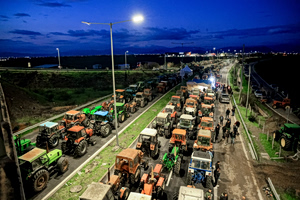
Glentzakis warned that if these issues are not resolved, farmers and livestock producers on the island will intensify their mobilizations.