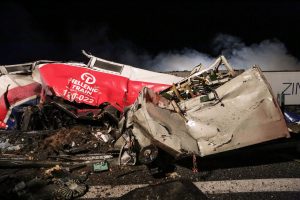
The case of Greece’s tragic Tempi train crash, which claimed dozens of lives in February 2023, remains in the spotlight as families of victims renew their fight for clarity.
For ten days, grieving father Panos Routsis has been on hunger strike in front of the Tomb of the Unknown Soldier in Athens, demanding the exhumation of his son’s body. He insists he will continue until authorities grant his request.
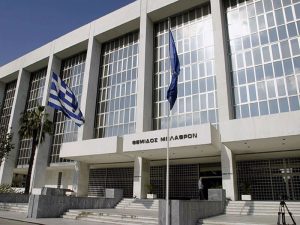
While Greece’s Supreme Court has ruled out reopening the judicial investigation, both its president, Anastasia Papadopoulou, and prosecutor have rejected exhumation requests aimed at testing remains for chemical traces. They argued that these matters have already been examined and decided by the investigator and judicial councils.
However, Supreme Court Prosecutor Konstantinos Tzavellas suggested a possible compromise: that exhumation might be permitted only for identification purposes, either following a formal request or after reviewing the families’ official complaints.
A New Request by Victim’s Father
Separately, on September 24, 2025, Pavlos Aslanidis, father of victim Dimitris Aslanidis, filed a new request before the President of the Appeals Court of Larissa, Maria Lianou. His petition calls for DNA testing on five “unverified” body fragments placed in his son’s coffin, as only three of the eight fragments were tested during the initial process.
According to his lawyer, Giannis Matzouranis, the application also demands biochemical, histological, and toxicological examinations that were never carried out. The aim is to determine with certainty the cause of death.
The request falls under the Tempi case file (no. BM Φ2023/49), accompanied by the prosecutorial proposal (1/2025) from Larissa Appeals Prosecutor Lambros Tsogas.
Legal Arguments and Broader Concerns
In his detailed petition, Aslanidis argues that earlier refusals to authorize exhumation have prevented essential forensic work. He stresses that only partial DNA identification was performed and insists it is both legally and morally necessary to complete the examinations.
He further argues that the refusal undermines public trust in judicial impartiality and risks leaving unanswered questions about the circumstances of his son’s death. His lawyer emphasized that, under Greek law, the President of the Appeals Court is empowered to order further investigative acts—even at this stage of proceedings—if necessary to clarify the case.
Next Steps
The request now awaits examination by the Appeals Court. If approved, the exhumation and tests could provide new evidence in a case that has deeply shaken Greek society and left families continuing their search for truth more than two years after the disaster.