While the city of Trikala slept, five women worked through the early hours of Monday morning inside a cookie factory on the outskirts of town. By the time day broke, they were gone. Their deaths have been widely reported as part of one of the country’s deadliest industrial accidents in recent years.
They were also friends as well as co-workers, often assigned to the same production hours. Like many working parents, they had chosen the night shift to make daily life manageable. Working through the night allowed them to spend the day with their children, taking them to school, preparing meals, resting when possible, and being present for the school pick-up.
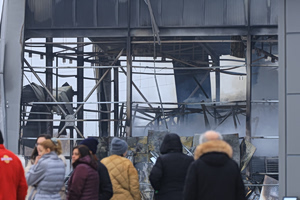
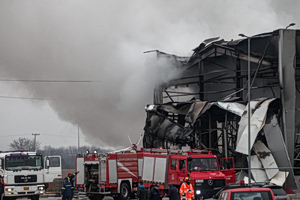
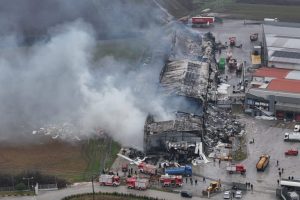
That routine ended shortly before 4 a.m. on Monday, when a powerful explosion tore through the factory, followed by an intense fire. The five women were working in the area where the blast occurred. Their bodies were later found in the basement of the facility, close to one another.
The women behind the names
Vasiliki Skampardoni, 42, was a mother of two young children and well known in the local community. Earlier in her career, she had run her own hair salon before moving into industrial work.
Elena Katsarou, 45, was also a mother of a 13 year old boy and an active participant in community life. She had worked at the Violanta cookie factory for several years.
Stavroula Boukovala, a mother of three, worked in the production line of the factory.
Anastasia Nasiou returned to Greece six months ago, after living and working in Germany since 1989. She had three boys and had followed her husband back to Greece, once he retired so they could be close to family.
Agapi Bounova was the last victim recovered. She had worked at the factory for over 15 years and was looking forward to retirement. She had chosen the night shift so she could help out with her grandchildren, taking them to school and assisting her family.
Ordinary moments, lasting weight
Just hours before the explosion, employees at the factory had gathered for the traditional cutting of the New Year’s cake. Many of those present, including the five women, later returned to their stations for the night shift.
One co-worker did not come to work that evening because her child was sick. After learning of the deaths, she reportedly said that staying home to care for her child had saved her life.
What remains
The women’s bodies were transferred to the city of Larissa for identification through DNA testing due to the extent of the burns. Authorities continue to investigate the cause of the explosion, examining scenarios that include a possible gas leak or the ignition of flour dust. Temperatures inside the facility reportedly reached extreme levels, causing extensive structural damage.
In Trikala, public mourning continues. Labor unions have organized strikes and demonstrations calling for accountability and improved workplace safety. Local officials have proposed a three-day period of municipal mourning in memory of the five women.
For their families and for Trikala, the consequences are profound. The loss of five women — colleagues, friends, mothers, grandmothers — has altered the texture of everyday life in ways that will take time to fully register. Their loss will continue to shape the community long after any investigations conclude.