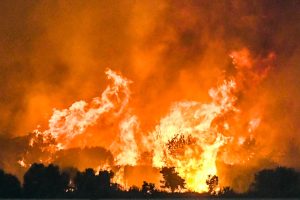
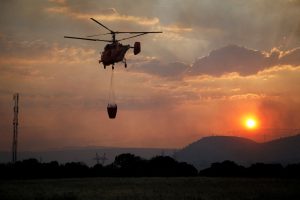
Firefighters on the Greek island of Zakynthos have employed the backfire method — a controlled burn designed to halt the spread of an approaching wildfire — in a bid to protect homes in the community of Lithakia.
The technique, which has been formally regulated in Greece since 2022, involves deliberately setting a controlled fire along the path of an oncoming blaze. The goal is for the two fire fronts to meet, depriving the wildfire of fuel and causing it to extinguish or at least slow significantly.
A related tactic, known as burn out, targets the perimeter rather than the direct path of a wildfire. In this case, firefighters create firebreaks by burning vegetation in a controlled manner, reducing the risk of flames leaping across due to heat or wind-blown embers.
Under Greek regulations, the use of fire to fight fire is permitted only when a blaze cannot be controlled by other means, and solely at the discretion of the commanding firefighting officer. Before such an operation, an “Application Plan for Backfire” is typically prepared, and local authorities, the forestry service, and police are notified to provide support.
Only in emergencies — when lives face imminent danger — may the commanding officer proceed without this formal plan. The method is carried out by members of Greece’s elite Special Forest Operations Units, often referred to as “forest commandos.”
While the backfire approach is a standard firefighting tool in countries such as the United States, its use in Greece remains rare, reflecting both the unique challenges of the country’s terrain and the cautious approach of its fire service.