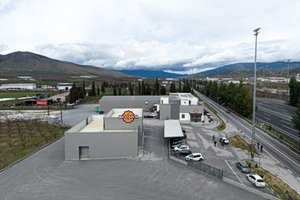
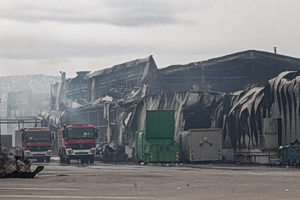
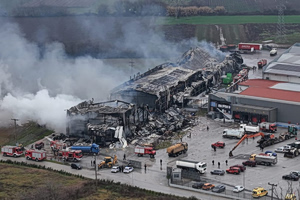
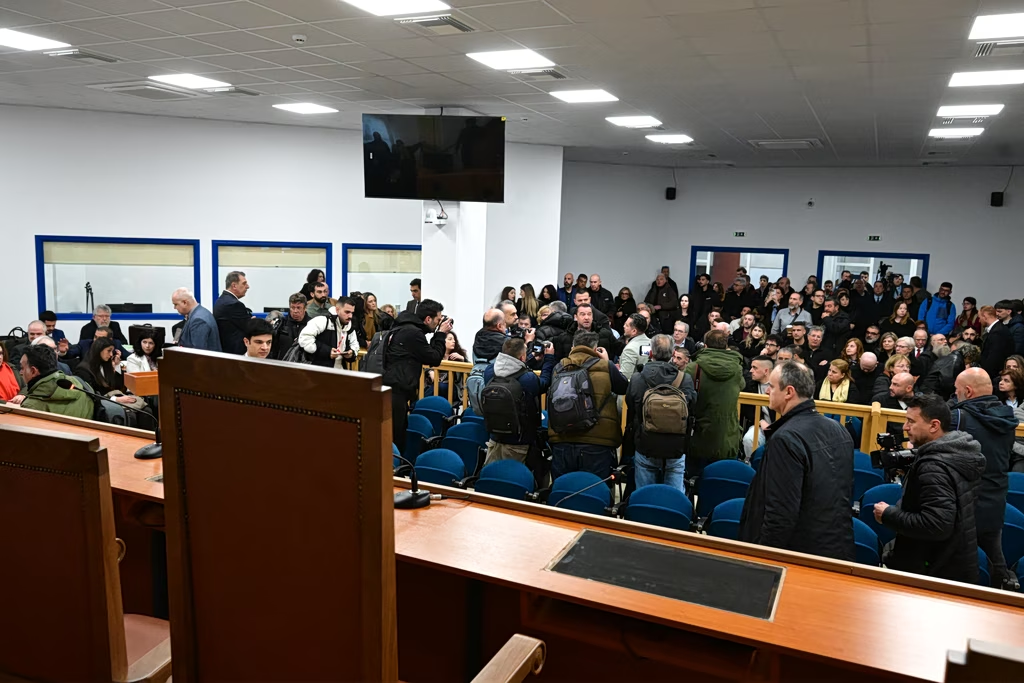
A court in central Greece has ordered the owner of the Violanta biscuit factory to be held in pre-trial detention following his testimony over a deadly explosion that killed five women at the company’s facility.
Konstantinos Tziortziotis, owner of Violanta in Trikala, appeared before an investigating judge and prosecutor for more than four hours. After his testimony, both judicial officials agreed to remand him in custody.
According to information from the proceedings, Tziortziotis denied any knowledge of the alleged safety violations at the factory. He reportedly told authorities that he had entrusted all operational responsibilities to associates, effectively giving them full authority over the facility’s management.
The decision came amid a charged atmosphere outside the courthouse. Employees of the biscuit manufacturer gathered early in the day to show support for their employer. In a joint letter signed by 256 workers, employees expressed respect for the victims and their families while describing the owner as someone who stood by them during difficult times.
However, the local labor center issued a statement alleging that recent worker gatherings outside police headquarters and the courthouse were not spontaneous but organized with management intervention.
Engineer alleges unauthorized use of his name
As the investigation unfolds, new testimony has raised further questions. The supervising engineer linked to a 2006 technical study stated that his name was used without his knowledge. He said he had no involvement in the specific study and was never informed that he was listed as supervising engineer, suggesting possible forgery of his signature.
Fire service report cites serious omissions
A fire service report following the fatal explosion describes what it calls serious safety omissions at the factory.
According to the findings:
- Fuel tanks lacked a permanent active fire protection system capable of automatically detecting and extinguishing fires in their early stages.
- An electrovalve designed to shut off fuel supply in case of a detected leak was disconnected.
- The basement where the explosion occurred did not appear to have a valid building permit.
- Workers reported a persistent smell of gas over an extended period and said that after notifying those responsible, they were told the odor originated elsewhere.
Information cited in the case also indicates that all three factory facilities may have contained undeclared underground spaces. Experts reportedly noted that if those spaces had been officially declared, the buildings would have been subject to stricter fire safety classifications and inspections.