Desmond Child has a love affair with Greece. He loves its culture, its history and its people, and for over a decade he has been visiting the country with his husband Curtis Shaw and their twin sons. He owns a home, which he views as a sort of creative retreat, in Skopelos and has collaborated with major Greek artists like composer Phoebus (who was instrumental in organising the 2022 concert aptly entitled “Desmond Child’ Rocks the Parthenon”with singers like Alice Cooper) and pop star Sakis Rouvas.
Inducted into the Songwriters Hall of Fame in 2008 – with over 80 Billboard Top 40 hits and 500 million records sold worldwide – perhaps Bon Jovi’s “Livin’ On A Prayer” is his most beloved song, and he made it the title of his autobiography. He says that at some point in the war Ukrainian and Russian soldiers sang it on both sides of the firing line. Amazing.
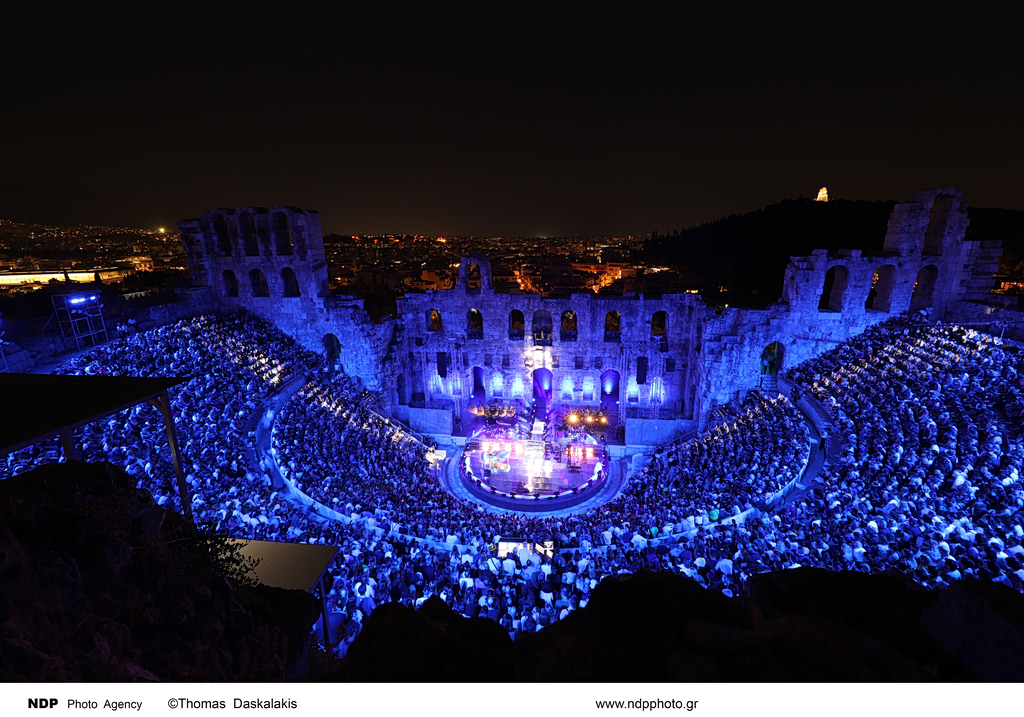
Odeon of Herodes Atticus during Desmond Child Rocks The Parthenon.
In a no-holds-barred interview with TO BHMA International Edition, Child explains why he is so passionate about the return of the Parthenon Sculptures and a string of other issues: Growing up in a project in Miami where a music professor who was a Holocaust survivor took him under her wing, taught him for free as long as he didn’t drink, smoke or use drugs and helped him fly, feeling lonely and different as a child “perhaps because I was born gay… I saw the world in a special way”, the decisive influence in his life of his adored Cuban mother from an artistic family, his anger over the now prevalent discrimination against Latinos in America (“we’re not just vermin, or gangsters and rapists and murderers”), and his huge admiration for Bad Bunny (who he would be thrilled and honoured to write a song with) and the enormous symbolism of his Super Bowl half-time performance.
Bunny’s greatest accolade perhaps was when Donald Trump called the star singer’s extraordinarily creative set “the worst ever” and “a slap in the face”, though Child does not mention it.
Were you excited about the Thessaloniki Documentary Film Festival world premier screening of the documentary Desmond Child Rocks the Parthenon, on your smash 2022 Herodes Atticus theatre (right under the Acropolis) benefit concert for the return of the Parthenon sculptures?
I was very excited particularly because I hadn’t actually seen the entire film put together. We were rushing and everybody was in their corner doing their thing – I was working on the sound and our director and editor were doing the last-minute edits.
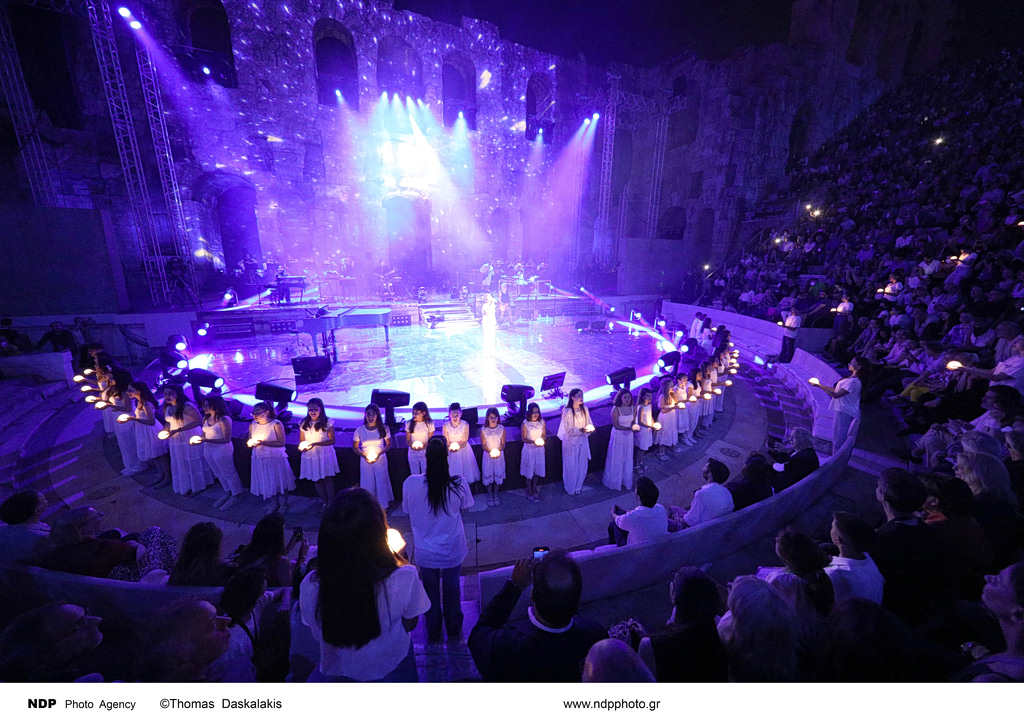
Spiros Lamprou’s 30 voice childrens’ choir.
It would be great to have it screened in London, right where the Marbles are.
I totally agree. I think it’s very important for people all around the world, but particularly in Great Britain, for them to understand the seriousness of the situation. I always bring up the case of Stonehenge, if they woke up one day and somebody took them away. Then somebody else says they were just sitting there and we just took them, and then they spent 200 years fighting it.
Why do you feel so strongly? Do you feel a sort of mystical energy when you visit the temple?
Well, absolutely. When we visited the temple at sunrise and did some filming there when there was nobody there, just seeing the sun rising was just amazing. As far as the concert is concerned, just being on the stage at the Herodion is very moving, because it’s been there nearly 2,000 years, and also some of the greats of all time, like Maria Callas, performed there. You feel the history is alive while being at a sacred place like that.
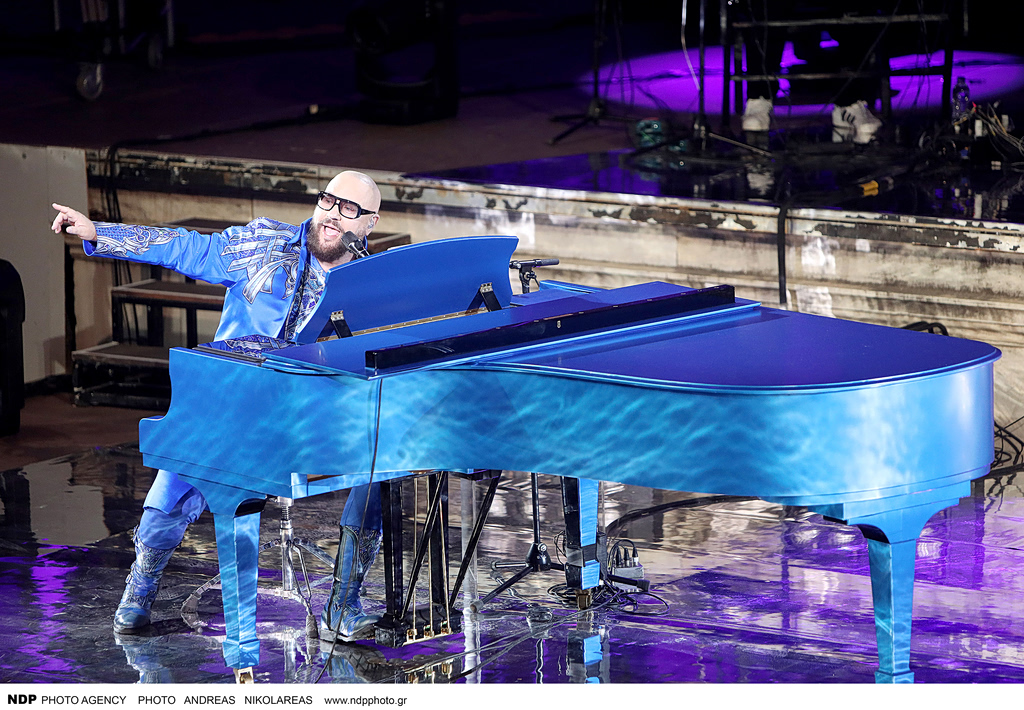
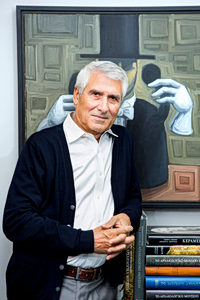
Desmond Child.
As for the provenance, if you will, of the sculptures themselves, there really hadn’t been any valid paperwork or contract before their removal. They said, well the country was occupied. But remember when the Nazis occupied let’s say Paris, they decided to take some artworks back home, with the idea that we’ve occupied so we can take it. We have spent 75 years trying to bring them back to the original owners and to the countries where the artworks were.
‘You don’t go and take a temple apart and take the pieces away’
There’s something else that I came to understand. Each piece of the Parthenon is not an independent artwork unto itself. The artwork is the complete set. That’s the artwork. So you can’t compare it to let’s say the Winged Victory in The Louvre Museum. That’s an individual, single piece of art. That is an important concept to understand.
Beyond that, there is the spiritual aspect of it. You don’t go and take a temple apart and take the pieces away. It’s a sacred and holy place. If you think of all of those reasons, that’s why all the pieces should be back. And guess what? It’s not that long of a flight [to Athens] from many parts of the world, and particularly from Great Britain. So, if they love the Sculptures so much, come and visit and spend some time in Greece. Who doesn’t want to do that?
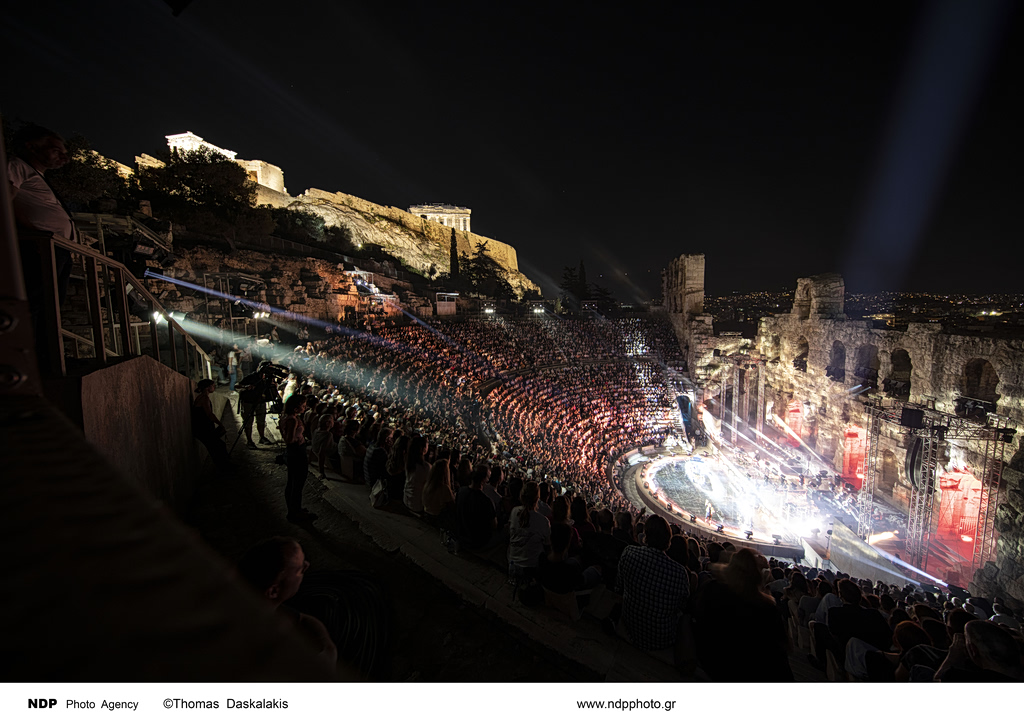
Odeon of Herodes Atticus.
The Parthenon was a creation of the golden age of Athens and its democracy. How do you see democracy faring in America and around the world today?
Well, I can’t really speak to that because I’m not educated enough. ‘I’m a musician and I can’t speak in grand gestures about democracy. I know that people on both sides of the equation feel very differently about this, and they’re moving away from each other. I would like democracy to include more dialogue. Explain to me exactly why you feel the way you feel. That to me is what democracy should be about.
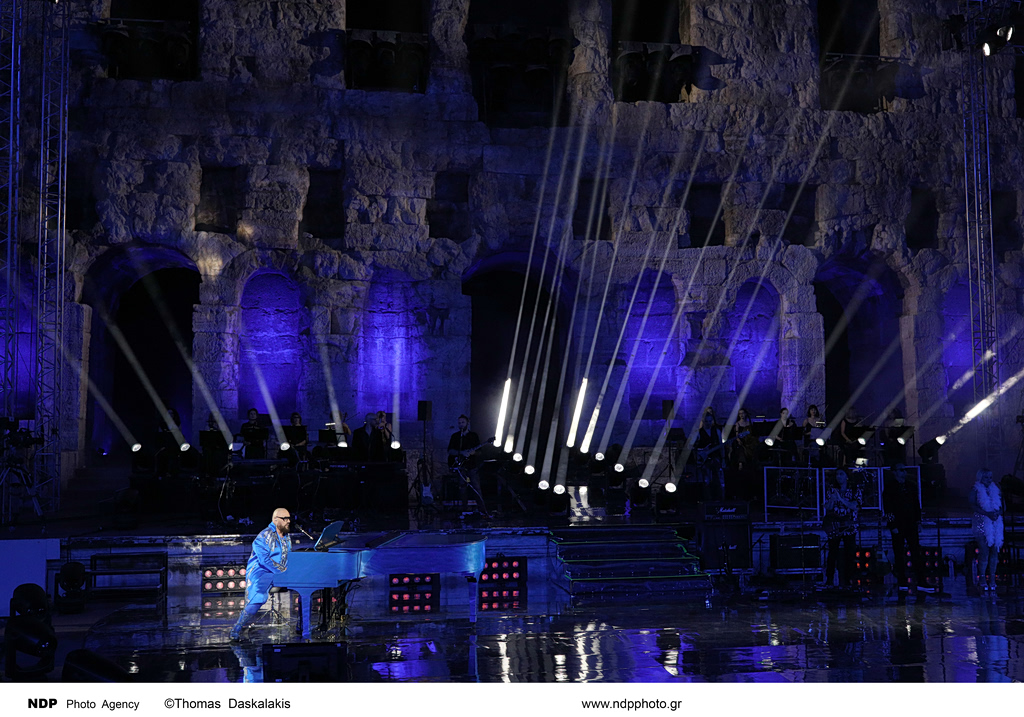
Desmond Child.
There are ongoing negotiations about the Marbles between the British Museum and the Greek government, and there’s been some talk about the museum lending (or leasing) a portion of the pediment sculptures, in return for a loan of ancient Greek masterpieces. Is it valid or acceptable to borrow something of which you are the rightful owner?
I think those are semantics. Borrow a portion? I don’t see that. Bring them all back, and as for the word ownership, they are owned by planet earth, all of humanity. That’s who should own it, because it’s one of the wonders of the world and it should be projected as such, for history and for future generations. That’s the plaque I’d like to see: ‘Owned by the World’. It’s not fair that they aren’t all together. No one would like to wake up one morning and see [the parts of] Stonehenge in some museum that says, “We just took them.”
I’m just a songwriter and I say thank you to the people of Greece for allowing me to present my music as a contribution to the Acropolis Museum.
MUSIC AND LIFE AND DNA
You’ve written so many songs that have been loved by hundreds of millions of people. It would seem that you have an incredibly deep core inspiration as an artist. One wonders where does this inner fire come from? Is it from God, nature granting you talent, or something else?
I think it’s probably that, and then circumstances. My mother was a song writer and my great grandfather was a poet. My father was an actor.in high school and college. So, I came from an artistic background and I got some really great DNA from my mother and father. Ever since I was a little kid. I was able to sit at a piano just improvising. Even if I did not know how to speak yet music was in my spirit. All that drove me to want to be the best that I could possibly be.
I came from very poor circumstances, and I wanted to take care of my mother so that she could have a beautiful life.
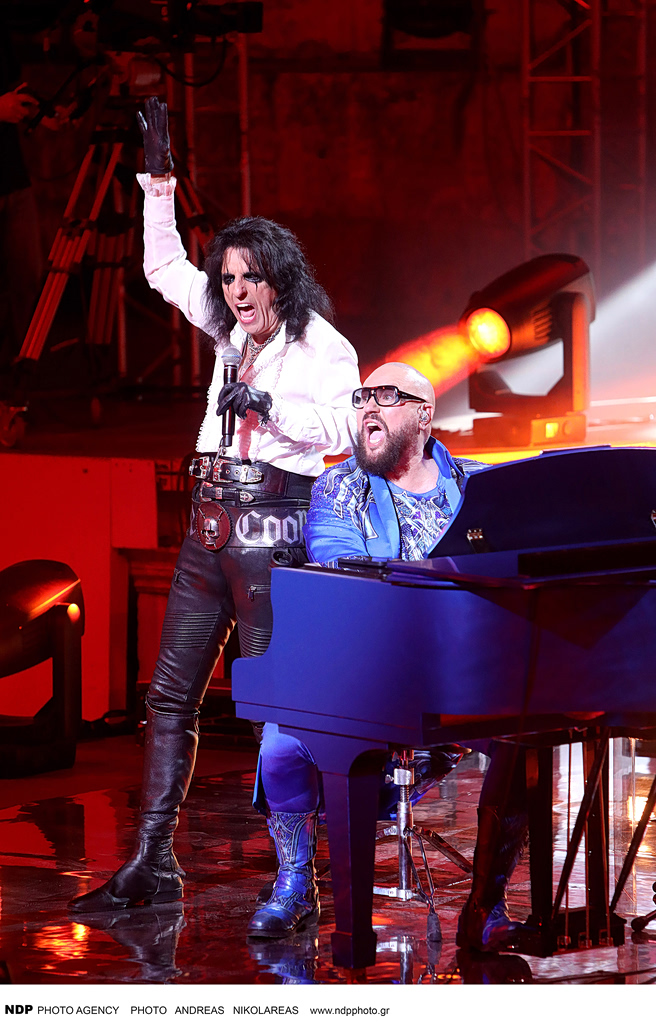
Alice Cooper singing in the new documentary on Desmond Child’s benefit concert for the return of the Parthenon Marbles.
Since you touched on the spirit, do you believe in God or a higher power?
There are multiple galaxies by the trillions, right? I just think it’s something beyond comprehension. Why? We want to create a being like us. We want to create God in our own image.
Are there artists that you worked with and something just clicked to form a deep spiritual bond? I know you felt such I bond with the singer Laura Nyro, though I don’t know if you ever met her.
Yes, I did meet her and in fact I was the lead-in act for her at the Algonquin [Hotel, NYC]. I sang one of her songs, “The Man who Sends Me Home”. It was a thrill to not only get to meet her and spend time with her, but to sing one of her songs.
Are there other artists that you have developed a special spiritual bond with?
I would say Laura Nyro first [pronounced NEER-oh], and Nyro [one of his twin sons with his husband Curtis Shaw] is named after her. I have that, but I would also say and, had the chance to have dinner once, with Joni Mitchell. She’s the real deal, and her integrity is beyond words. I just love her! These are my idols, who I did not actually collaborate with.
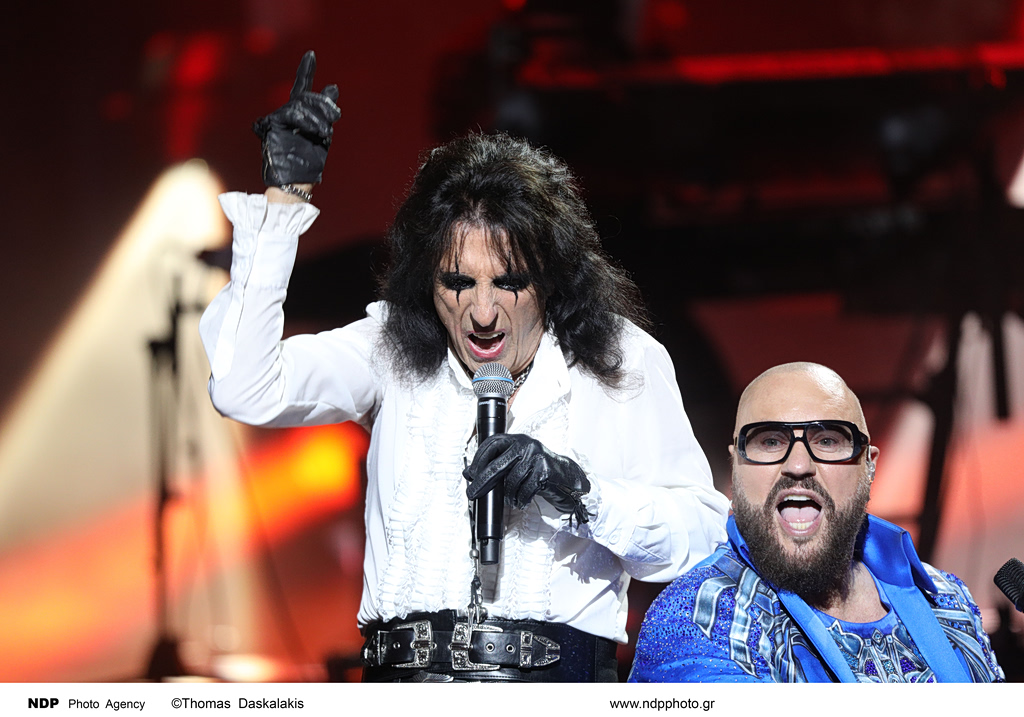
Alice Cooper and Desmond Child performing together.
I have formed very strong bonds with Jon Bon Jovi, Richie Sambora, Steven Tyler, Joe Perry, Alice Cooper, Joan Jett, Paul Stanley of Kiss. There’s a camaraderie of beautiful feelings coming through writing and you can feel that energy.
Tell us a bit about your artistic process, which I understand includes talking to artists before writing and delving into their inner being.
I think of myself as having a sort of empathy. Sometimes when you don’t know somebody that well you find them opening their heart. They’ll confess what they haven’t confesses to their best friends. Those things make their way into the song.
Has your enormous success over 40 plus years changed or shaped your character differently from the younger Desmond, and what was Desmond like as a child?
Ι was a very lonely child, though I had a younger brother. I felt different than most of the other children, I can attribute that perhaps to the fact that I was born gay. I think that already makes me different. I think I saw that the world with different eyes. I saw the world in a kind of special way. It’s not just about sex. It’s just a completely different point of view. I think already that makes me different. I see the world through different eyes and feeling about oneself, I think that contributed to how it jumped out, because a lot of my friends from high school that weren’t normal children, a lot of them got into drugs and other problems and they died young.
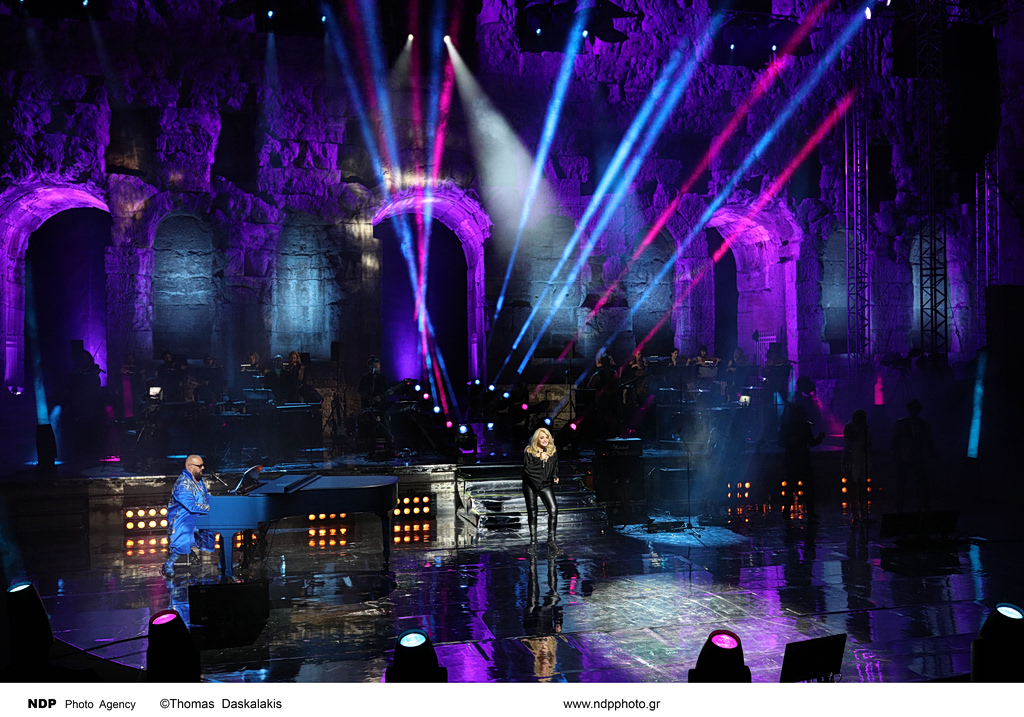
Desmond Child performing with Bonnie Tyler.
A mentor changed his life
I was lucky enough to meet a singing teacher who was a Holocaust survivor, named Marie-Louise Leets. She was a professor at the University of Miami. A lot of high school friends went to her privately, and she just took me under her wing. She said I’ll teach you for free as long as you don’t smoke, don’t drink, and don’t take drugs. I made that vow and I kept it, so I was able to stay out of trouble, and to really concentrate on developing my talent. She taught me so much. Having a mentor like that is very important. She was a private teacher, because the education system doesn’t pay people of that calibre enough to go into public schools, because education doesn’t seem to be a priority.
I think that being different the norm let’s say – whether sexual orientation or gender identification, or your race or your ethnic origin – all these things are very rich elements to create with, because the norm sometimes can be very unimaginative.

Bonnie Tyler.
Your mom was a beautiful Cuban poet and songwriter named Elena Casals, also known as La Musa. What life lessons did she teach you that you still carry, and maybe even have passed on to your sons?
She had a tremendous amount of charm, and that opened a lot of doors for her. But she was such a dreamer that she wasn’t really able to capitalise on all of that beauty and talent.
After I did the concert “Desmond Child Rocks the Parthenon” and I was leaving Athens to go back to the US and was looking down at the city, it dawned on me that I had a parallel story. My mother knew a sculptress named Lee Burham. She did a bas relief, 4” thick and 4.5ft tall, made out of Brazilian walnut. It was the only good thing that we owned. My mother bought it from her. At that time, in 1954, she paid her about $600.for it, and that is thousands of dollars today. It was the one thing that we had when we lived in poverty in the projects of Miami, called Liberty City. One day when I was 10-years-old, I came home from school ad it was gone. She had sold it. We were so poor. It just disappeared, and after pining and pining for it I was able to find it and buy it back for $35,000. When we designed our New York apartment, I designed a special wall for it and trimmed everything around it in walnut, just knowing exactly where it was going to be. Luckily, my mother was still with us and I flew her to New York to see it and she touched it and was moved.
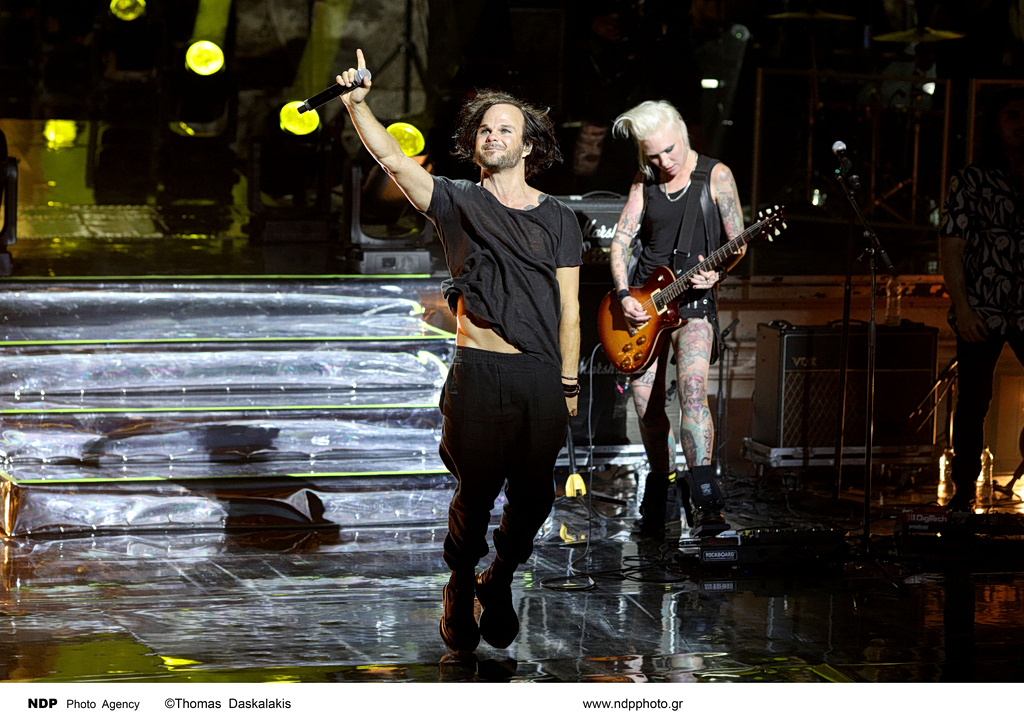
The Rasmus.
I didn’t really realise why the Parthenon Sculptures touched me so deeply, and it’s because I experienced the same thing happen. All of a sudden the sculpture itself reminded me of ancient Greece. It was my mother covered in a long flowing, unstitched sheet and three Greek-looking men with long noses and draped in robes [chiton] kind of whispering in her ear, because my mother had relationships with many men. She was a very passionate woman and her body belonged to her, so she took the pleasure that she wanted to take. I think she was very modern in that way.
One of the very many cool things that you’ve done was to create a “Latin Songwriters Hall of Fame” and named it with your mom’s moniker. La Musa. I want to go to something very recent. What was your take on Bad Bunny’s performance at the Super Bowl? Do you think he has the type of talent that can withstand the test of time, and would you work with him on on a song?
Gosh, if I were lucky enough to work with him that would be awesome. I think that he is a genius. The way that he put together that half-time show was needed and was a very important moment. We Latinos have been demonised and criminalised, and he showed the beauty of our culture and recreated a village, with for example a little boy getting a haircut. Every corner had some kind of village life, and then the excitement and the joy of the community, of all the people that were on that field, with the flags of all the Latino countries. He was showing the world that we have worth, and that we have joy, and we have a lot to give, and we’re not just vermin, or gangsters and rapists and murderers as we’ve been characterised. I think it’s very important. People criticised him for singing in Spanish, but the fact is that I can speak perfect Spanish, and I didn’t understand a word he said. So it’s like hey, calm down. But the vibe was such – because he sings in a kind of urban dialect where he’s flowing over consonants – his sound, aah, is just amazing.
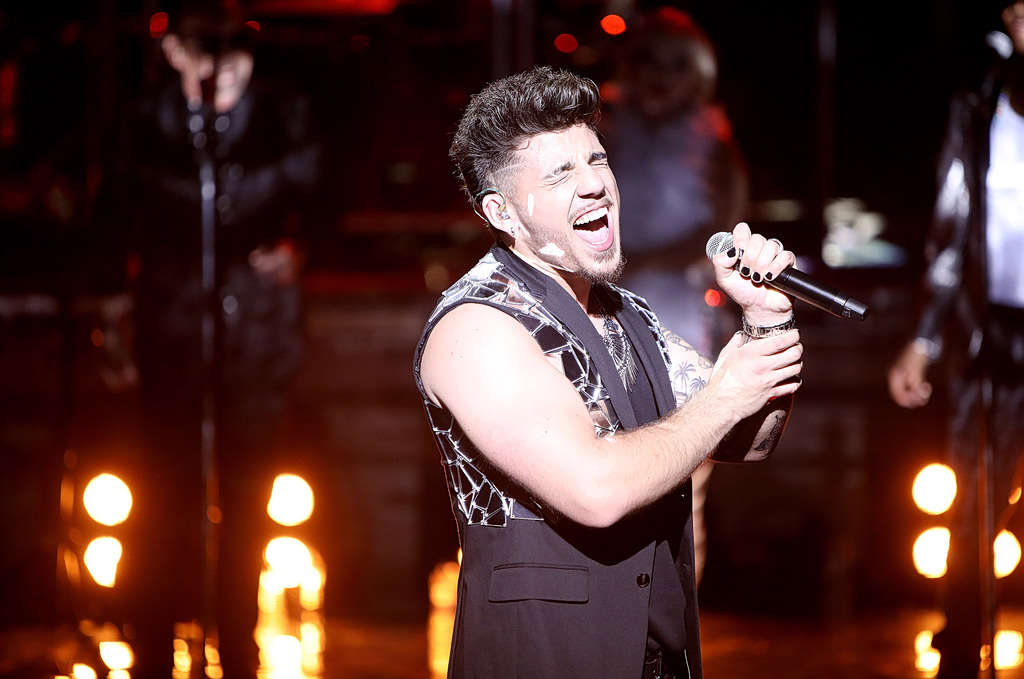
Leo Dante.
When I first produced “Livin’ La Vida Loca” with Draco Rosa, and “The Cup of Life”, also for Ricky Martin, we were at the turn of the century. Our sound really took hold. Technologically, we were the first song to reach #1, that was done completely digitally, and because in those days technology didn’t have reverbs and all those kinds of things it was very dry, and that created a different sound that kind of broke through. If you hear “Livin; La Vida Loca”, it’s in your face. Wherever you hear it, it just comes through. We actually were honoured by the Library of Congress National Recording Registry for our technological achievement, and also the cultural impact. From that moment on, it ushered in the era of Reggaeton [a popular, high-energy Latin music genre], culminating with the song “Despasito” which was written by Erika Ender and Luis Fonsi.
Now, Bad Bunny Takes that Mantle and takes it even further. He’s one of the biggest-selling artists of all time, and he sings exclusively in Spanish and maybe a few English words.
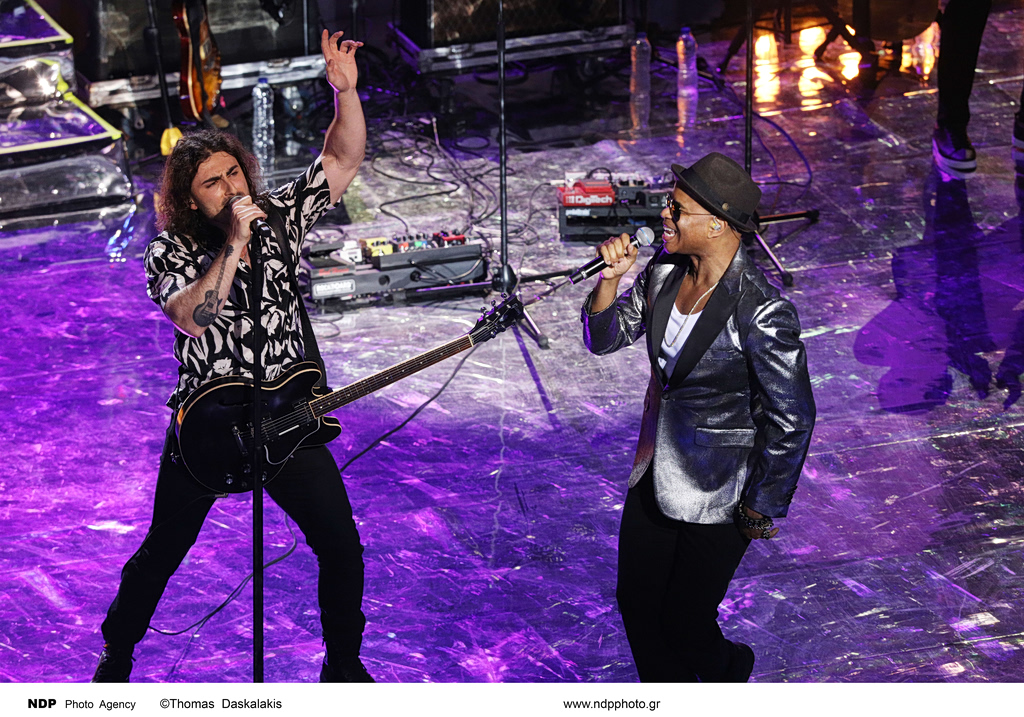
Justin Benlolo & Chris Willis.
When Draco and I wrote “Livin La Vita Loca”, the head of the record company said, “Okay now, can we write the song in English?” But it is in English. It only has three Spanish words! So, when he put out the full-page ad in Billboard [magazine] it said “Livin’ La Vida Loca”; and then in bigger letters it said “Living the Crazy Life”. Because he didn’t understand it, he didn’t think anyone else in the world would understand it. The only three words in that song that are in Spanish are La Vida Loca.
I don’t know if you agree, but I think it is really a tragedy, that our country, which was built by immigrants – at the base of the Statue of Liberty you read poet Emma Lazarus’s line “Give me your tired, your poor/Your huddled masses yearning to breathe free,” – is now just excluding and is not at all inclusive. How do you view that?
I don’t know how to explain it, but I wrote a song [music and lyrics] for Barbra Streisand called “Lady Liberty” I included those words, and it’s one of the greatest performances of Barbra Streisand. She sang it with all her heart, because it was a love song to liberty. She is a patriot, and she very much believes in democracy and fairness, and it stands for all of us. America has ‘plenty of room for ‘people coming, bringing all the riches they bring’.
If you fly over the United States you can go on for hours not seeing even a village. There’s plenty of room on our continent for people coming and building and bringing their special backgrounds, all the riches that they bring. I’m Cuban and I grew up in Miami and Miami Beach, and I feel very American, but at the same time I’m so happy that I have my Cuban heritage, and also the Hungarian side as well.
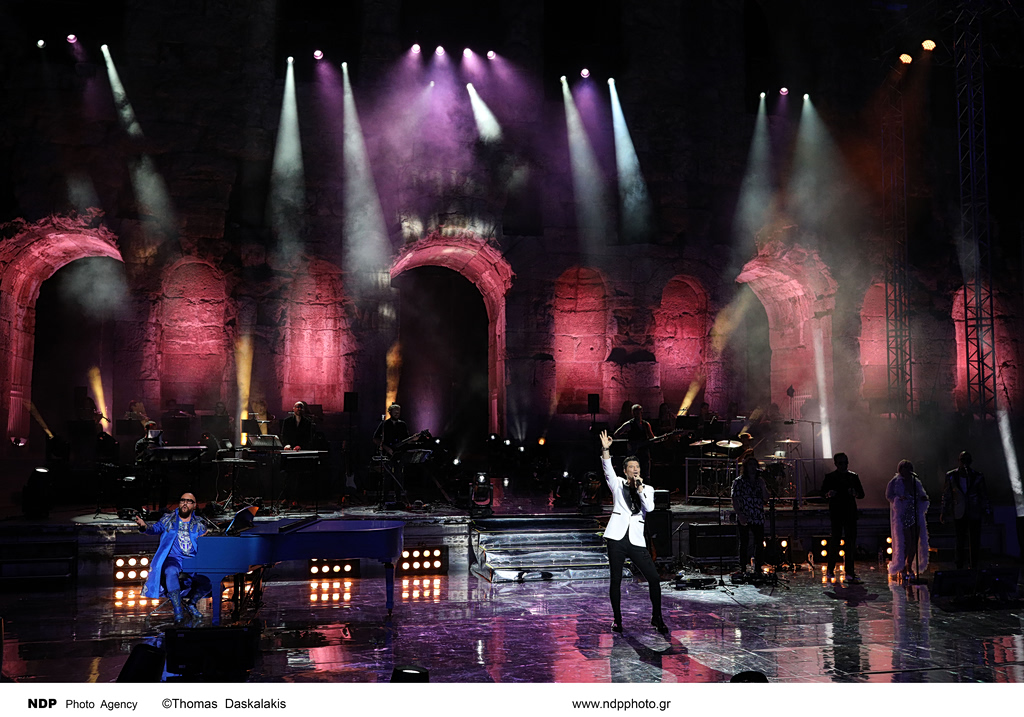
Desmond Child & Sakis Rouvas.
In 2016, in honor of the Hungarian Revolution of 1956 against the Soviets, I was asked to write a sort of anthem like “We Are The World”. It’s called “Steps of Champions” in the English version. All the top Hungarian stars and all different kinds of people sang the song and it really took off. School children all know the song and sing it. So I’m very, very fond of Hungary and the Hungarian people, and I understand how much they suffered under the Soviet yoke. Both of my parents came from Soviet-dominated countries.