Paolo Gentiloni, who will participate in the Delphi Economic Forum XI in April (22-25), argues that a potential defeat for Viktor Orbán could be very good news for Europe, weakening populism, boosting EU unity, and proving that even Trump cannot sway the continent. He explores the EU’s urgent push to bolster its defense and economic resilience in the face of war, inflation, and shifting alliances. From NATO tensions to Iran’s fragile ceasefire, Gentiloni offers a candid, no-holds-barred look at the choices that could shape Europe’s future.
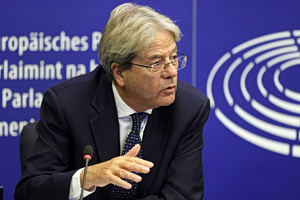
European Commissioner for Economy Paolo Gentiloni attends a press conference Tuesday, Oct. 19, 2021. (Ronald Wittek, Pool Photo via AP)
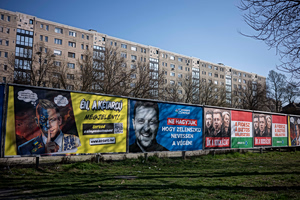
I’d like us to start with the elections in Hungary. Why does such a relatively small country matter so much for the EU? And what would a new Orbán victory, or his defeat, mean for the EU, its cohesion and future?
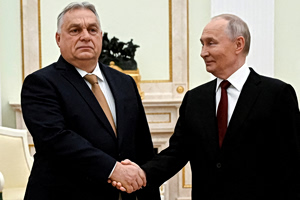
Hungary has become quite important in recent years for a mix of different reasons. The result is that Hungary is now a privileged partner for Russia, for the U.S. under the Trump administration, and for China.
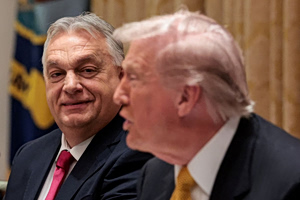
It is by a large margin the leading European country in terms of direct investment from China. It is the country that supports Russia against Ukraine. And from an ideological and political point of view, as we saw with J.D. Vance’s visit, it is the good guy in the European family for President Trump.
All of which give Hungary quite an important role in Europe. Of course, we must also note that Prime Minister Orbán is lagging behind in the polls for the first time in 16 years. So, there is a real chance that the regime which Prime Minister Orbán himself calls an illiberal democracy will be defeated.
Of course, this would be a major change for the EU, given Hungary’s well-known opposition to every measure the bloc seeks to introduce in support of Ukraine, and because its model of illiberal democracy is, quite honestly, very much at odds with all the principles we espouse in the European Union. This is why there is such a lot of interest in this election. Viktor Orbán could be defeated for the first time. But that’s far from certain, of course. We’ll have to wait and see.
Given the threats President Trump has made against NATO and its EU members, how do you see Euro-Atlantic relations evolving now? Will Europe be ready to defend itself within a reasonable timeframe? It seems that may be the only way ahead for the European Union.
Well, I think we have been saying this over and over again for several months now, in fact for over a year: President Trump is, in a sense, a wake-up call for the European Union.
Because I think he has made it very clear from the start that the Americans would be less committed to European defense.
This is, of course, rather volatile. It depends on different emergencies. We went through a very difficult time when President Trump made clear his intention tο own Greenland. We had better times when the NATO countries decided to increase their military spending. And we are going through another tough period now, which is not reasonable, because, of course, we are not involved in this war at all. We weren’t asked to participate as European allies of the U.S. We weren’t asked to agree. This was completely different from, for example, the various wars the US led in Iraq or Afghanistan. Rightly or wrongly, those were wars in which the U.S. involved its allies. This has not been the case in the Iran war, and it is somewhat strange that President Trump is now blaming his allies for not participating in something he didn’t want us to take part in.
So I think we should take this wake-up call seriously and speed up our bolstering of European defense. Of course, that isn’t easy from a certain point of view, but the Ukrainian war continues to underscore that, while Russia’s enormous military power is a serious threat, it isn’t something we cannot deal with. After all, Ukraine has dealt with that power very courageously and strongly.
Do you think this ceasefire with Iran is likely to succeed, if I may use that word? And what role do you foresee for the European Union, given that it has largely stayed out of the situation, both diplomatically and militarily?
As we speak, it’s very difficult to know if this ceasefire will hold and for how long. There are two enormous obstacles to the ceasefire. The first is Lebanon: quite simply, it isn’t clear whether the ceasefire includes Lebanon or not. The second obstacle is the future of the Hormuz Straits, which is of critical economic importance, of course. Because, again, it isn’t clear what kind of compromise could be reached on this matter.
But if we guess that there is a possibility of the ceasefire holding, there are a couple of remarks I can make. First, we should be aware that we will be paying an economic price, whatever happens. The price might not be as disastrously high as it was for the pandemic, the inflation might not be as run-away as it was after the Russian invasion of Ukraine, but there will be serious consequences, even if the war does actually finish soon.
And my second remark is this: Europe was right to stay as far away from this war as it could. Yesterday, most of the European leaders plus the leaders of Japan and Canada—so all the members of the G7 apart from the U.S.—issued a statement supporting the ceasefire.
Their joint statement also referred to the possibility of a commitment to preserving navigation rights and stability in the region after the war. So this is a role the European Union could play, albeit once the war is over. We didn’t start this war, so it’s not on us to play a significant role in ending it, but we can make a crucial contribution after the war.
How do you assess the state of the EU economy? We see a need for more military spending. At the same time, there are pressures from the war, oil and gas prices, and inflation. How do you see this playing out?
The consequences of the war will be there in any case, though they will depend on how long it lasts, of course. Right now, we see that there is a chance of a ceasefire.
So even if the ceasefire holds, several estimates suggest that the European Union has already suffered a 0.5% reduction in growth and a 1% spike in inflation.
Of course, even if the war is over, it will still take a few months for things to get back to normal. Supply chains need to be restored, the Hormuz Strait has to open again, and the skyrocketing prices of jet fuels can only be brought down gradually. None of these things will happen overnight. Of course, there is also the highly negative scenario that the war isn’t actually over.
If it does start up again and goes on for months, I think it will usher in a period of stagflation at the very least, though even recession is possible—for Europe, but also for the world economy. So, let’s hope the war is over and address its consequences which, though they are unfortunately very real, are not yet what I would call catastrophic. Of course, they could become catastrophic in just a few months’ time, if the war does restart.
My last question is about the rising populism we are witnessing in many EU countries. Do you think the European Union can counter this, and what are the risks if it cannot?
The rise of populism is not something new here in Europe. We all know that. It’s been going on for 10 or 15 years. And I think we also can see the robustness of the European project, of the European path and European institutions. For example, in my own country, Italy, which has now been ruled for three years by a right-wing government which came to power holding strongly anti-EU positions, we have gradually seen a more traditional pro-European, or at least not anti-Europe, attitude emerge. I don’t support this government, of course, but I think we should recognize that the threat of the Italian extreme Right has not materialized—not as far as European affairs are concerned.
So, I think the Hungarian vote will be very important. If Victor Orbán loses these elections, despite the support pouring in from all the world’s big powers, I think it could be a game changer—for populism in Europe, too. But populism hasn’t really been on the rise in recent months. Look to what happened in the Netherlands, where we have a really pro-European government now.
The populist surge did not materialize in Slovenia, either, where there was a very tight election result. Now all eyes are on Hungary. And of course, everyone is thinking ahead to what will happen next year in France. Overall, I think it is now clear that the Trump administration isn’t good for the popularity of populism and right-wing nationalism here in Europe. In fact, it seems to me that President Trump is becoming a liability for the extreme nationalists in Europe. Which means we can manage the problem they represent in Europe, provided we respond to this wake-up call regarding the threat to our autonomy.
Thank you so very much for our discussion.
Thank you.