Helga Kalm, Deputy Director and Head of the Foreign Policy Programme at Estonia’s International Centre for Defence and Security (ICDS), and former Political Adviser at the Estonian Embassy in Washington, speaks to To Vima about Russian-Estonian relations in the aftermath of the “drone war” and the new geopolitical reality shaped by Donald Trump’s presidency.
We have had an intensive time of late. We had the incursion of drones in Estonia and many other EU countries, the Zapad military drills, the rising number of drone attacks in Ukraine. Given the recent developments what are the fears of the Estonians and what kind of actions are needed from your point of view to achieve a curtain kind of safety when it comes to Russian aggression?
The situation in Europe is straightforward. Russia has launched a war of aggression against Ukraine, it is spreading disinformation about the legitimacy of certain European countries and their right of self-determination, and it is waging a hybrid war against the continent, including by interfering in elections. Russia has played itself into a corner, where it is incapable for providing civil liberties and economic opportunities for its own population, so it is just trying to be a spoiler everywhere else. We can deter Russian aggression if we remain firm in our responses and maintain the course. We need to increase our defence spending and reduce international dependencies by creating an independent European defence industrial base. We need to maintain current export controls and sanctions and continue to add new measures. And we need to start using Russian frozen assets to pay for the damages it is causing as a means of reparation. If we remain united and determined, Russia will not be able to expand its aggression.
The problem with Europe is that history is understood differently across Europe. Some Europeans have never learned about the mass killings, torture, starvation, and political totalitarianism that was Soviet Union. There is a certain romanticism about Soviet Union among some circles, and Russia plays on those sentiments, by portraying itself as a protector of all Russians everywhere and labelling the Baltic States as Russophobes. In reality, the sentiment is anti-Soviet and a desire to live according to European values as set out in the Helsinki Final Act of 1985. People just want democratic freedoms, and to not be dominated by an imperialist totalitarian neighbor.
Is there still a possibility for improved relations between Russia and Europe after the recent events?
It would be very easy for Russia to improve relations with Europe – they would just have to stop the aggression. I believe every country in Europe wants peace, except Russia who continues its war of aggression in Ukraine and hybrid attacks against other peaceful and democratic European countries. Under present conditions I don’t see room for improvement. It is up to Russia to demonstrate that they would like to improve relations with Europe, but so far they have shown no interest in it.
The Trump presidency seems to be uncommitted to the territorial security of NATO allies. In this case, should Europe move towards some kind of autonomy in its defense?
Europe needs to do more to be able to defend its borders and citizens, regardless of who is the president of the U.S. For years Europeans have enjoyed the peace dividend and reduced their militaries to expeditionary forces. While EU and NATO member states all want to leave in peace, the ambition is not universally shared across the world. Russia and China maintain their imperialist ambitions and believe that the strength of a country comes from the ability to dominate others. At the same time, Russia is neither a military nor economic giant and we should refrain from picturing it as an unconquerable force. Europe just needs a better culture of readiness, as outlined by both Mario Draghi and Sauli Niinistö reports, and to spend adequately on its own defence.
Russians are denying the recent incursion and accuse Estonia and Baltic states generally for Russo-phobia and warmongering. Do you think there is an element of truth in what Russia claims?
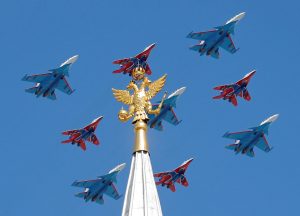
The fact that three armed Russian MiG-31 fighter jets violated illegally Estonian airspace has been proven by data from radar systems, which has also been shared publicly. The incident was extremely reckless and dangerous as the fighter jets did not have flight plans, and their transponders were switched off. At the time of the airspace violation, the fighter jets did not have two-way radio communication with Estonian air traffic control which shows malign intent. Denying their activities is just typical Russian disinformation. I believe that the Greek government and society would be similarly upset if armed fighter jets from an unfriendly country violated their airspace for 12 minutes under similar circumstances. It is important that we don’t fall prey to blatant disinformation by a country that has without any cause started the largest war on European soil since World War II.