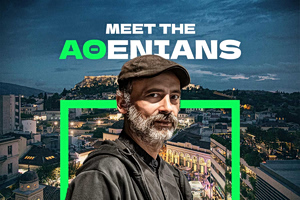
Where do Athenians spend their time? Where do they unwind, meet friends, or enjoy their daily coffee? Where does work end and the city begin? In Meet the Athenians, we talk to the people of Athens about the places and moments that make them love the city they call home.
In this interview TO BHMA International edition talks with the gastronomy tour guide, Sofia Dritsa.
1) How does your work interconnect with the city and its people?
My work is tied to Athens in such a direct way, it feels almost personal. As a food guide, I walk the city through its memories, its scents and flavors, its micronarratives: the local markets, the smells wafting out of the bakeries and coffee shops, everyone who opens up to talk about their products or simply chat about their day, the small failures and minor triumphs. In Athens, food is more than just the obvious—it is the most honest way to converse with the city and the people who shape it.
2) If you had only 24 hours in Athens, which three essential stops would be on your list?
I guess I’d start my day in the central market, before the city wakes. The loud voices, the teasing, the smell of fresh ingredients, the liveliness and the eye contact when people talk to you — that raw energy is Athens’ pulse. You don’t even need to tune in; it’s so compelling, it gets through to you, regardless.
At noon, I’d pick a small taverna in a neighborhood that still smells like home, even if it’s just steps away from the busy center — somewhere in Petralona or Koukaki, for example. Where locals and visitors can share something simple, yet profoundly essential: a few mezze, a glass of wine, and conversations that blend with those from nearby tables.
And in the afternoon, I would climb Philopappos Hill to watch the city breathe beneath the gentle light. It’s the moment the city turns calm, almost tender, as the Acropolis slowly lights up with the natural landscape framing the view.
3)What’s one thing you really love about Athens, and something else you wish was different?
What I love most about Athens is that it remains multifaceted: messy, real, unpolished, even contradictory. A city that never pretends, even when new trends push it to play a jarring role. You can find flowers in the most unexpected corners, truth in people’s eyes, photographable moments everywhere you look, and stories to be told.
Of course, I would wish for more quiet, less anger, more greenery and fewer cars—for more room for people to connect. I used to say the city needed to be demolished and rebuilt from scratch. But now I’ve come to love its peculiarities and accept it for what it is: an endless palimpsest on which, no matter how many interventions you try to impose, the past will always push up through from underneath.