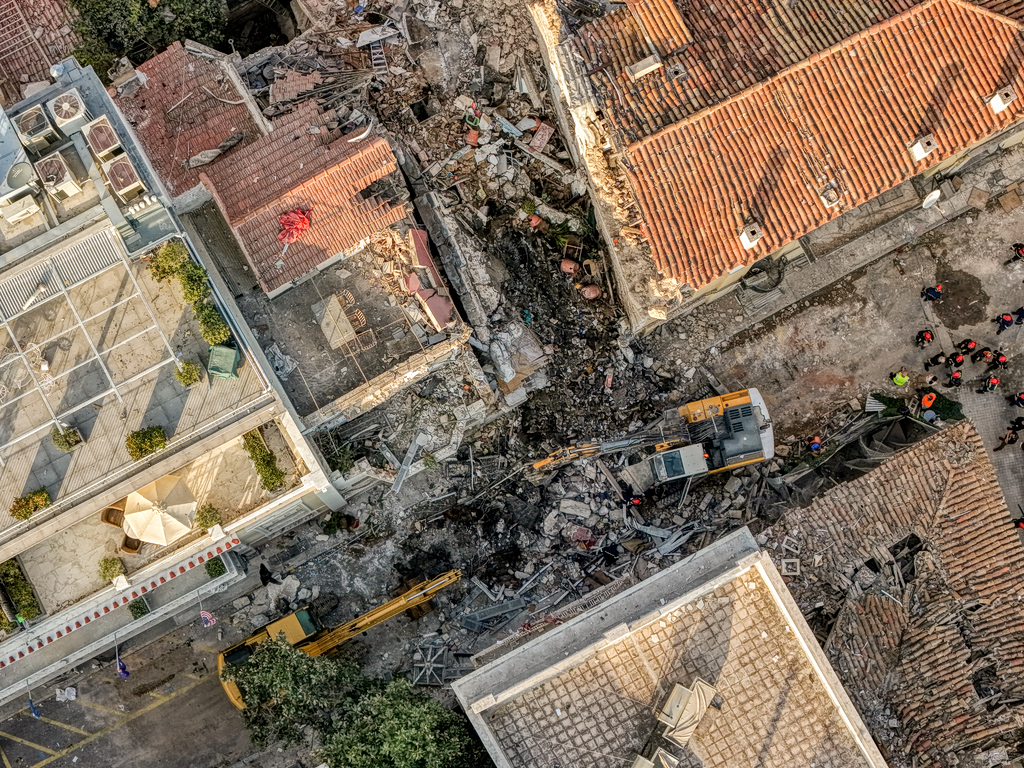
“This is how we decided to execute by way of example the head spy of the CIA and its chief of station in Athens, Richard WELCH, who under diplomatic cover, and with the assistance of the five CIA section chiefs in Athens, directs an enormous network, a veritable army of local, paid spies – in the government, ministries, the army, security police, a segment of political parties and of the press – that constitute a fifth column of imperialism in our country.
“Richard Welch, as the chief, is co-responsible for all the crimes committed by the CIA against our people. He is not just a small-time employee or a simple executive organ, but rather the chief, with specific personal responsibility for decision-making.
“His responsibility is rendered greater by his lengthy prior postings in Greece in the decade 1950-1960 and in Cyprus between 1960-1964.
[proclamation of the “Revolutionary Organization N17” claiming responsibility for the 23 December, 1975, murder of Richard Skeffington Welch in Athens]
When Richard Welch arrived in Athens to assume the post of CIA station chief, right after serving as station chief in Peru, he was returning to familiar territory.
Immediately after being hired as an operations officer, right out of Harvard College, he served in Greece from 1952 to1958, an exceptionally long tour. He was then transferred to Cyprus, serving there from the creation of the republic in 1960 until 1964.
Six months after his arrival in Athens for his second tour, just over 50 years ago, he was shot dead outside his house with three bullets at point-blank range, assassinated by the newfangled Marxist-Leninist urban guerrilla group “Revolutionary Organization 17 November”.
Welch, of Irish descent on both sides, was imbued with a love of ancient Greek civilization from his school days at the distinguished Classical High School in Providence Rhode Island, but also from his time at Harvard, where he was a classics major (Greek and Latin), and graduated Magna Cum Laude (received by around the top 10 percent of each graduating class).
Welch was among the five percent of the class of 1951 recruited by the Agency that year. Another classmate hired that year was his lifelong friend Christopher May, who was to write an extremely illuminating Agency obituary that draws heavily on performance reviews and personal discussions.
“However critical he was of the Agency’s performance or decisions in later years, Dick Welch never wavered in his conviction that he had made the right career decision, and that success for the Agency was essential to the well-being of the United States,” May wrote, with a rare reference to intra-agency dissent.
Founded just five years earlier, the CIA was clearly interested in recruiting the best and the brightest from the Ivy League. Welch clearly fit the bill.
The next year he arrived in Athens at age 23, with his young wife Patricia, for his first assignment. The tour was clearly successful, as Welch was kept at the station for an unusually long seven years (1952-1958).
The period was marked by huge popular demonstrations in Athens and around the country with tens of thousands of protesters, beginning in 1952 and lasting throughout the decade, demanding the liberation of Cyprus from British colonial rule and annexation of the island (which had a population 82 percent Greek and 18 percent Turkish), an objective not shared by the government of the day, which discerned that the time was not ripe given geopolitical conditions).
This critical issue on the Greek side was to be handled by the fairly young Konstantinos Karamanlis, who was appointed prime minister by King Paul following the death of Field Marshall Alexandros Papagos, the revered PM who led the Greek Rally Party. The king set aside much more senior party figures to pick the 48-year-old northern Greece MP, and historians believe the choice was backed by the Americans as one that would guarantee staunchly anti-communist stability at the height of the Cold War and amidst the flaring Cyprus issue.
“Dick stayed in Athens for three rich tours in all. The high point probably came in 1956, with the elevation of Constantin Karamanlis to the prime ministry,” May wrote.
Cyprus front-and-center
They were right. Karamanlis founded his own conservative National Radical Union Party (ERE) that would sweep to power in 1956 – and again in 1958 and 1961 – securing him eight consecutive years in power. In 1960, he signed the three treaties he had helped negotiate establishing the Republic of Cyprus (Britain, Greece and Turkey were assigned the role of “Guarantor Powers” of Cyprus’ independence).
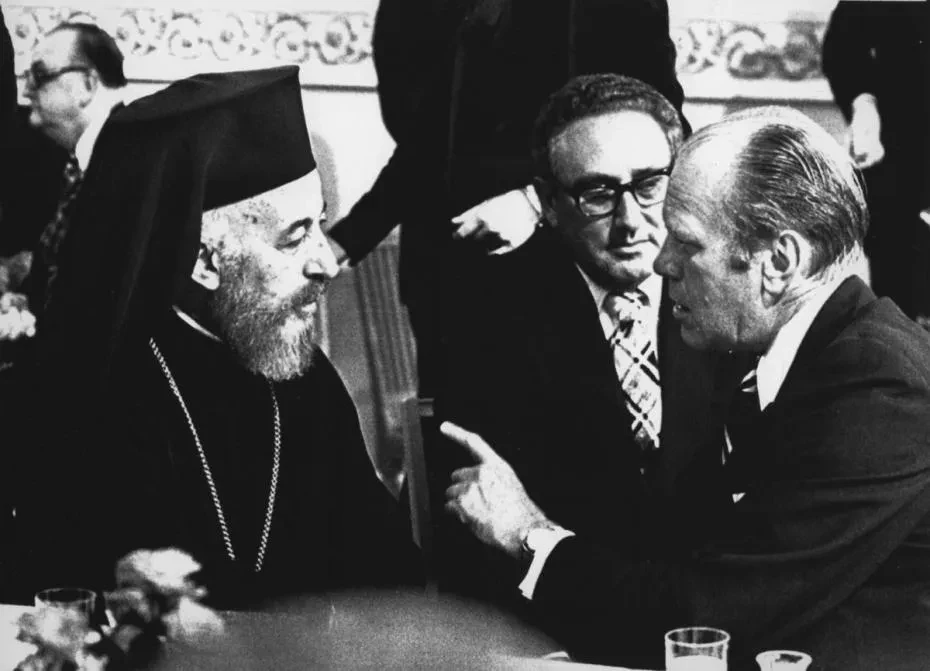
US President Gerald Ford and Cyprus’s president, Makarios III, confer at height of 1974 Turkish occupation crisis.
Welch – upon the establishment of the Republic of Cyprus in 1960 with an exceedingly delicate inter-communal power-sharing constitution enshrined in the fateful Zurich and London Treaties – was transferred to Cyprus, where he served until 1964. There, he witnessed the fierce, bloody inter-communal battles – after Greek-Cypriot President Makarios unilaterally amended 13 points of the Constitution – that led to the drawing on December 30, 1963, of the so-called Green Line, a UN-monitored buffer separating the capital of Nicosia into Greek-Cypriot and Turkish-Cypriot quarters. A British general’s drawing with a green pencil a line on a map is considered the first partition of Cyprus.
Just five months later, it was only a blunt June 5, 1964, letter from US President Lyndon Johnson to Turkish Prime Minister İsmet İnönü that saved Cyprus from the execution of Ankara’s readied plan to invade the island.
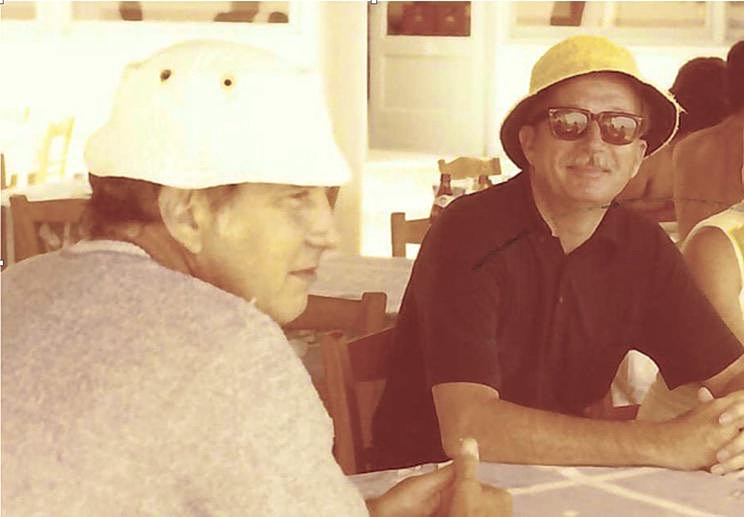
Richard Welch with deputy CIA station chief Ron Estes, summer 1975, Vouliagmeni.
A unique collegial friendship
In the lead-up to these tragically dramatic events on Cyprus, there emerged a uniquely deep and lasting friendship between two CIA officers – Welch and Ron Estes – that defined both and left lifelong scars on Estes, after Welch’s assassination in Athens a decade later.
They utterly enjoyed each other’s company and on Cyprus they particularly relished their routine chess matches each Sunday.
A seemingly odd couple
Friends and family say the two men at first blush could not have been more different: Estes a tall, strapping and handsome Korean War veteran that would fit the bill in casting an American James Bond. Welch a conservative-looking, bald and bespectacled intellectual with a sharp analytical mind, a keen wit, intense ambition and a deep sense of his own worth – which some in his Agency reviews suggested he did little to conceal – a man who though sociable would not suffer fools gladly and did not fear expressing rather ill-received but tolerated criticism to superiors, or at times even voicing reservations over Agency actions.
He could have become America’s spymaster
His high expectations were viewed as legitimate by many of his colleagues, who admired his brilliance and believed even that one day – had his life not been cut short so soon – he could quite possibly rise to the position of CIA Deputy Director of Operations (DDO), America’s spymaster.
Seemingly opposites on the surface, Welch and Estes developed a deep professional, intellectual and spiritual bond, a brotherly friendship characterized by mutual respect. Estes looked up to Welch with strong admiration.
While in Cyprus, the two colleagues had made a rather hopeful pact that one day they would take over the CIA station in Athens. Though that would seem like a mere pious wish, both had learned modern Greek quite well in previous tours there (Estes in Kavala, Northern Greece) and were familiar with the country, its people and the complexity of its politics. They were plausibly convinced the Agency would view them as suitable. Dick would be station chief and Ron would be his deputy. That simple.
As fate would have it, eleven years after Welch left Cyprus to serve in Guatemala and become station chief in Peru, their dream came true. When it was decided that station chief Stacey Hulse would be leaving, Ron wrote Dick to apply for the job. He did, and he got it.
A most joyous reunion
“He and I had taken over the Greek station, as we vowed 11 years earlier, and we celebrated. For weeks and weeks, we celebrated. We saw each other socially say five times a week. The station had a 33-foot Greek fishing boat and we made it into a pleasure craft and sailed most weekends. We had a wonderful time until December, 1975,” Estes said decades later, in a lengthy May, 2022, interview with the Association of Former Intelligence Agents (AFIO).
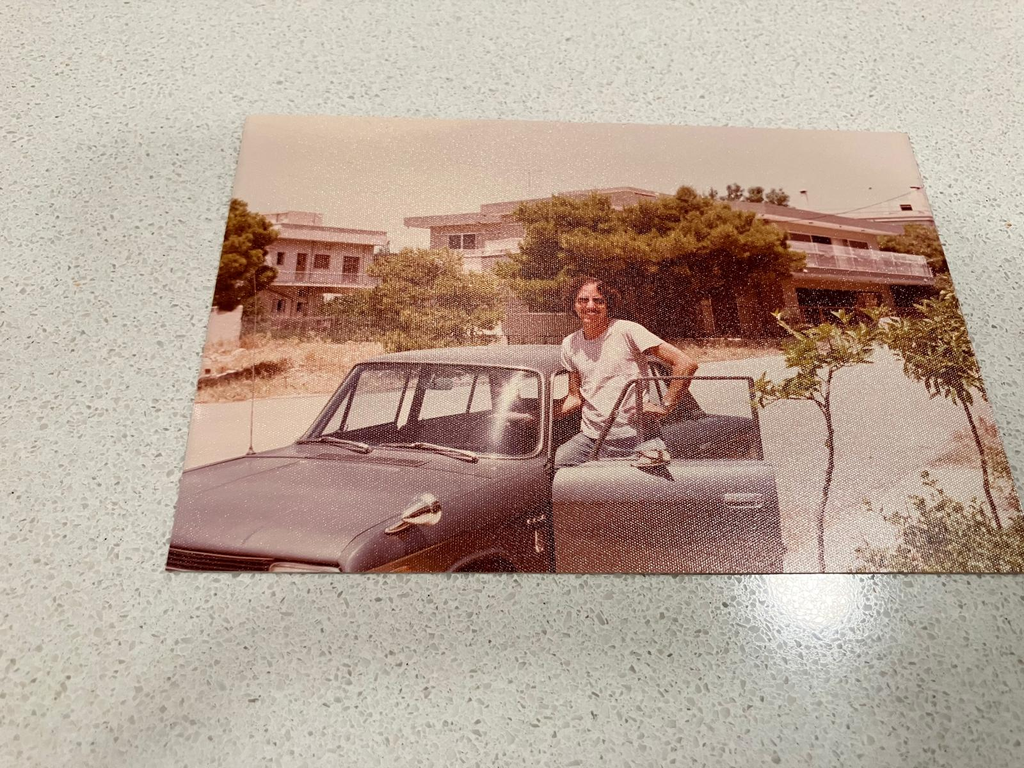
Ralph Mariani as a junior operations officer in Voula, 1975.
Tragedy through the eyes of a young ops officer
At that time, a very junior ops (operations) officer, 31-year-old Ralph (Rafael) Mariani, was serving under Estes. Though he hardly knew Welch at all, as he reported only directly to Estes, the murder left an indelible, lifelong psychological mark.
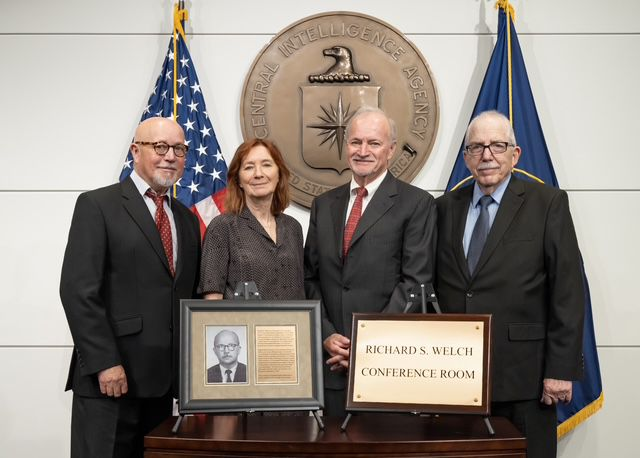
Left to right, Dedication of Welch Conference Room at CIA HQ in Langley, VA with Tim Welch, Molly Welch, Nick Welch and Ralph Mariani, who spearheaded the project.
In the seven years leading up to last December’s 50th anniversary of the murder, the now 82-year-old Mariani made it his mission to keep Welch’s memory alive. He and Estes (who died in 2024) in retirement lived less than two hours away in Florida (the latter in Saint Augustine), and met twice a year. He promised Estes he would do so, and he has kept his promise.
It was Mariani’s efforts that prompted the Agency to create the Richard S. Welch Conference room in its Langley, Virginia headquarters, dedicated in June, 2024, in the presence of the children of Welch and Estes, and Estes’s wife Luba.
Mariani has become a cherished member of the Welch and Estes extended families and attends all memorials for both men, side-by-side with their children.
Remembering Welch as mission
“I have done it out of respect for him and as a deep feeling of historical injustice. I felt that he wasn’t recognized properly. The main motivation is that the New York Times and the Washington Post, the two major newspapers here in the United States, both refused to do obituaries on Dick Welch. I attribute it to the fact that in the mid-’70s, the CIA was being beaten up by the Congress, by the committees, and there was an anti-CIA feeling, and both newspapers didn’t have the courage to recognize the legacy and the accomplishments of Dick Welch. It’s a very sad thing for American journalism not to recognize the first ever CIA Chief of Station killed. It’s an abomination.” Mariani tells TO BHMA International.
He stresses that both Welch and Estes were charmed by and had become imbued with Greek “Filotimo”, a word that literally means love of honor, but is used to denote a mix of virtuous traits in the national character of the Greeks. He believes that an obituary in major newspapers would have expressed the irony that such a man was murdered.
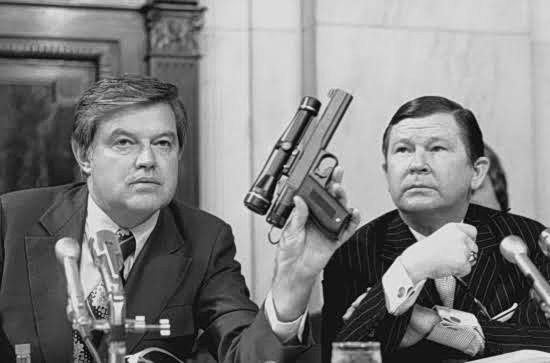
Senator Frank Church [left] holds up a gun at a hearing of the committee he chaired investigating illegal CIA activity; the 1974-75 hearings captured global attention and rocked the agency.
Never before had CIA activity been probed, nor had it ever been subjected to congressional oversight.
The committees’ revelations stirred an unprecedented maelstrom of public criticism of the CIA. Welch was murdered just four months before the Church Committee’s final report was issued, and some critics believed that the government used the assassination to temper intense criticism of the Agency and blast those who endangered the lives of its operatives by blowing their cover.
The hearings garnered intense international media attention, and though there is no indication from N17s proclamation that the group was aware of damning revelations or believed that these would temper the reaction to the murder of such a high-level CIA target, the proceedings had greatly tarnished the Agency’s image abroad.
Blaming the junta
Mariani and Estes believed that junta figures through media contacts, after the regime’s fall in July, 1974, had whipped up the already intense popular anger against the Americans over US support for the dictatorship and trained it on the CIA, to scapegoat the Agency for dictator Demetrios Ioannides’s disastrous decision to try to overthrow Cyprus’s President Makarios, opening the way for the Turkish occupation of the island. Ioannides has gone down in history as one of the nation’s greatest traitors. Many Greeks believe he played the role of the useful idiot.
English-language daily Athens News fingers Welch, Estes
For his part, Estes was convinced that hostile agents of KYP (the Greek intelligence agency) had leaked information on Welch, exploited by the terrorists, in an act of revenge for their perceived betrayal by their CIA counterparts as regards the junta’s abortive coup against Makarios and the subsequent Turkish invasion.
“The information was obviously leaked by hostile KYP officers, because the only names leaked were those in liaison contact with KYP,” Estes said in an interview for James Risen’s 2023 NYT bestseller book “The Last Honest Man” [referring to Senator Frank Church].
If Estes was referring to the 25 November, 1975, publication in the English-language daily Athens News of the names, addresses, and telephone numbers of Welch and other officers serving at the station, his claim is dubious.
The paper published a “letter”, purportedly drafted by an unknown and never to reappear “Committee of Greeks and Greek Americans”, providing details on the previous postings of Welch, Estes, and William Lofgren (newly assigned to Athens) and invited readers to contact them and seek explanations of their activities, a thinly veiled call to attack the CIA officers
In its proclamations, however, N17 detailed how the organization was surveilling Welch for months. Moreover, Welch’s daughter Molly spent two months in Athens over the summer and she realized, to her terror, that the entire family was being shadowed.
Moreover, Welch’s cover had already been blown (but only as Lima, Peru station chief) in the summer and winter, 1975, issues of the magazine CounterSpy – co-founded by the infamous CIA turncoat Philip Agee, who made it his mission to destroy the Agency by outing over 1,000 agents internationally – though it is questionable whether the N17 gang was familiar with this or needed it as a source of information.
One of the most perplexing elements in the entire story is Estes’ assertion in an interview that the station had received information about the existence of N17, but because there had been no noteworthy activity on the part of the group, the intelligence was given short shrift.
If true, and one might well harbor strong reservations, that would suggest a surprising level of incompetence.
Mariani, too, blames the junta
“To the question, ‘Whom do you hold responsible for the assassination of your chief and your best friend, Dick Welch?’, the answer always from Estes [in interviews] is clear and succinct. He blames the junta. He blames the junta, and I do too. He blames the junta because after they made the awful, one of the worst mistakes in Greek political history, choice of trying to overthrow [President] Makarios in Cyprus, they looked for scapegoats, and their scapegoat was the CIA.
“They reached out to their media contacts, and there were articles I believe blaming the CIA for its alleged involvement and its actions in connection with the Athens Polytechnic massacre,” Mariani says. “This influenced leftist groups and fueled a desire for revenge.”
Welch not oblivious to threat of terrorism
Most who have attempted to answer the gnawing question of why Welch did not want a security detail and why the Agency did not insist on one conclude that he felt safe in Greece, as no murders of Americans had occurred there and no CIA station chief anywhere had ever been assassinated. No one can quite explain, however, why he chose to ignore the warning of Ambassador Jack Kubisch not to stay with his second, Guatemalan wife Kika and his ailing father in the house everyone knew to be the residence of successive CIA station chiefs.
If Welch and his wife felt comfortable there, the political environment in the country should have instructed otherwise. Two months before they arrived in Athens, the US Embassy was stormed in a huge protest marking the 21 April anniversary of the rise of the junta. Moreover, anti-Americanism was pervasive, as was intense hostility toward the CIA, which Greeks blamed for the Turkish invasion of Cyprus, the greatest national humiliation since the 1922 Asia Minor Catastrophe.
Curiously, May, Welch’s old classmate and colleague, wrote that he had communicated his security concerns and that his friend was not oblivious to the possibility of a terrorist threat. He was clearly not naïve.
“Greece was terribly important to him. And in the two or three letters I received from him before we lost him, he kept telling us how important and how much he felt a part of the Greek scene and the nation. I remember asking him if there was any danger, any possibility that violence should reach the Embassy level, or at least the US representation there.
“He was very level-headed about it, very matter-of-fact. He said there was violence all over the world. If it’s Greece, why not in Greece? He did say something about believing that if there was a place to go, Greece is as good a place as any. We didn’t give this too much importance, but there was definitely some talk; there could have been a premonition, who knows?” May said.
Indeed, May noted the irony that in a brief stint as Acting Deputy Division Chief, WH (Western Hemisphere), Welch oversaw a major effort to produce a comprehensive study on the terrorist problem in the hemisphere. It was viewed as “endemic and one of the most difficult problems with which we now are faced and will have to cope with for the indeterminate future”.
“The study covered terrorist modus operandi, defensive measures (physical, cover, etc.), and many other ramifications on certain defense measures, and has been used by security officialdom in the Department of State as a basis for much of its approach to the same problems – putting Technical Services Division into such fields as car-armoring and other counter-measures, and responding to liaison requests for assistance in countries where terrorism is a particularly vexing problem,” May wrote.
“With a prescience that was reasonable and only now seems eerie, Dick predicted that some day a senior CIA officer might be a terrorist’s target,” he added.
Welch targeted as a symbol of US intervention in Greece
Mariani suggests that N17 picked Welch as a trophy prize, someone who represented everything they despised.
“I feel that 17 November killed Welch as a symbol. He wasn’t there in ’74; he was in Peru. They killed him as a symbol for what they believed the CIA had done in the ’60s with the Papadopoulos coup, and then in the ’70s with, in their mind, blankly giving Ioannidis support. But the fact that he was such a lover and aficionado of the Greek culture, both classical Greece and modern Greece, makes him a special person in terms of deserving both respect and recognition,” Mariani underlines.
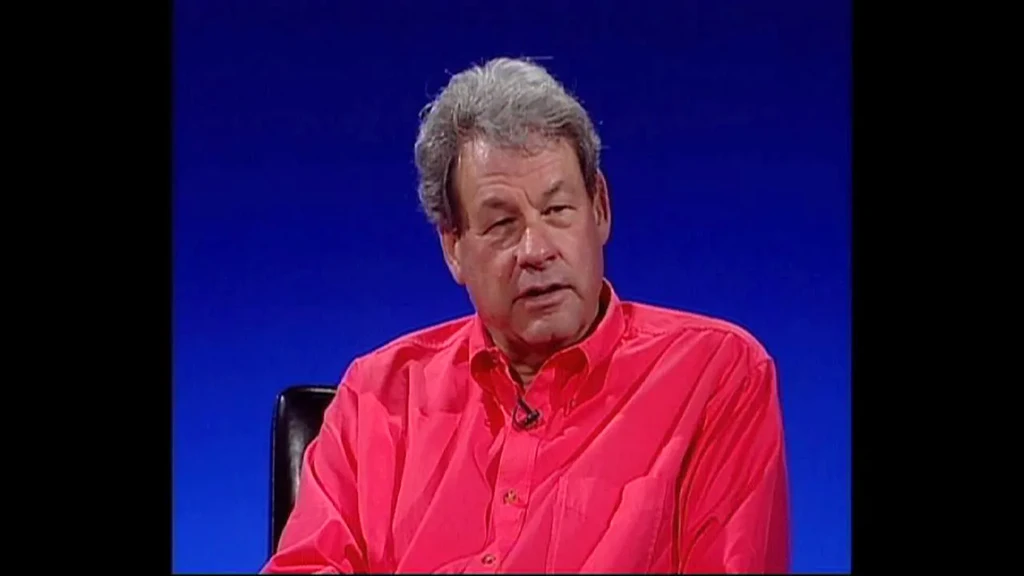
NYT Athens bureau chief Steven Roberts was introduced to Welch at the Embassy Christmas party, an hour later he was first to break the story of the murder of the CIA station chief internationally.
The last Christmas party
By an odd twist of fate, the journalist who first broke the story of Welch’s murder was one of the last people who saw him alive.
The New York Times’ Athens bureau chief, Steven Roberts, who also covered Cyprus and was there when the first Turkish invasion occurred, was in attendance at the US Embassy Christmas party at the ambassador’s residence on 23 December, 1975, where he was introduced to Welch, just over an hour before he left the party to return home with his wife Kika and meet his fate.
When Roberts learned that Welch was murdered, he admits there was a certain disbelief that this could happen to a CIA station chief in Greece.
Immediately, a deep sense of apprehension and fear fell over the embassy staff, the expat community and all Americans working in Greece. The looming question, of course, was “Who’s next?”
“Well of course we knew it was a dangerous place, but we never anticipated murder. I had been covering Greece at that point, and Welch had been preparing to come to Athens. I was at a holiday [Christmas] party at the ambassador’s residence and the head of the information team at the embassy was a man named Ed Alexander, a Greek-American I believe. He came up to me and said, ‘I’d like to introduce you to the man who has just become the CIA station chief. So I was introduced to Mr. Welch at this party,” Stevens told TO BHMA International.
“He said to me, ‘I’m very pleased to meet you, because I have been reading your stories about Greece in my preparation for coming to this assignment. I would like you to come down to the Embassy and we can establish a relationship.’ I had known several of the other CIA agents who were under cover at the Embassy. I thought great, having a relationship with the CIA station chief could only be valuable to me as a reporter. I was delighted with this turn of events.
“I went home, and we lived with my wife Cokie [who was to become one of America’s most distinguished and respected broadcast journalists] and our two small children at the time in Neo Psychico. Not much later, the phone rang. It was the wife of John Rigos, who was the UPI correspondent in Athens at the time. His wife said to me, ‘I have just got a phone call from one of John’s stringers who’s looking for John but he’s not home. Do you know where is?’ To be honest, John had a reputation for carousing, so I said I saw John at the ambassador’s party but I have no idea where he is now. She said, ‘I’m trying to find him because one of his stringers has called and said that a man named Wells (she had the name slightly wrong) from the embassy has been shot. I had met Welch just an hour or two earlier. I immediately sensed that she must be talking about Welch. I hung up the phone and called Ed Alexander, my contact at the embassy, and told him I’d just heard this news. He confirmed to me that it was Welch who had been shot. I talked to him and got some quotes and I filed the story for the New York Times. I have always believed this was the first story anybody wrote about this killing.”
“There was a sense of significant apprehension in the American community of journalists, diplomats and others. No one knew, of course, if this was a lone attack on one individual or whether this was a harbinger of other attacks on other Americans. No one knew that.
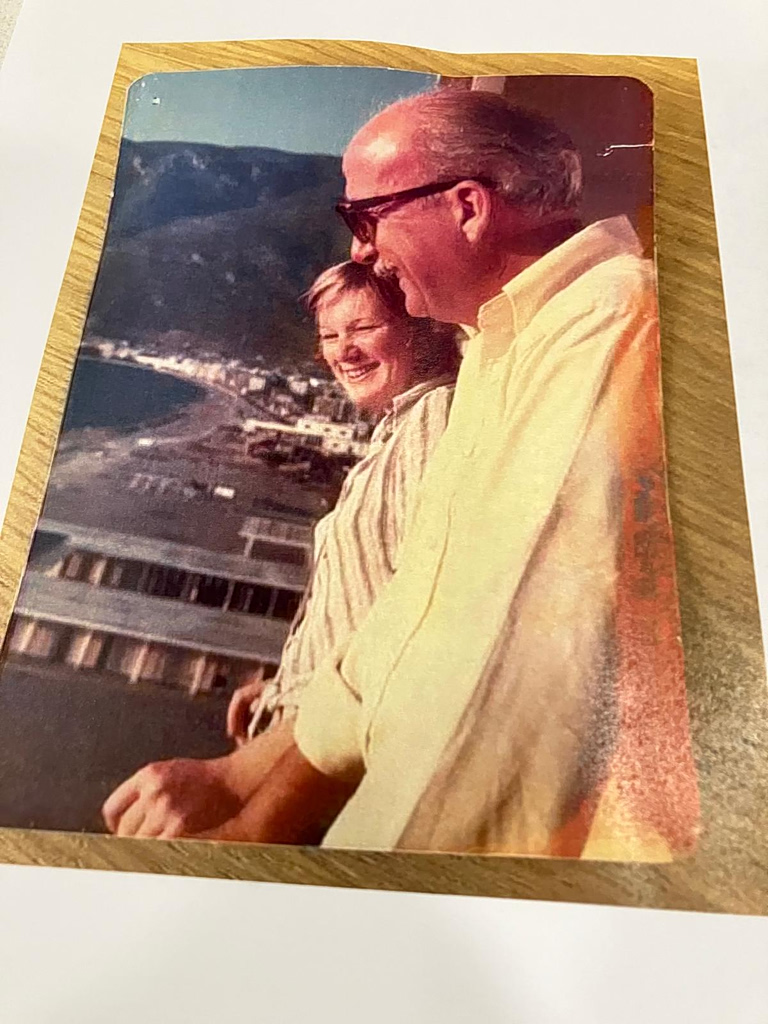
17-year-old Molly Welch with her father at Loutraki, en route to a tour of Delfi, the Corinth Canal, and the Peloponnese. Her two months in Greece were her first opportunity to establish a deeper bond with her father, who would be away in career tours.
Molly Welch: A father-daughter acquaintance as last goodbye
The Welch family was the first of 23 families destroyed by the November 17 terrorists over 27 years. It is not only those they murdered that they left behind, but the shattered lives of children, husbands and wives, friends and grandchildren who carry the scars carved by those who purported to be fighting American imperialism, capitalism, NATO and the West more broadly.
Molly Welch’s two-month visit to her father in Athens (along with her older brother Nick) in the summer of 1975 was her first chance to really get to know him, spend quality time and develop a meaningful relationship, as her parents divorced when she was quite young and her English-Swedish mother raised their three children in England. He was mostly absent in her life, with professional tours in Guatemala (where he met his second wife Kika) and Peru.
“I learned early on that it was job first and family second,” she told TO BHMA International.
“I think if Dad hadn’t been killed, that initial meeting in those couple of months would have then matured, you know, as time had gone by, and it would be more adult talking to adult. I was still very much a teenager, a very naïve teenager for age 17,” she underlines.
“My dad every single day would say, ‘Right, what’s your plan for the day?’ And we said, ‘What?’ And he’d say, ‘You have to have a plan for the day.’ And if we didn’t, then he’d make a plan, which was something like, for instance, you’re to go down to the National Archaeological Museum by bus. We always went by bus. And we didn’t quite know our way around downtown Athens at the time, but that didn’t seem to matter. And you’re to go and find, you know, the Mask of Agamemnon.”
Strong alarm bells presaged the killing of a family
Though a CIA station chief had never before been murdered and Welch is said to have felt safe in Greece, Molly remembers that there were very loud danger signals, and that her father at times would check under the car for a possible bomb. The whole family was being followed throughout her stay with her brother Nick in Athens.
“My brother Nick and I were approached in public one day. Ron Estes had a speedboat, and he said, oh, if you want to, you can go down and potter around in this speedboat. Somehow the trim got wrapped around the propeller. This is at the marina. We spent the whole afternoon just trying to unwrap this trim. Then these two men approached us – I thought they wanted to help and said, ‘You’re CIA’ or, ‘Your father’s CIA” or something. I remember shaking head to toe,” Molly Welch recalls.
‘It’s nothing, don’t worry about it’
“We went back and we told Dad, and I was really, really upset about it. Typically, he said, ‘Oh, honestly, Molly, don’t worry about it, don’t worry, it’s nothing, don’t worry about it.’ And I remember going to the shower and I was shaking, I was shaking. And I worried about it. I worried about it a lot.”
Constant surveillance
“It was a major alarm bell, and he didn’t heed it. He didn’t heed it. I think again if Nick and I had been there before, say we’d already got to know Athens and my dad a bit more, we probably would have said, ‘They’ve got to get you out of here, Dad. You can’t stay here. You can’t stay here.’
“But we were so naive and out of the picture that to me it was nearly surreal. It was surreal, and when my dad said jump, you jumped, you know, in a good way. He was very confident – he was very brave. He’d never have a gun. Of course, as it turns out, that was the biggest mistake that he made, and he paid for it. He paid for it. So, you know, what can you say again with hindsight? I think maybe again he was so excited to be back in Athens…”
“We were being followed. I know that we were followed the whole time that we were there. Now I know that they saw Dad pushing his father in a wheelchair. [The incapacitated Colonel Patrick Welch was being cared for by his son and was sleeping when Dick was murdered in the home’s driveway. He had suffered two strokes, and Molly is certain that the murder caused her adored grandfather’s death four months later.] These people [the 17N murderers] saw my father caring for his own father, saw him with his wife, and saw him with his children. This is a family, and they decided to kill him.”
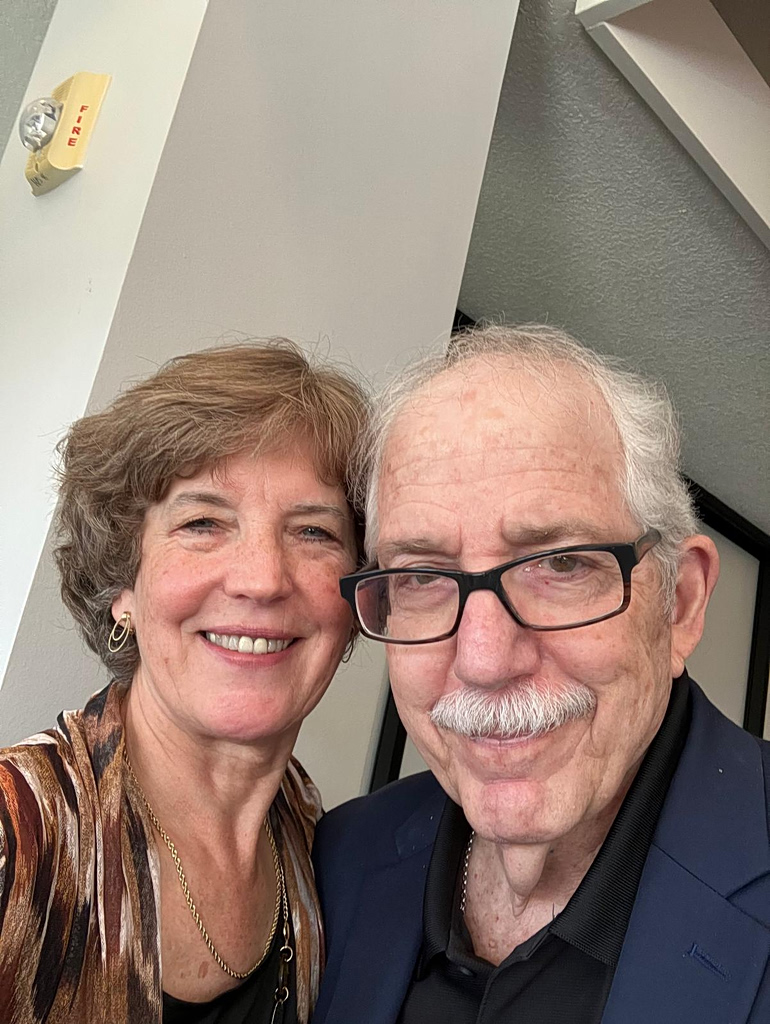
Ron Estes’ daughter Valerie Estes with Ralph Mariani.
The blood that binds two families
Ron Estes’ daughter Valerie, a Virginia-based veterinarian who has travelled broadly working to help other countries in setting up policies and structures, recalls her father’s singularly deep admiration for his colleague, the two men’s brotherly friendship, and how closely knit the two families were, a bond that only deepened after the tragedy of Welch’s assassination.
“I knew Dick well. The Welches were friends since I was tiny. Dad had incredible respect for him and admired him. They were extremely close friends. He said he was just so brilliant – an excellent linguist but a very humble guy. He was humble and down-to-earth. A good guy. He was impressed by his Harvard education, his grasp of languages,” she says.
‘You remember where you were when you heard Kennedy was shot’
“I was in the States when Dick was shot. It’s sort of like everyone remembers where they were when Kennedy was shot. I was working at a fast-food restaurant in Virginia and my boss came in and said, ‘Your friend Laurie is on the phone, take it in my office.’ She was my best friend then and she knew all about the Welches. I thought why is she calling me at work? She said, ‘Can you sit down?’ She told me she had just heard on the news that Dick Welch had been shot. I immediately was thinking, ‘What about Dad?’ She said he was the only one shot. I called my mom and we were obviously really upset. My next thought went to Molly, Nick and Tim. My heart just broke for them,” Estes says.
“There’s been a lot of press about the murder. But it’s important to show the kind of man that Dick was, aside from being a smart Harvard grad that was so admired and loved by his family and our family and a lot of other people because of the kind of person he was.”
The Welch kids, the Estes kids, and Ron’s misplaced guilt
“We are all a family now, because of who Dick was and what he meant to my father. My father was a wonderful, very smart and very caring man. He would do for Dick more than I’d seen him do for anybody else. He had such respect for him that it made all of us realize what kind of a person he was. They were as close as you can be as best friends and colleagues, and pat each other’s backs. We call each other the Welch kids and the Estes kids. We’ll be lifelong friends, because of the closeness of our fathers.”
The fateful pledge
“The start of it all occurred in Cyprus. They pledged to each other that one day they’d take over the Athens station, and they did. That’s what made this tragedy even worse. It’s because they wanted to do that so badly and work together in a country they loved. And then to have this happen was just like a double whammy.”
“My father had guilt in a number of areas that he didn’t deserve to have. When a guy that you love like that and encouraged him to come and all that kind of stuff, you can’t help but feel some of that, whether it’s your fault or not.”
“He never went back to Greece, as much as he loved Greece – he spoke Greek and Greece was like a second home to us. But he couldn’t go back. He kind of kept his feelings inside for a long time.”
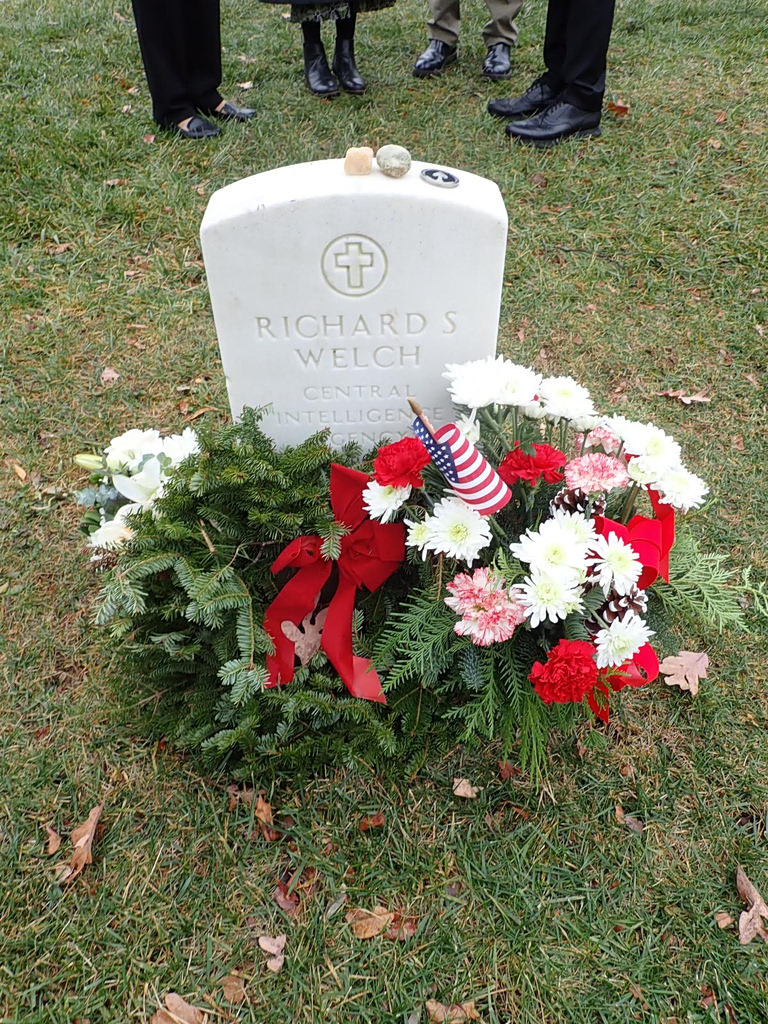
Richard Welch was buried in Arlington National Cemetery, then unprecedented for a man without military service, by special permission of President Gerald Ford, who attended his funeral, along with Secretary of State Henry Kissinger. His tombstone was the first at Arlington to be carved with the words “Central Intelligence Agency” (and a Christian cross). Four months later his father, Colonel Patrick Welch, was buried in a grave very near his son’s. Richard Welch was posthumously awarded the Distinguished Intelligence Cross, the CIA’s premier honour for valour, and he is commemorated by a star on the white marble Memorial Wall for officers who have fallen in the line of duty.
Ron Estes, a Korean War veteran, died on October 13, 2024, age 93, and his ashes were placed in the Arlington National Cemetery columbarium. The entire Estes and Welch families attended the funeral.