
 Μake us preferred on Google
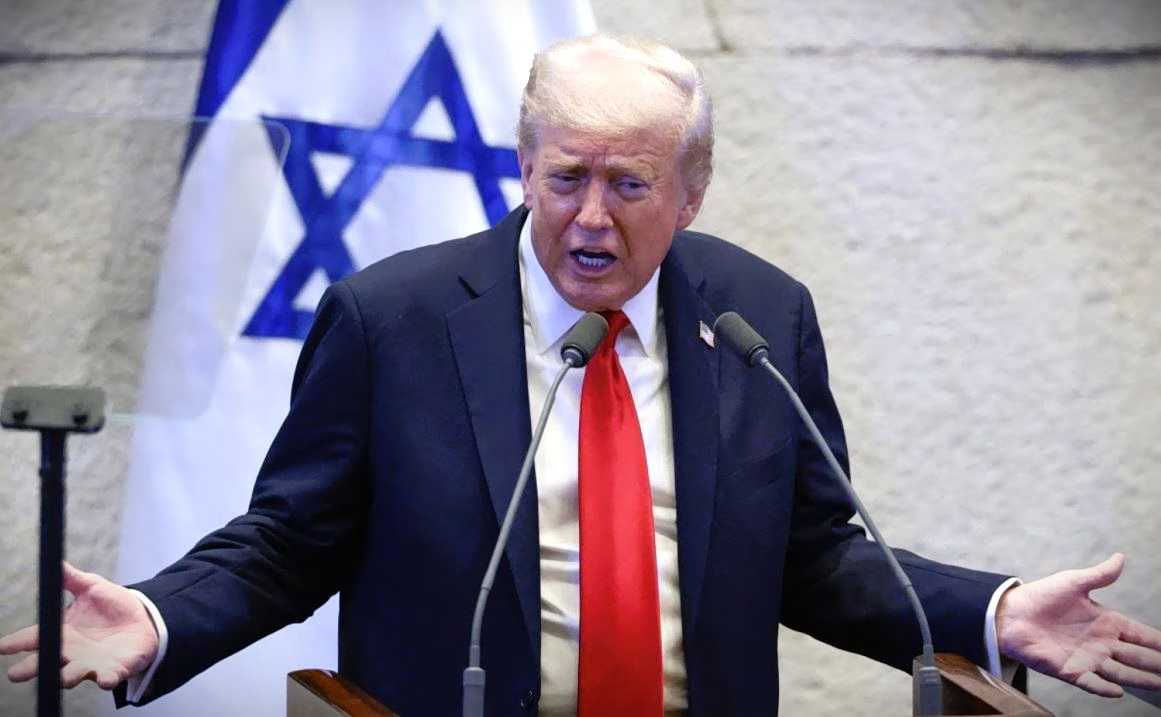
 Israeli Prime Minister Benjamin Netanyahu rejected President Trump’s plan for disarming Hamas, a key plank of the Gaza peace process that also requires Israel’s gradual withdrawal from the enclave.
The Israeli leader issued a statement in a government meeting Sunday spelling out his rejection of the plan, in an unusual public break with Trump. The move risks angering the president, who hailed what he called “a historic agreement” to disarm Hamas late last month.
Netanyahu faces uphill elections in October and has come under domestic criticism from his hard-right coalition partners who accused him of misleading them over the terms of the plan, which would see the decommissioning of Hamas’s weapons in exchange for phased Israeli withdrawal from Gaza.
“Israel rejects the 15-point document. The IDF will not carry out any withdrawal until Hamas is disarmed. And when I say the disarmament of Hamas, I mean heavy weapons, less heavy weapons, light weapons, all the weapons,” Netanyahu said in a video statement released by his office at the opening of an Israeli cabinet meeting, using an acronym for the Israeli military.
When Trump announced that a deal had been reached between Hamas and his Board of Peace, a body he created to oversee Gaza’s postwar transition, he said Israel was very happy with it.
But Israel and Hamas are deeply distrustful of each other, and major disagreements about the 15-point plan’s details have since emerged, such as the sequencing of disarmament and Israel’s withdrawal.
The Gaza plan arrives at a sensitive moment for Netanyahu with polls showing he is likely to fail to secure a ruling majority in the coming general election. While the U.S. would like to see Israeli troops withdraw from what Israel calls buffer zones in Gaza, as well as Lebanon , these moves are likely to be very unpopular with the Israeli prime minister’s right-wing voter base who see Israel’s presence there as important to their country’s security.
Netanyahu’s announcement comes despite intense pressure, including from the U.S., for Israel to agree to the plan, according to two people briefed on the matter. The Gaza plan was raised by U.S. officials in a recent meeting between Netanyahu and Trump in late July, according to one of the people briefed.
Nickolay Mladenov , the Board of Peace’s high representative for Gaza, has met with Netanyahu three times in the past two months and asked him to stop airstrikes in the Palestinian enclave, as required by the plan, in the most recent of those meetings in Israel earlier this month, according to the person.
In response, Israel tightened control over the way targeted killings in Gaza are approved, requiring authorization by the chief of staff rather than lower-level commanders, The Wall Street Journal reported . Israel would still be able to respond to what it perceived as direct and immediate threats.
Netanyahu on Sunday said that Israel would continue striking threats both to Israeli soldiers and to civilians in Gaza. Israel hasn’t conducted strikes in Gaza in six days, according to the country’s military, a contrast to almost daily bombardments before that.
Relations between Netanyahu and Trump have splintered in recent months amid the war in Iran as Israeli and U.S. goals have increasingly diverged. The tensions have included a series of terse phone calls between the leaders.
Before granting him a meeting with Trump last month, the administration insisted the Israeli leader take steps to show he was serious about advancing the U.S.-brokered peace talks in Lebanon and Gaza, including allowing the Board of Peace to enter Gaza after months of stalemate, the Journal reported . Hard-line members of Netanyahu’s cabinet later reacted with anger and accused Netanyahu of misleading them about the terms of the deal.
The prime minister responded by saying he was in discussion with the U.S. about Israel’s objection to the plan.
“Right now, we are talking with the Americans about this issue. They have ideas—some of them are acceptable to us and some are not acceptable to us, and we know how to stand firm on these matters,” Netanyahu said.
The plan that Israel rejected is the second phase of a Trump peace plan for Gaza that began in October 2025. The first phase consisted of a swap of Israeli hostages in exchange for Palestinian prisoners and an end to intensive hostilities in the enclave, while the second stage deals with thornier issues such as Hamas disarmament, Israeli withdrawal and Gaza’s governance.
Write to Anat Peled at anat.peled@wsj.com