Women’s Circles, practices that have resurged across the West and in Greece, gather monthly under the full moon. These are ancient rituals that bring women together, fostering solidarity and sisterhood beyond the competition imposed by patriarchal norms and the commodification of femininity. They are not linked to feminism or sexual orientation. Rather, they are spaces of sharing, joy, empowerment, dance, and reconnection with the healing traditions of grandmothers and ancestors.
In this photo essay, we witnessed the women of the Kalash in their villages in the eponymous valley, just a few kilometres from the Taliban-controlled border. During the three-day spring festival Joshi, women dressed in colourful traditional dresses — free of burqas and hijabs — sing, dance, and celebrate publicly, alongside men from across Pakistan and tourists from around the world.
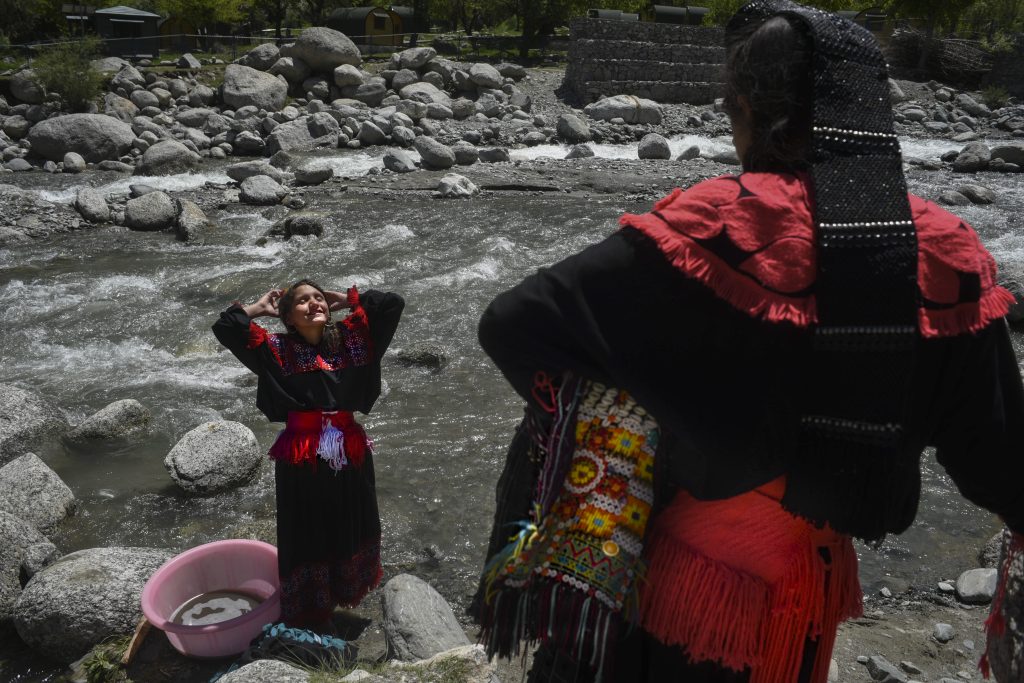
May 14, 2024- Kallas Valleys, Pakistan:Two young Kalash women wash their clothes in the river, enjoying their sisterhood, chatting in the bright sunlight to the music of the Chitral River. Kalash women can marry the man they fall in love with, study what they want at the universities of nearby cities, respect the tradition of their tribe and some like to the village, wear their traditional, colorful costumes during holy days and feasts experiencing the unique freedom of women in the entire country.
Children on Their Shoulders
We camped on the banks of a rushing, pristine river in a truly magical setting for three days. Women of all ages ascend the sacred heights above their villages, lost in full-day circular dances, murmuring songs, carrying children on their shoulders, and infants in their arms. Men play drums and flutes from dawn, approaching the centre of the women’s circle to honour the goddess Hestia — known locally as Gestak — on her way to the temple. During the festival, shepherds distribute milk from their goats, regarded as sacred, which young girls then deliver to their families. On the final day, men offer flowering branches, symbols of fertility and respect for women.
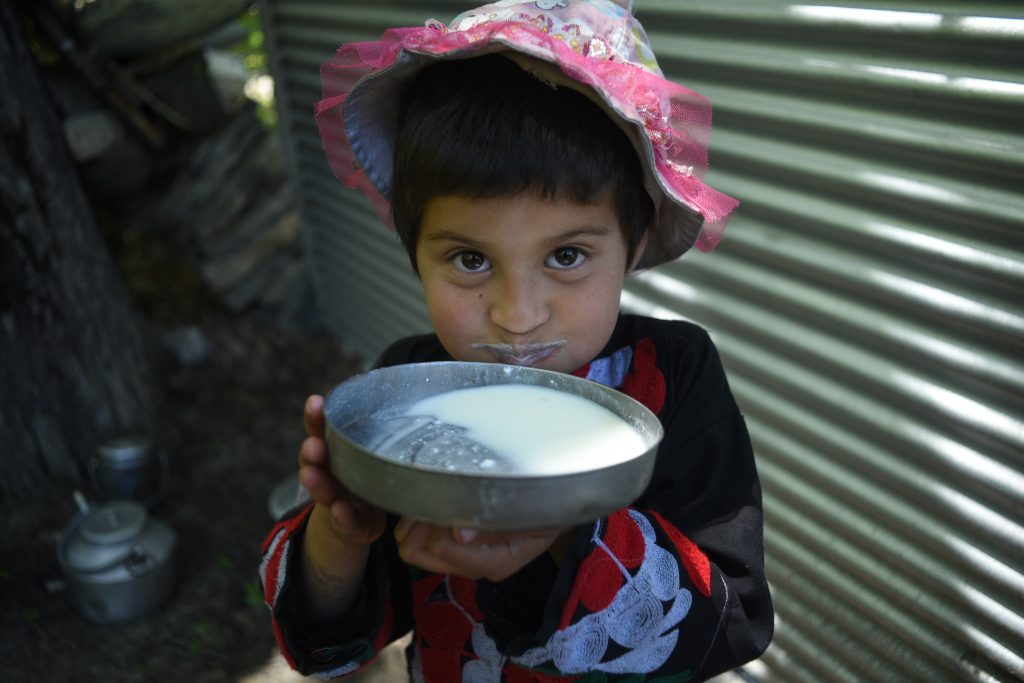
May 14, 2024- Kallas Valleys, Pakistan:Kalash little girls drinks the ‘sacred’ milk eagerly. During “Tsiripipi”, a special, local milk ceremony into the spring festival, women and girls pick the first flowers of the year, while families exchange gifts of cheese and milk which is considered sacred. During this feast, every shepherd shares the milk from his goats.
A Unique Community in the Heart of Islam
In a deeply Islamic country, just kilometres from Taliban-controlled regions, live the Kalash, believed by some to trace their ancestry to Alexander the Great, though modern genetics only partially supports this theory. Numbering between 3,000 and 4,000, they inhabit the remote valleys of Biriir, Bumburet, and Rumbur in Pakistan’s Hindu Kush, near Chitral. Here, they have created a distinctive world of homes, schools, communal kitchens, cafés, and temples, all constructed in their unique architectural style. Their homes, built from carved logs and perched on steep slopes, resemble Macedonian verandas and are often two-storey structures seamlessly integrated into the mountainside.
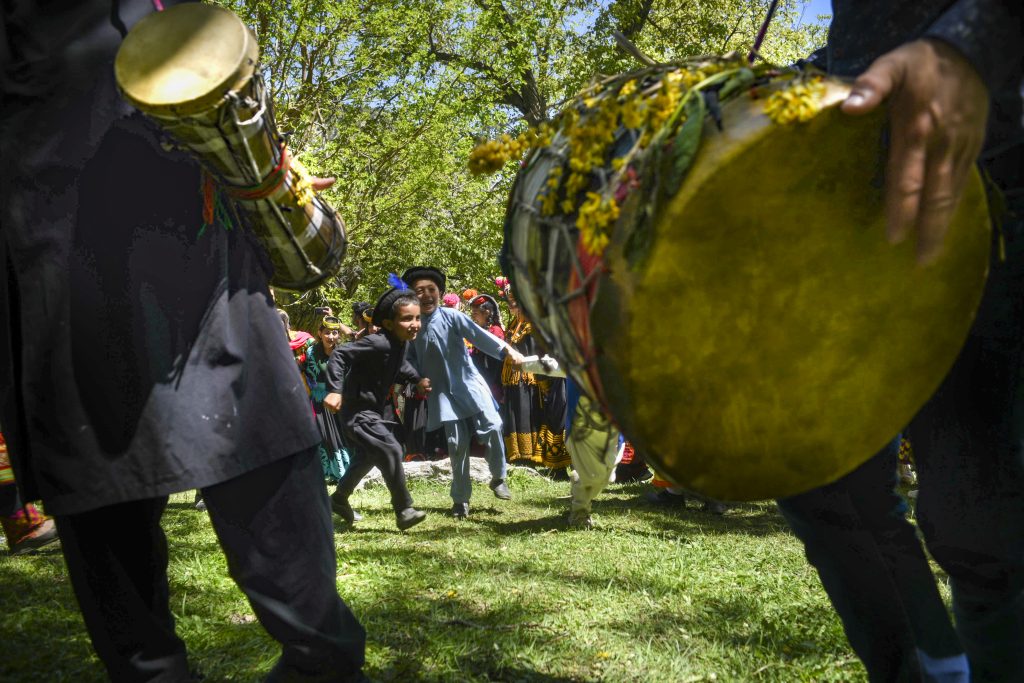
May 15, 2024- Kallas Valleys, Pakistan: Two little boys dance and play in the center of the women’s dance, during the Joshi Spring festival of the Kalash tribe.
In this way, men grow up in a small society accepting women as equals to them. Kalash women dance in small and large open circles, in nature, with gratitude to the Fertility of Nature and Spring, murmuring, humming and singing, listening to the loud, rhythmic beats of the percussion for many hours, so much so that they sometimes enter a trance.
The Kalash preserve their ancient religion — whose origins remain unclear — speak their own language, Kalasha, and maintain a rich oral tradition.
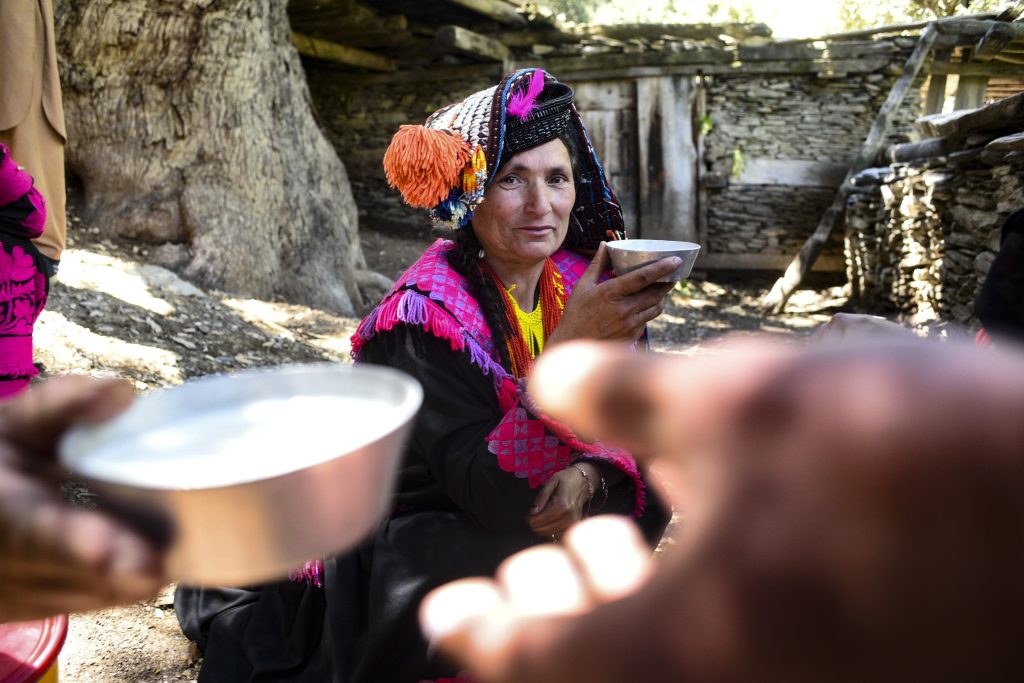
May 14, 2024- Kallas Valleys, Pakistan:During “Tsiripipi”, a special, local milk ceremony into the spring festival, women and girls pick the first flowers of the year, while families exchange gifts of cheese and milk which is considered sacred. During this feast, every shepherd shares the milk from his goats.
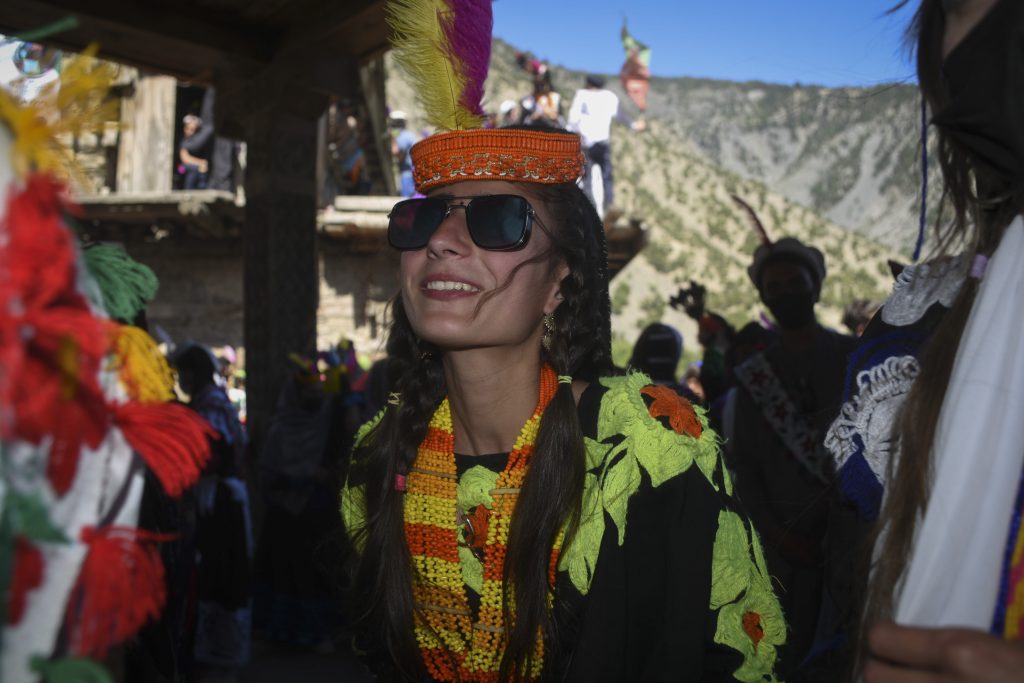
May 15, 2024- Kallas Valleys, Pakistan: A young Kalash woman comes in ecstasy dancing all day till the sunset, during the 3 days Spring celebations named Joshi. Despite the strong influence of Islam in their region, the Kalash women of all ages, managed to retain their colorful traditional clothing, in contrast to the conservative attire worn by women in neighboring cities, such as the burqa. Their festive hats are adorned with feathers and aromatic branches, reminiscent of the plumes of Macedonian helmets. The sea shells in their attire remind them of their maritime origins. The number of the colored beads of their necklaces, indicates the degree of their economic status. Their hair is combed into five braids, where the main one, in the center of the head, has been braided since a young age and has never been cut.
History of Survival
Historically known as Kafir — “unbelievers” — for their black clothing, the Kalash originally inhabited Kafiristan, in present-day Afghanistan. Forced to flee invaders, they resisted Arab conquerors and Islamization. Only by the late 19th century, after the Durand Line divided Afghanistan from India, did those who had retreated to the three valleys in the Hindu Kush survive the brutal campaigns that Islamized the majority of the Kafir.
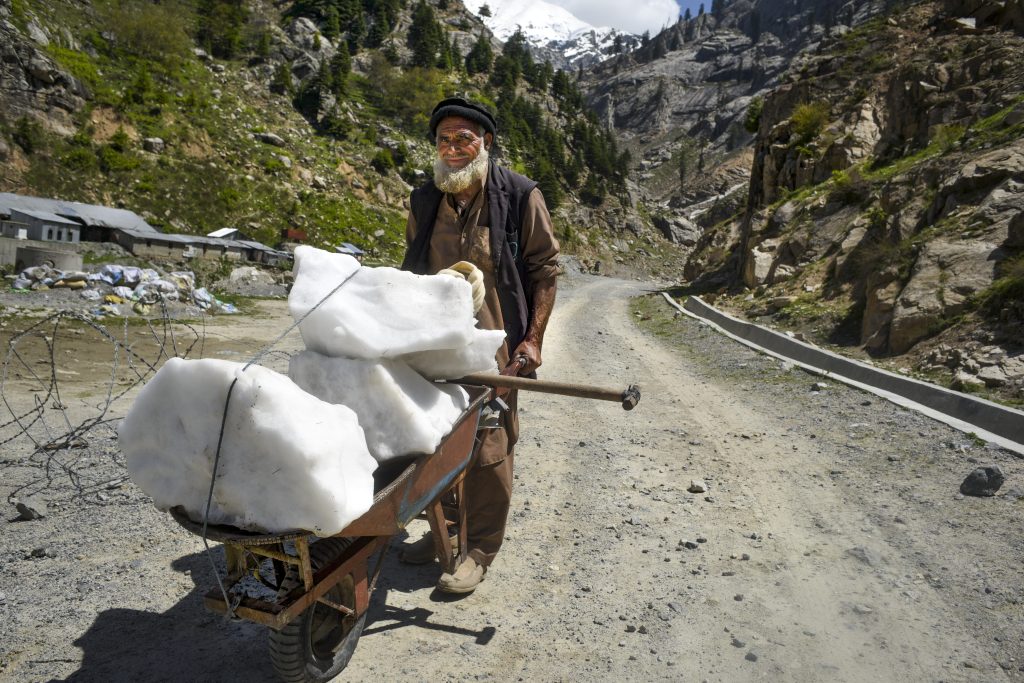
May 15, 2024- Kallas Valleys, Pakistan: Leaving the valleys of Kalas, we are stopped by the police to check our passports. I get out of the jeep and, while waiting, I photograph this proud old man who is happily descending from the snowy mountain, carrying ice in his cart that he is going to use to preserve the meat and the few vegetables now that summer is coming.
Legend has it that the god Dionysus founded settlements famous for their festivals during his travels in India. Alexander the Great conquered the Achaemenid empire, reaching as far as India, leaving behind Greeks in Bactria to oversee governance and trade. The region, known as the “land of a thousand cities,” became a Hellenistic outpost in Central Asia. Though it eventually fell to the Parthians and nomadic groups, Greek influence survived, with descendants ruling into the 10th century CE. Even today, the discovery of communities with European features and worship of ancient deities sparks curiosity about the lost descendants of the Greeks in Bactria.

May 15, 2024- Kallas Valleys, Pakistan: A visitor to the Kalash spring festival “Joshi” enjoys the uniquely beautiful view of the Rumbur valley, waving her shawl, thus giving a little shade to her head, from the strong midday sun of the mountain. For me this photograph symbolises the women into the Islamic regions who take their position, like the Kalash women, who stand out for their beauty, they are proud, free with obvious sociability and active participation in the democratic processes of the Community.
Love and Freedom
Within Kalash culture, ecstasy, love, poetry, shamanism, and pagan practices connected to the Greek god Pan endure. In one of Pakistan’s most conservative areas, Kalash women live with unusual freedom: they dress as they wish, dance and sing ecstatically, and choose their partners — even dissolving marriages or eloping if they desire — though full gender equality is not yet achieved. Women manage households while men focus on trade and manual work. Among younger generations, however, dynamics are shifting.
Another striking custom is the menstrual hut, where women stay during their periods and are cared for, including being brought food. Maintaining this tradition requires resources and improved hygiene facilities.
Wine, Education, and Cultural Pride
The Kalash remain the only local community producing and enjoying wine. Women preserve their colourful traditional garments, in contrast to nearby hijabs, niqabs, or burqas. Younger women pursue higher education in nearby universities, studying subjects such as botany, blending modern knowledge with ancestral wisdom. The Kalash follow their own calendar, structured by the moon and seasonal cycles, beginning the year in March with the Spring Sacrifice Month.
Despite living in a challenging, non-native environment surrounded by Muslims, Buddhists, and Hindus, the Kalash maintain their distinct identity. Attempts at conversion by neighbouring Muslims through threats or inducements are resisted. Marriages outside the ethnic group are largely taboo. Community governance involves elected leaders, priests, and twelve advisers, with women actively participating in democratic decisions and celebrated for their beauty, pride, and agency.
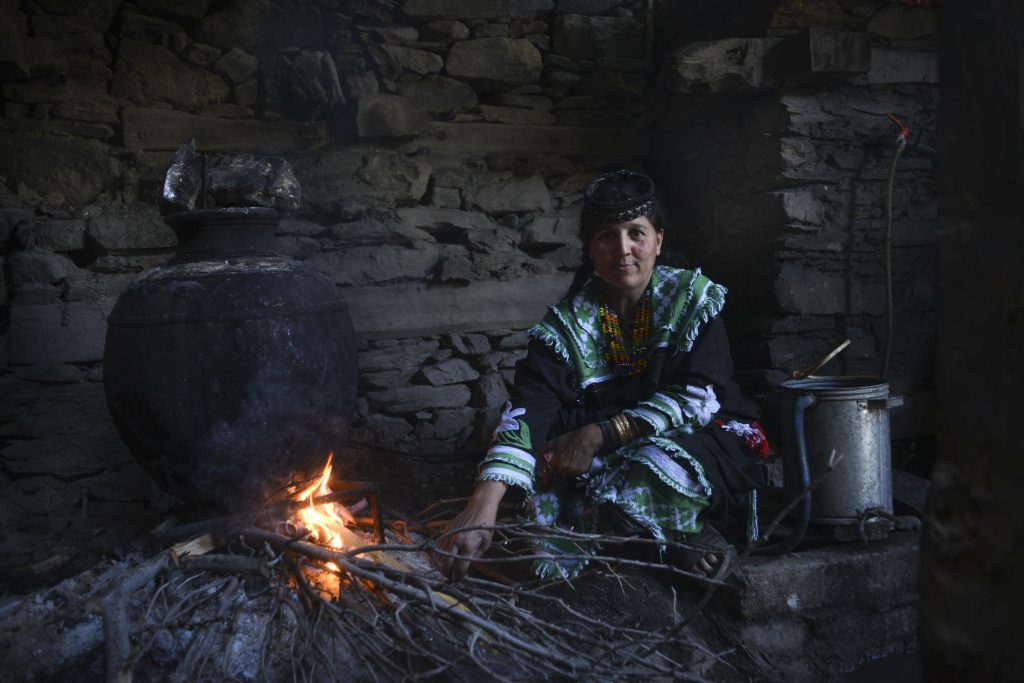
May 14, 2024- Kallas Valleys, Pakistan:Kalash woman prepares the fire in order to make her house-wine.
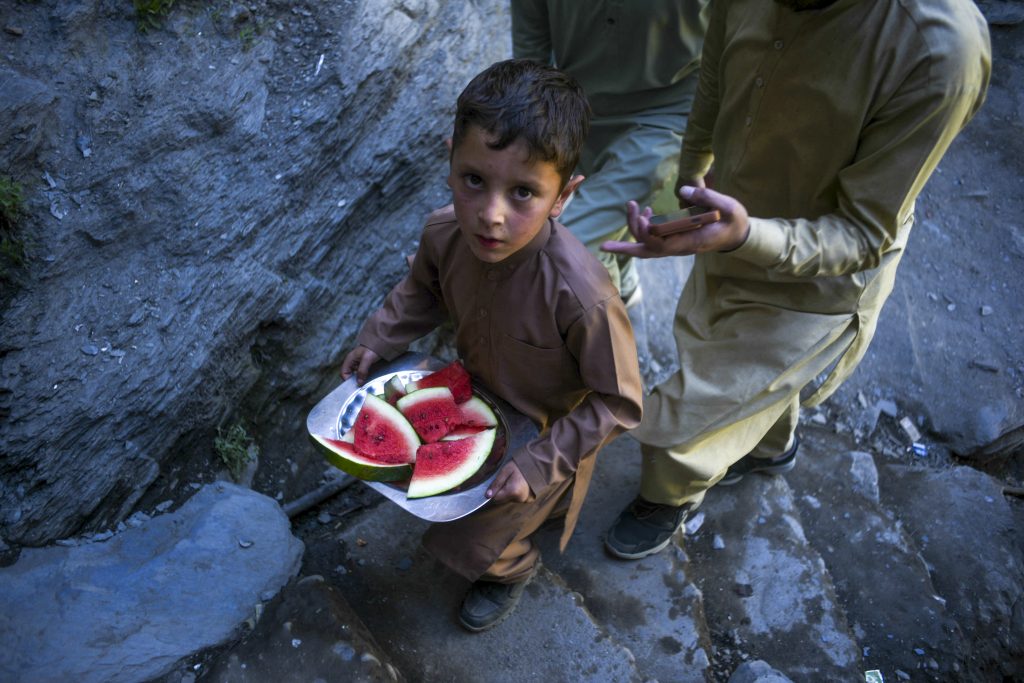
May 15, 2024- Kallas Valleys, Pakistan:A little boy from the Kalash tribe carries some watermelons to the dancers at the feast.
This portfolio showcases my personal work in the Kalash Valleys, located in the mountains of Pakistan, just a few kilometers from Taliban-controlled areas, during the Spring Celebration.
Greek Ties and Lifelong Friendship
Unlike Muslims who sit cross-legged on the ground, Kalash carve elaborate Greek-inspired motifs — Vergina star and meander — into their chairs. Thanks to long-standing efforts by Greek volunteers, notably teacher Thanasis Lerounis, the Kalash have sustained strong educational and cultural links with Greece. Schools were founded, textbooks produced, aqueducts installed, and a museum established. Despite Lerounis’s kidnapping by the Taliban, the Kalash still remember him fondly as a brother, greeting visitors with tears and warm embraces.
Challenges Ahead
Kalash livelihoods rely primarily on agriculture and animal husbandry, leaving them vulnerable to poverty. Crops are insufficient; incomes fail to cover basic needs. Houses lack proper sanitation; temples need restoration; children are malnourished; mothers suffer anaemia; and the elderly face chronic illnesses. Harsh winters exacerbate isolation. Tourism, new technologies, and foreign ideologies threaten their heritage. Deforestation risks soil erosion and flooding. Education, health care, and protection of language, religion, and customs are urgent priorities to ensure this ancient culture endures.
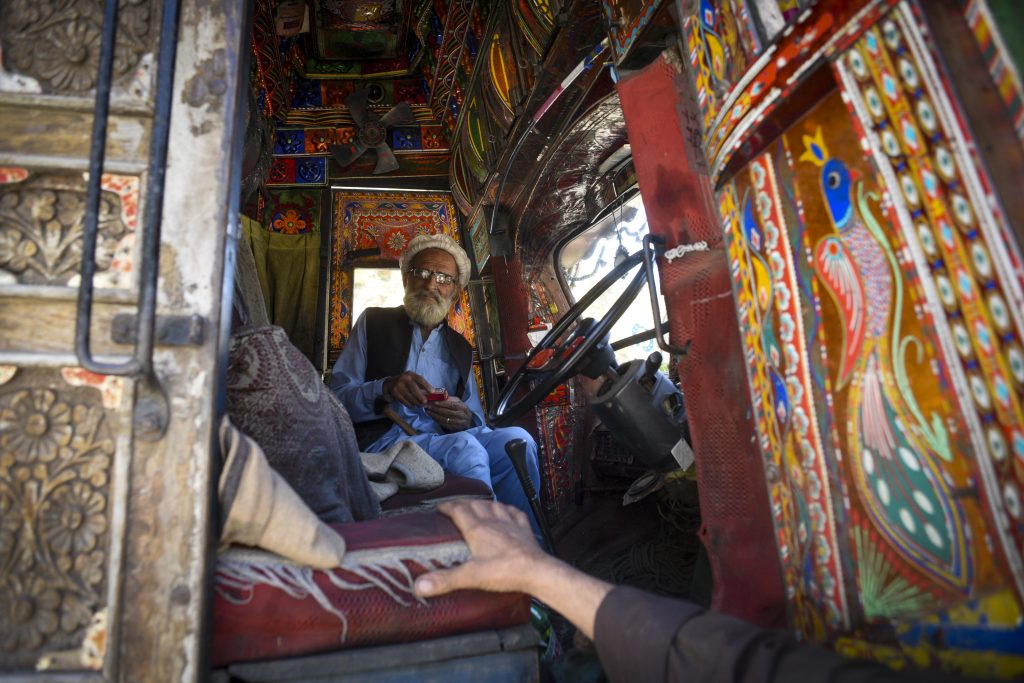
May 17, 2024- Kallas Valleys, Pakistan:A very old man in his hand-painted truck, drives to transport goods from Chitral, the nearest city, to the Kalash Valleys and back.
The driver’s and passenger’s doors are carved from the outside. This is the tradition in trucks, lorries and even passenger buses in Pakistan. The Kalash festivals are a major event that every year attracts more and more visitors from all over the country as well as from abroad, thus somewhat increasing the income of the people of the tribe who otherwise really need significant help.