As we follow the latest developments, like many people around the world, we have to ask ourselves: is there really such a thing as democracy? We are citizens of the 21st century. So we have to ask: is this century of ground-breaking progress truly compatible with the principles of the democratic constitution? I think we’ve all formulated an answer in our heads. And what about our rights?
Every day, the news shines a light on new images of horror. Freedom, equality, justice, security are being violated systematically. But let’s start from the beginning and take them one by one.
Freedom
The spotlight casts a majestic light on the most obscene, the most horrible of crimes: war.
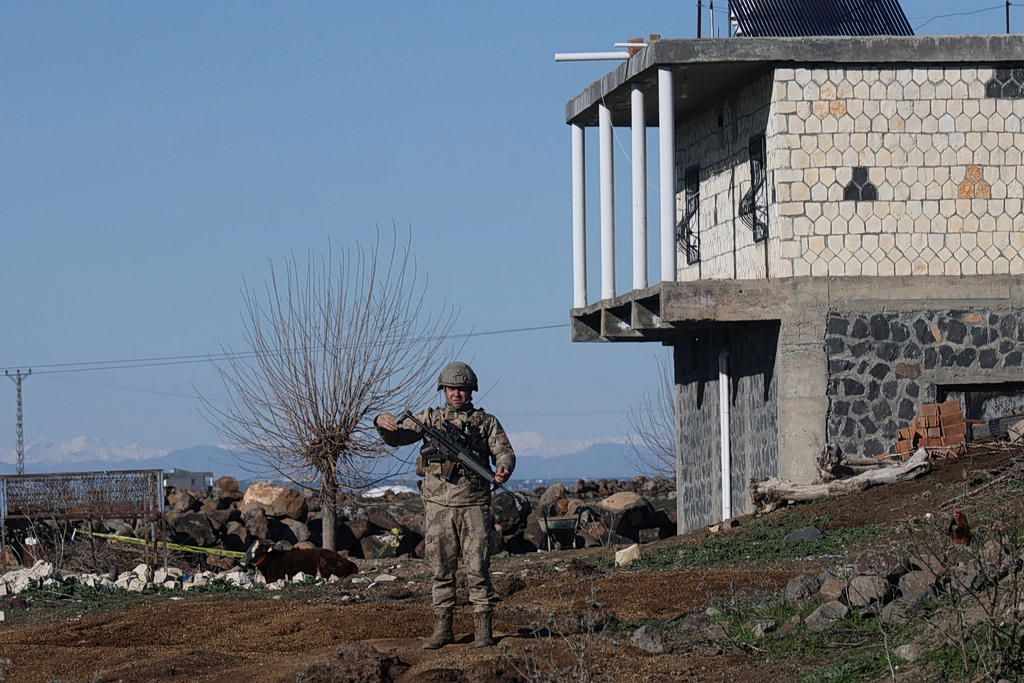
Yes, Europe is the continent of civilisation. And sure, Europe condemns terrorist attacks and outbreaks of war beyond its borders. But what happens when one of the world’s largest conflict zones is situated in its very core? What happens when dozens of Europeans are captured as prisoners of war or murdered in cold blood? In Eugene Delacroix‘s painting we see Liberty leading the French people in the 1789 revolution. But in 2025, how and where are we to look for Freedom?
Equality
You may well say that equality applies to multiple forms of relationship. And we will respond by asking you in which of those relationships is equality both real and unassailable? Between the sexes? Are women really equal to men; has the longed-for parity finally arrived? Is equality before the law fully guaranteed? What about parity in expression? Or equality before the state? Is there really no discrimination on the basis of race or religion, age or social and economic criteria?
Justice
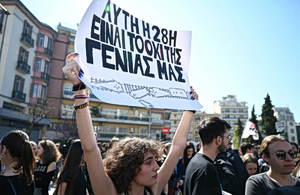
Justice is a dark page in History which has still to come out into the light—in Greece, at least. Recent incidents have heightened the impression that justice is no more. Two accidents. Tempi, Greece, 2023 and Novi Sad, Serbia, 2024. Two examples that couldn’t illustrate more clearly how a public good celebrated since antiquity has been politicized and debased.
Security
Is there such a thing as security? Does a woman feel safe walking down the street alone, even in the daytime? Does an immigrant feel safe in his new home? Does a student feel safe walking through the center of a European capital? Or a child who wants to go outside to play? Or a worker in their place of employment? I’d be hard-pressed to believe there’s even one citizen who can honestly say they feel safe.
Then, there are the other areas we often overlook.
Health
Free healthcare is not a given in many countries around the world, or even in every EU Member State. Is it really morally and legally acceptable—under the law on human rights—that someone should have to pay to access health services?
Education
It is no secret that learning by rote is fundamental to education in Greece. We Greeks grow up in a country where our personal opinions, ideas, creativity and imagination are considered a barrier to our receiving a proper education.
Red Card Number 1: no avenues for self-expression
Of course, no discussion on education would be complete without a mention of the Greek university entrance examinations. Although the procedures are among the fairest in terms of how the examinations are conducted, it is still an extraordinarily draining business for the students that opt to take them.
And it goes without saying that parents have to spend enormous sums of money on private lessons if they want their children to be in a position to achieve good results. So where’s the equal right to learning? How can it be taken for granted that an average family, even one with just one child, can afford such an expense?
Red Card Number 2: barriers to access. Finally, the opening of private universities is sure to pose another major problem for the education system. As we all know, private education exacerbates social and political inequalities in general and inequality in accessing education in particular. It costs a great deal to attend a private university, which opens up a veritable chasm between those who can afford to study there and those who are restricted to state institutions.
Red Card Number 3: generating inequality.
This article was originally published in the insert “The European BHMA” published with “TO BHMA on Sunday” on 11 May 2025.